Adrienne Farricelli
-
Posts
731 -
Joined
-
Days Won
46
Everything posted by Adrienne Farricelli
-
Possession/Aggression/Resource Guarding
Adrienne Farricelli replied to LORI OESTREICH's topic in Dog Training & Behavior
Before going into depth on the other issues, I wanted to touch a few other things. I pulled Indy off by her collar, tell her no, and give her a time out in another room for a few minutes to calm her. I know how tempting it is to physically intervene when two dogs are getting into conflict/fights, however, caution is needed, because this can put us at risk for a redirected bite. In other words, the dogs are so aroused by the conflict, that any hands reaching for a collar or any body part getting in between is at risk of being bitten. This is not intentional, but an instinctive side effect associated with all the adrenaline rush of the event. It is therefore recommended to use a "hands off" approach to separate dogs fighting, and some options were discussed in the post above. Another important thing to consider, is that, when we use collar grabs to put dogs in a timeout or to remove them from a situation there is risk that the dog next time may play "hard to catch" swerving away at our hands attempting to reach the collar, not to mention, some dogs may even bite the hands. It's therefore helpful working on making collar grabs less aversive for the dog, and creating positive associations with them. Some exercises based on desensitization and counterconditioning are covered here (towards the bottom) https://www.braintraining4dogs.com/members/brain-training/obedience-101/recall/ and here under rewarding collar grabs: https://www.braintraining4dogs.com/members/archive/exercises-to-teach-puppies-to-tolerate-touch/ The females are intact. Indy has not had her first heat yet. No, I intended to breed my girls as long as everything was healthy with them. I wanted to point out some issues that may occur down the road. Please keep in mind that these scenarios might or might not occur, but it's good to keep them in mind. As the saying goes 'forewarned, is forearmed." Some of the most intense fighting we see in households with multiple dogs are between two female dogs. This has been even backed up by studies. These fights generally start taking place around adolescence/social maturity generally starting anywhere between 1 to 2 years old. Being intact can also cause hormonally-induced fights two and competition around the estrus cycle. Also, false pregnancies can cause a dog to become overly protective of certain toys as hormones make the dog believe they are "surrogate babies" and real pregnancies ae known to cause conflict too. Once again, this may not happen, but always good to monitor things just in case. -
Possession/Aggression/Resource Guarding
Adrienne Farricelli replied to LORI OESTREICH's topic in Dog Training & Behavior
Following is some general info in regards to the issue of dogs exhibiting conflict around resources and high arousal situations. You'll also find some examples of behavior modification. Let's start with the ball issue. So we have Indy (11 month old Aussie) which apparently is the main instigator (I haven't seen her behavior, but let's assume it's her starting the conflicts-sometimes it's not clear cut) and Charlie (9 year old Australian cattle dog/Cavalier King Charles mix) is the victim. Any time there is conflict going on among dogs sharing a household it's a good idea to start by excluding medical problems. This is because, if there are any medical issues at play, even the best behavior modification plan won't lead to progress because a dog who is feeling not well, is an unhappy dog and it can impact their relationship among the dogs. Being that Charlie is 9, there may be chances that he may be struggling being around two younger dogs, and at this age, play won't be as strong as a priority as in the case of a dog under the age of 3. There is a fine line between tolerating and dreading stuff at this age, so we need to be watchful on his interactions with other dogs and body language so to recognize early signs of tiring. I am not talking about physical tiring necessarily, but emotional tiring as well, as some dogs are "introverts" compared to others and at 9, he may be struggling with some things. For example, we need to be watchful that the younger dogs aren't missing any of his possible "leave me alone" signs and that he has a quiet place to retreat to. You mentioned: "Charlie usually will drop a toy if Indy wants it whether a ball or something else if she walks up on him." Charlie, apparently seems to be aware of the fact that for Indy priority access to the ball is important and therefore it seems like he's wanting to be a mellow fellow, giving up a toy when he feels Indy wants it badly. This is something to be commended as not all dogs are willing to give up a resource in their possession like that. You then also mentioned: "Recently, Indy has jumped on Charlie while low growling and has bit him. I pulled Indy off by her collar, tell her no, and give her a time out in another room for a few minutes to calm her. These several occurrences happened when Charlie was running with Indy behind him. "I've noticed Indy lean against Charlie and cut him off before she jumps on him. Soon after, she's bitten him." Based on this, apparently Indy is expecting him to have "eyes on his back" and give up a ball even when he is running around with it and she is behind. This form of biting sounds more like closely bordering bully behaviors, wanting the ball at all costs, although we must accept to some extent that she's an Aussie and these dogs like to control the movements of other dogs and whatever, and they can have a Type A personality. Your statement: "I'm not certain Charlie understands social cues from other dogs since he wasn't socialized when little. Not sure if this makes the issue worse." This is certainly an aggravating factor, being that not recognizing social cues can cause him to be placed into situations that will create conflict. For sure, not being socialized can play a role, but at the age of 9, I think it's important to have him checked by a vet because, as dogs get older, they may miss some cues due to sensory decline or painful disorders (you can't give in to a growl that you may not hear, or it may be difficult to move out of the way if you have achy joints). Also, Indy is possessive with new toys. Management-wise, you would want to provide toys that evoke guarding behaviors privately. In other words, in an area away from your other dogs. Dogs who tend to guard stuff rehearse the problematic behavior over and over, and practice makes perfect. Since growling/stiffening works to keep the other dogs away, dog who guard will feel the need to always do that, and the behavior tends to also escalate over time, especially if the other dogs don't move away. Management helps prevent her from rehearsing the problematic behavior, and also prevents her from being tense due to the presence of other dogs, protects your other dogs from feeling tense too, while also keeping them safe. So how are these issues tackled? As mentioned, behavioral cases require a multi-faceted approach. I will list three main ways this issue may be tackled. It goes without saying that safety is always paramount. Muzzle training is important with dogs with a bite history: https://www.braintraining4dogs.com/members/video-archive/train-your-dog-to-wear-a-muzzle/ And there needs to be a plan in place in case fights erupt. I like to keep a bottle of Spray Shield handy, but there are several other options such as banging two pot lids together, using an air horn, using a bottle of compressed air which makes a hissing sound. 1) Management alone. Yes, management can be used as a stand-alone procedure and it's a quick fix. Many dog owners find that it's the cheapest and most simply approach, although it can be difficult to implement at times because it requires some effort (keeping the dogs separated when there is risk for potential conflict) and there are always risks for things to go wrong (a door may be accidentally left ajar, a child may let the dog out) so many dog owners elect to tackle the root cause. 2) Management plus behavior modification. This works on the dog's underlying emotions and offers the possibility of working directly on the issue, although a certain level of management will always be needed. For instance, management will be a great extent needed throughout the behavior modification process. This is something that is more involved, requires time, and for correct implementation and safety it is recommended to work along with a professional using force-free behavior modification methods. Maintenance sessions may be needed. What would behavior modification entail? It would entail taking a step-by step approach often working through distance (desensitization) and changing the dogs' emotional response when in possession of toys (counterconditioning). Here is a guide on these two powerful methods: https://www.braintraining4dogs.com/members/archive/desensitization/ https://www.braintraining4dogs.com/members/archive/counterconditioning/ Special attention is taken during the process to avoid the dogs from going over threshold: https://www.braintraining4dogs.com/members/archive/threshold-levels/ The goal is to elicit what is known as a positive conditioned emotional response: https://www.braintraining4dogs.com/members/archive/conditioned-emotional-response-cer/ For example, one would have the resource guarding dog lie on mat with a low value toy in her possession while on leash, while somebody has another dog on leash. Every time the dog with the toy sees the other dog enter the room, she is fed a treat. When the dog is taken out of the room, no more treats. (The other dog is also fed treats randomly to keep things fun and reduce any possible tension). The open bar/closed bar method helps clarify this concept allowing the dogs to clearly make a connection: https://www.braintraining4dogs.com/members/archive/open-bar-closed-bar/ This is practiced over and over aiming for the onset of a conditioned emotional response where the dog with the toy, rather than getting tense and dreading the other dog coming near, starts looking forward to it because the presence of the other dog comes to predict great things. You may notice a happy tail wag or happy expression on the face when this happens. Gradually, the dog is walked closer, but always working at the dogs' pace, always carefully monitoring their body language for comfort. Once the dogs are more comfortable and most tension has left the body, we can start instituting some training, where the dogs learn to respect each others' space when in possession of a toy. Dogs can be taught to leave another dog alone when in possession of a toy and to go to lie on a mat rather than risk conflict. In other words, we implement differential reinforcement, where we train the dog/dogs to engage in an alternate behavior, something we would like the dog to do instead. 3) Management and behavior modification involving environmental cues. In other words, on top of behavior modification, the dog can be taught to automatically go find a person so to receive some type of reinforcement upon noticing a dog with a resource. Of course, this takes time to teach and is an advanced skill considering that the dog is expected to do so even without the direct presence/supervision of a person. In other words, the sight of a dog with a toy, becomes an environmental cue to go find a person. On top of this, all households owning multiple dogs may find it helpful to have all dogs fluent on a variety of cues. These should be trained individually and then dogs should be able to respond despite the presence of other dogs. These need to be trained at a fluent level and should be given at the earliest signs of trouble, ideally *before* any conflict has had any chance to start. Helpful cues: Name discrimination. Paying attention to you when you call a specific dog by name. Recalls https://www.braintraining4dogs.com/members/brain-training/obedience-101/recall/ Go to your mat, adding distractions and duration. https://www.braintraining4dogs.com/members/video-archive/train-dog-go-to-mat/ Hand targets https://www.braintraining4dogs.com/members/brain-training/preschool/targeting/ Smacking sound https://www.braintraining4dogs.com/the-airplane-game/the-smacking-sound/ "Let's go outside" cue. Since you have some resource guarding with treats and arousal issues, it's important to work on this gradually, individually and find some structured solutions to prevent any fights. I like to train dogs to wait for their turns for treats, but this takes time to train to reach this level of impulse control and lowered arousal, so you will need to have a muzzle and leash on Indy and some in-person guidance for safety. As mentioned, it's important to give the above cues at the earliest signs of conflict/stress so it's therefore important learning basic body language and the earliest signs of potential conflict. https://www.braintraining4dogs.com/members/archive/dogs-dont-bite-blue/ As mentioned, when it comes to intrahousehold conflict, it's important to take a multi-faceted, holistic approach. So you may also want to ensure the following: -Provide Predictable Routines Dogs feel more secure and safe when they know what to expect. This often entails providing them with routines. For example, you can teach your dogs that when you sit down to read a book or watch a show it's relaxation time for the dogs where each dog can chew on something in a crate or ex-pen nearby. Of course, you'll need to pave the path to this by allowing the dogs to exercise/train/do brain games/offer structured play prior so to drain their energy. -Make Dogs Feel Safe You need to be your dog's advocate and ambassador and therefore help your dogs feel safe in their environment. Most cases of interhousehold aggression are triggered by insecurity and stress. It helps dogs to know that you are there for them and will intervene when they need it. It's therefore good to intervene when we see a dog who needs to escalate to get his/her point across as this can cause a tendency to intensify behaviors to make a point. -Teach the dogs to look up to you when they are not OK with something. For example, when a treat would fall between my Rottweilers Petra and Einstein, and Einstein would snatch it, Petra was trained to look up to me for her own treat rather than instinctively react and get into conflict. This took several reps to train, and safety precautions need to be in place when we train this with dogs who resource guard (muzzle, leash, distance from the other dog, fluent response to smacking sound to teach to look up at me, then faded gradually so that the presence of a treat on the floor eaten by Einstein became the cue to look up at me). In person guidance may be needed to ensure safety. -Implement Rules Dogs in possession of something should keep what they want and be left unbothered. They have a right to maintain it. The intruding dog should be redirected and sent elsewhere and reinforced for complying. For example, if a dog has a toy, and the other dog tries to gain access to him, he or she should be promptly told to go to a mat for a treat. This accomplishes two things: the dog is provided with an alternate behavior to engage in and forms positive associations with the other dog (when other dog has a toy, I get a treat!). -Work on Impulse Control The Jazz up and settle dog can help with dogs who get easily aroused, helping them find their "off button." https://www.braintraining4dogs.com/members/brain-training/high-school/jazz-up-and-settle-down/ Impulse control exercises: https://www.braintraining4dogs.com/members/archive/impulse-control-frustration-tolerance/ -Tackle any underlying anxiety Often, dogs who get into conflict suffer from insecurity and there may be various stressors in their lives. You mentioned that you have military planes practicing at times, if the sounds are pretty predictable, you can try working on the "hear that' method discussed here https://www.braintraining4dogs.com/members/archive/fear-noises/, and keep on buffering sounds as you are already diligently doing. -Ensure enough exercise and mental stimulation You have high energy breeds who were selectively bred for serious work. A 30 minute walk usually doesn't suffix for these dogs. They may not be tired or tired enough. Structured training, mental stimulation (brain games!), structured play (not the over-the-top high arousal type), exercise (check with your vet for how long/how much and specific recommendations for the young dogs due to their growth plates). I will be posted about the other issues mentioned soon, possibly tomorrow. Disclaimer: behavior modification comes with risks. If your puppy or dog shows signs of potential aggression (lunging, barking, growling, snapping, biting) for safety, please consult with a dog behavior professional who uses force-free behavior modification techniques (no shock, prongs, or physical corrections) for direct in-person guidance. Articles, videos and general info found in the forums or course (or any online source) are not meant to replace in-person training/instruction. By using this course and forum, you are waiving any liability claims or other type of claims related to any dogs' behavior against you or others. -
Possession/Aggression/Resource Guarding
Adrienne Farricelli replied to LORI OESTREICH's topic in Dog Training & Behavior
Thank you for the extra details, they are very helpful! So let me start by answering the first questions you posted, and then I will go more in depth on some of the issues you are facing. 1. Should I not play ball with Charlie and Indy together? Or separate? Playing ball appears to rev Indy up too much at this time, and this arousal appears to spill into aggression. Not playing ball when they are both together is a sensible choice considering that you don't want your dog to rehearse high arousal behaviors as such and you also want to protect Charlie from any potential physical and emotional harm. 2. Will the program I purchased from you help with this issue? With cases of intrahousehold conflict among dogs, a multi-faceted approach is needed. You will therefore have to tackle the issue from a variety of angles. Training, brain games, tackling any underlying anxiety-noise phobias, learning how to recognize early signs of stress and learning more about implementing general management and general behavior modification methods such as desensitization, operant and classical counterconditioning and the associated conditioned emotional responses, differential reinforcement etc. may provide several benefits. However, any time there are cases of aggression, with risks for bites, it's important pointing out the importance of working alongside with a professional (using force-free behavior modification) who can coach you through the behavior modification process directly in a step-by-step fashion so to ensure correct implementation and for safety. Every case is different and will therefore require an individualized approach. 3. Is there any advice for redirecting Indy? Redirection requires training very fluent responses to cues that must delivered at the earliest signs of potential conflict. It therefore takes a very observant eye and close supervision. I am glad to hear that Indy has obtained ACK obedience training, which can serve as a foundation, although the training she was taught will need to be generalized to distracting situations such as being in presence of your other dogs and then under high arousal situations. This needs to be implemented gradually and systematically. 4. Do you suspect it is resource guarding? If not, what is it? From your description, this sounds like potential arousal aggression with some elements of resource guarding. However, there may be some other factors at play (like Charlie not reading her signals well) and the fact that you are dealing with herding breeds which are known for attempting to control movements. Indy's age reflects the time when most owners start seeing challenging behaviors directed towards other dogs sharing the household. The most intense and severe cases are seen with two female dogs reaching adolescence and social maturity, although it can be seen in dogs of opposite sex as well. I will be going more in depth on the subject matter in my next post or two. -
Possession/Aggression/Resource Guarding
Adrienne Farricelli replied to LORI OESTREICH's topic in Dog Training & Behavior
Hi there, Welcome to the forums! Thank you for providing such detailed information. Cases of intrahousehold interdog conflict can be complex, there are various dynamics at play. To better understand your situation, I would need a few more details. All three love to fetch a tennis ball and enjoy running to get them. Recently, Indy has jumped on Charlie while low growling and has bit him. I pulled Indy off by her collar, tell her no, and give her a time out in another room for a few minutes to calm her. When Indy jumped on Charlie, did that occur as they were chasing a ball? Did Charlie attempt to get it and Indy blocked him? These several occurrences happened when Charlie was running with Indy behind him. I'm not certain Charlie understands social cues from other dogs since he wasn't socialized when little. Not sure if this makes the issue worse. I've noticed Indy lean against Charlie and cut him off before she jumps on him Did all these incidents always occur in presence of toys? Like Charlie is walking towards a toy and she tries to get there first and blocks him? How is her bite inhibition? Does she break skin? Leave any marks? Does Charlie appear emotionally impacted by these incidents afterwards? Are these happenings rather new or have they been displayed for some time? She also wants attention from others first when they come to visit. Are these visitors people or other dogs? The females are intact. Indy has not had her first heat yet. Are you planning on getting them spayed? (Indy) Jumps at Charlie with her head against his when he barks going down our driveway for a walk. I keep Indy closer to me on one side now and let Charlie walk out front. He quits barking once we reach the road. Have you identified any trigger for his barking? 2. About six months old Indy exhibited a startled reflex when she was woken up suddenly. She would also go after Charlie and lunge at him. I called her name in a relaxed manner. This has now stopped. Did this happen only once or were they repeated episodes? Glad to hear this has stopped now. Indy is sensitive to noise. She doesn't like loud planes from a military site nor does she like thunderstorms. Do you live nearby a military site? How constant is this noise level? What does she do exactly when you say "she doesn't like it?" Thanks! -
Thank you so much. A lot to digest. I already understand from readings that i have unwittingly added to Maisi’s need to resource guard her treasures because since a wee pup i have Stolen bits of wokd, twigs, rocks - you name it, that she brings inside to chew up. She hates having them removed. I shouldve traded and am doing so now. i will keep the highly valued toys locked away meantime. No little children around so have no fears but will be wary. You are very welcome! Ideally, we want to start instilling a sense of trust from an early age, which is why I highly recommend doing the exercises to prevent resource guarding as soon as getting a new puppy. https://www.braintraining4dogs.com/members/archive/the-importance-of-preventing-resource-guarding-in-puppies/ It's much easier preventing this issue/working on it very early, than working on it later once it has become an ingrained behavior. Ideally, breeders should get this type of behavior modification started when the pups are still in their care, and they should coach new owners on continuing this important education, but we're not that lucky to always have breeders who are knowledgeable and willing to put in that work. The good news is though that, more and more breeders are starting to acknowledge the importance of this. I will walk together or on her own as she is fine on her own. OK, I seem to have missed this little information tidbit which makes a whole lot of difference! This seems to confirm the possibility that Maisi is struggling in particular with your other dog being walking ahead at a distance as she does well walked alone. Thus, this means she doesn't seem to struggle being separated from your older dog to the broadest definition we may see in separation-related issues with "bonded pairs." This doesn't mean she's not suffering, just that it happens mostly in that particular context (which makes it more easy to work on). If your older dog that passed (again, so sorry for your loss), was taken to the vet that day and never returned, this may have instilled in her a sense of stress/impending doom over a dog who "went on a walk" and neve came back. Some dogs may struggle when they can't process death (by seeing the body) and fail to gain a sense of closure. Dogs may act in uncharacteristic ways after a dog in their social groups passes. So yes, walking her on her own can be a good solution if that doesn't evoke any stress-related whining or other stress-related behaviors. Other options are trying to change the departure routine. For example, loading the two dogs in the car to a neutral place and walking them there. The important factor here is doing what it takes to not allow her to rehearse stress-related behaviors, keeping her always as under threshold as possible. you say about the collar safety but will this type of play stop when she is older? It may or may not. If you are referring about her grabbing him by the collar during play, once the collars are removed for play, this habit will extinguish as there is no collar to grab, although some dogs will still like to still grab the loose skin by the neck. If you are referring to just rough play, it can mellow down once older, but many dogs remain Peter Pans in the play department. We were often thinking our Rotties mellowed down in their play as they got older, but it was mostly because of the summer heat. We actually sort of missed watching them play. Then, come fall, along with its cooler temperatures, and they were back to their frisky selves, barking and playing, which like you, we always enjoyed watching. Some dogs can be directed to reserve their rough play only for outside, by catching them at first signs of playing (like that initial pay bow/sneeze) letting them sit by the door (open sesame style) https://www.braintraining4dogs.com/members/brain-training/college/open-sesame/ and then releasing them by telling them to "go play!" in a happy tone of voice. Then once calmer, after they have burnt all the energy, they can be allowed inside again. we have maisie doing obedience weekly, scent work daily, and starting agility. She loves all this so hopefully will settle. That's wonderful! Hopefully, being that the loss of your other dog is still "fresh," this is just part of the grieving stage, and she will gain closure and go back to her usual self. Those activities will certainly help her while also boosting her confidence. re getting trained people in if necessRy - i joined this group because i thought you are highly trainec so im confused as to why you cant give all the necessary help. Please advise if ive misunderstood that you can solve issues. I have only just started the course and assumed i would get all the help here. tx again. I have a lot to read with all the links you have given With behavior issues such as resource guarding, or any type of deep/anxiety aggression, there are involved risks. Behavior modification is different than training. Training, which is what the main course primarily covers, entails teaching dogs operant behaviors such as to sit, lie down, come when called. The things you learn in a typical dog training class. Behavior modification entails changing the dog's emotional response, and because emotional responses often culminate in aggressive displays there is the element of risk. However, it's important to point out that training can too change a dog's emotional responses (although not directly) when it involves positive reinforcement, although the training often can be implemented only afterwards in some cases (when dogs are emotionally too charged, their ability to cognitively function shuts down). With behavior modification, one can't really give out exact instructions as every dog and every situation is different. Even if one would make a very detailed protocol under the form of an article or video, there are risks that, even if followed to a T, it may just be too much for that dog. This can cause unnecessary stress and may culminate into bites, and even if the bites don't cause harm, they can lead to significant setbacks which put a dent into any progress made. Behavior modification is a delicate issue. Often management is the safest approach (removing access to things/situations that trigger aggressive responses) until in-person help can be sought. Sure, there are dog owners who have to a good extent "solved" their dogs aggression problems by reading books or finding online help, but there is an element of risk in doing so, hence why you'll see disclaimers. The recommended approach is therefore to work in person along with a professional (in the case of behavior modification ideally a board-certified veterinary behaviorist or Certified Applied Animal Behaviorist for the most severe cases as they can rule out medical issues like low thyroid levels/pain and they can prescribe medications to lower levels of stress) or a dog trainer well-versed in behavior modification and attending continuing education courses to stay up-to-date. In-person help is important because as Jennifer pointed out, the professional can "read the dog" for the most subtle signs of stress and coach owners accordingly, always progressing slowly and at the dog's pace. Based on a home's setting, they can provide recommendations on how to implement management (where to place baby gates, identify 'hot spots' -areas where dogs sharing the home may be more prone to react aggressively and organize the space so that each dog has its own safe zone.) They can help condition the dog to a muzzle if necessary, and they can catch quickly any mistakes that may be detrimental to any progress. Not to mention, they can carry out a functional assessment, watch how all the family interacts, make observations on the living environment, how the dogs interact with each other etc.
-
Sorry to hear you feel overwhelmed from the reading material. There are videos at the end of each of the Brain Games so that you can see the correct execution and get an idea of the final goal. More videos can be found in the archive section: https://www.braintraining4dogs.com/members/video-archive/ The detailed readings are to cover in-depth the subject matter and ensure a deep understanding. If reading feels overwhelming, I think you may have the option to use a text-to-speech reader, there are several online ones.
-
Hi Erin, Welcome to the forums! I am sorry to hear that you're dealing with lots of mouthing, and several other behaviors. Over all, it seems like she's dealing with frustration and this is something that will need tackled early taking a multi-pronged approach, in a step-by-step, systematic manner. Please see my observations in non-bold. I am going through a similar situation with my Anatolian Shepherd/Maremma Sheepdog Bella. She is also almost 6 months old and over 60lbs. She doesn't bite/nip on me constantly, but does like to mouth a lot. I try to praise the heck out of licking to get her to give "kissies" more. But so far she prefer mouthing more. She does more biting/nipping mostly when she wants to try to escalate to play fight (as if I'm another dog) or is doing what I call "throwing a tantrum" because of being corrected from doing something she shouldn't. (digging holes looking for moles, or trying to eat deer poop out in the field on our long line leash walks.) At 6 months, Bella is now approaching the adolescent stage. Livestock guardians, as you already know are slow to mature, so you may see many pup behaviors, but caged in a large body. This is a time of many challenging behaviors, and in some cases, they may get pretty overwhelming. Here is a general read about what happens during adolescence: https://www.braintraining4dogs.com/members/archive/survive-dogs-adolescent-stage/ You are on the right track in praising a whole lot the licking. If she's praise driven, you should see licking behaviors increase in frequency and strengthen eventually superseding the mouthing. However, from what I have read so far, I feel that there is an underlying emotion of frustration and impulsivity that may be driving certain behaviors, so this root cause needs to be addressed. Frustration-based nipping episodes are best tackled by taking a multi-faceted approach, here are some general guidelines/tips: 1) Provide outlets for her instinctive needs. For example, provide her with a digging spot where she can dig to her heart's content. You can even put digging on cue, by pointing to it and telling her to go "find stuff!" that you have previously buried under. Oh, I see now that you are actually planning on that! That's awesome! 2) Encourage independent play through brain games and food puzzles. Treasure hunts https://www.braintraining4dogs.com/members/brain-training/elementary/the-treasure-hunt/ the Muffin Game https://www.braintraining4dogs.com/members/brain-training/elementary/the-muffin-game/ Kong wobbler, stuffed Kongs, Topplers, Lickimats etc. If she's prone to getting frustrated, you will need to make these extra easy to empty initially, gradually increasing difficulty as she learns better impulse control. 3) Avoid corrections as much as possible. Focus on preempting undesirable behaviors, training what you would like her to do using replacement behaviors. Corrections for frustration and arousal-related behaviors is like adding fuel to the fire. Risks doing more harm than good. We need to work on lessening her struggles rather than adding to them. So it's best to tell her what you would like her to do instead and praise/reward those generously. Behaviors that are reinforced, repeat and strengthen, especially if you are able to strategically make engaging in these far more rewarding than engaging in the undesirable behavior. For example, practice working on "leave its" rather than pulling her away, and reward her with something she absolutely loves. Here is the guide for training leave it: https://www.braintraining4dogs.com/members/brain-training/obedience-101/take-leave-it/ 4) Preempt undesirable behaviors as much as possible. This means implement management so that you prevent rehearsal of the problematic behaviors you don't want. This means, if you see deer poop ahead, walk her at a distance from it, or even better, go on a deer poop patrol removing it from the path you're planning on walking. 5) Consider challenges. When dogs are kept outdoors for most of the time, they are free to do what they like, so they will likely struggle and feel frustrated when we expect them to do what we want. For example, if she's off leash eating poop when she feels like it, she'll likely feel frustrated being on leash and being refrained from eating deer poop. So if we put her on leash, we need to find ways to make it extra rewarding along with the training. I used to walk a dog who was free over 10 acres of land and ate all the poop he wanted, when we walked by poop, on a short leash he would manifest his frustration by scratching his neck, coincidentally right by the collar. We worked through this by practicing "leave its" using the highest value treats he drooled buckets for, and soon his behavior morphed from wanting to eat poop, to signaling me when he found poop in hopes of getting a tasty treat. More about poop eating is covered here: https://www.braintraining4dogs.com/members/archive/eating-poop/ Management is the best option for this, and this often means erecting a fence (but I see you have this planned). 6) Provide games that allow outlets for her need to play, but without physically involving you. Consider flirt poles or long tug toys, kibble toss game (when you notice her approaching you with an intent to bite, toss a kibble *before* she has the chance to latch on. Once latched on, it's difficult to redirect them and we don't want to form any behavior chains (dog bites on purpose for getting a treat tossed afterward). 7) Practice impulse control exercises to increase her frustration tolerance. You need to take really tiny steps so to prevent frustration. So reward every little small step in the desired direction. https://www.braintraining4dogs.com/members/archive/impulse-control-frustration-tolerance/ 8. Redirect when you end training so that no frustration builds up. Last adolescent dog who got easily frustrated, would start nipping when we were done training, so I would end the session by letting him have a Kong stuffed with his wet kibble that was frozen beforehand. 9. Careful with ignoring behaviors that were previously reinforced. Ignoring can lead to the phenomenon of extinction bursts, which is increased frustration where the pup's behavior increases in frequency, becomes more variable, intensifies or new behaviors surface. This can be risky with dogs who tend to mouth, because it may cause them to mouth harder. I have found that if I walk with a large walking stick in my fenced in half acre with her, she doesn't try to nip/bite me. Or if she does, I place the walking stick between us and she stays back (she might nip towards the stick a few times, then will chase her own tail or something to expend her energy that way). Kind of like a shepherd with a staff? I *never* hit her with it or anything. It's just the act of putting it between us that keeps her back when we are off leash. Kind of like a flirt pole I guess? Is there anything wrong with walking with a big stick/staff and putting it between us like this? This really depends on how she perceives the stick. Some dogs are wary of large items and become fearful of them. Every time a behavior reduces, we should consider whether the dog is perceiving it as a form of punishment. However, it sounds like she still tries to nip when around it, so she may not be really fearful of it, she may just perceive it as a boundary not to cross. Yet, we are seeing that this measure frustrates her enough as she cannot reach her goal (nipping you) so that it triggers a frustration response/displacement behavior of circling/ tail chasing. So when we see frustrated behaviors, we need to take notice and find ways to reduce that. We don't want to encourage certain displacement behaviors like chasing the tail because these repetitive actions sometimes can become compulsive, which are pretty difficult to eradicate often requiring behavior modification and meds. So it would be ideal engaging her in a different way. You can try a flirt pole versus a stick at least she gets something to mouth and mouthing helps release tension, allowing a sense of closure, versus getting frustrated and attempting to grab her tail which may be difficult to grasp and may lead to a behavior vacuum (the same reason dogs get compulsive over laser pointers, they never get to grab it and this leads to a build up of frustration). Another option may be engaging her in a treat/kibble toss game, where the moment you notice her approach you with an intent to mouth (remember to catch her *before*) you toss a few kibble and/or treats, and prompt her to search for them. Once she gets good at this, you may even insert an operant behavior such as asking for a sit or hand target before tossing the treat. In the field by the house I haven't fenced in yet (planning to fence in around 2 acres around the property next year), I walk her nightly on a long line (50ft) in the area and for the most part she does great. But if she tries to get into something I don't want her to and I lead/pull her away (such as deer poop) she will usually charge me and start "throwing a tantrum". I am glad that you'll be erecting a fence. This should hopefully solve the deer poop eating behavior so something less to worry about. It would be great if this could be done sooner than later. Eating deer poop can cause GI problems, and sometimes deer may eat things that may be toxic to dogs. Not aggressive at all. Just nipping at my legs, butt, clothes, hands. I see it like she's complaining I didn't let her do what she wanted so she's trying to bully me into letting her do it and/or telling me how upset she is for not letting her do the thing. She mostly does this kind of behavior if I'm not letting her do something she wants to do, or stopping her from doing something she wants to do when we're out on the long line. I usually choke up on the leash and/or grab her collar and hold her away from me as much as possible until she calms down and repeat "No bite!!" "Stop!" until she wears out and stops and sits calmly, then praise for being "nice" and sitting calmly. After a little rest, she's fine again and ready to keep walking. The only thing I haven't tried yet is bringing my walking stick with me while out on the leash too. What am I becoming now, Gandalf the Grey?? LOL Any other ideas to get her to stop throwing a tantrum when she's kept from doing something she wants to do? Should I just accept I am a shepherd and need to always keep my staff with me now or at least until she's 2 years old and more mature? lol For other things when I tell her no, leave it, etc like when she looks like she is going to try to play with the ducks, for instance, she stops right away and has no problem with learning the boundary. She only throws a tantrum on a correction when it's doing something she REALLY wanted to do (digging holes and eating deer poop for instance) or if I'm standing talking to my mom and she wants to keep walking, she'll come over and start nipping me or my mom or both of us all over. We tell her no in a stern voice and sometimes she'll roll on her back to show she's submitting, but keep kicking and nipping at us as she does it. Usually I have to choke up on her leash and/or grab her collar to hold her away until she calms again(she's usually twisting around and trying to nip/bite and/or get away to nip/bite for a minute or two at this point).. I keep telling her "No bite!" and "Stop!" She knows "nice" so sometimes I try "Be nice" too. Yesterday I tried running through all of her obedience training that we practice twice every day (sit, lay, shake, look at me, etc) and that took her focus and stopped her for a minute, but then she remembered she was being a butt before and started throwing a fit again after performing her training tricks. She is struggling with the duration. She does show the ability to focus on you, but not for that long. Try giving her something to chew on while you're talking, a hand-made Kong, kibble/treat tosses/ treasure hunts. Also, try to keep the talks brief for now, and end them on a positive note to set her for success. For example, you start talking, then ask her to perform the behaviors (sit, lay, shake etc) and then end the talk and resume walking. You gradually increase duration but make sure to mix in shorter talks so that she doesn't detect an increase in difficulty. If we're closer to the house and in the fenced area and off leash and she starts nipping a bunch and won't stop, I'll usually go in the house for awhile until she calms down and she's better when I come back out. I try to let her know that she won't keep getting my attention if she keeps nipping. We do a "check" (perimeter walk) inside the fenced area twice a day and she is with me during chores feeding the ducks. Normally she doesn't bother them, but if one of them decides to freak out and run or flap around her, now and then she will look like she wants to play with it and I stop her before she even starts to try. Then promptly take her out of the pen. Thankfully she listens to that quickly. A time out carried out in a timely matter, where you are the one leaving rather than having her move to a different area is preferable in these cases, as it doesn't involve physically restraining her. It needs to be clear that your departure is contingent upon her mouthing behavior, and your staying is contingent upon her behaving in desirable ways. However, be watchful for signs of frustration when you leave (does she start circling? biting her tail? if so, we may need a different less frustration building intervention). I know she's still a baby, a 60+lb big baby, and right now I am trying my best to help her learn obedience skills, socialization with touching her feet, putting my fingers in her mouth to take something out, look at her teeth/gums etc. She may not like it when I take something away, but if it's something she can have, I'll practice "leave it", take it away, then give it back after I look at it. Otherwise, I say "yucky!" and throw it away. I try to teach "mine" and "yours" or "Bella's" as well. But I'm also teaching her things like perimeter walks/checks and getting her used to being around the ducks, etc. She's usually ok with leave it and "yucky!" means she doesn't get to keep it. But sometimes she gets mad about it and throws a tantrum if she doesn't get to keep it. I would add some sort of reward for training this, you don't want to take this for granted and you want to form positive associations toprevent the onset of resource guarding. So I would practice mouth inspections and taking something away and replace it with something yummy. This is to build enough positive associations, so that that day, when we may not have something yummy to replace, she'll be compliant and we can praise lavishly and pet her and tell her how good she was, and then practice more with yummy exchanges to maintain the behavior. More about preventing resource guarding and getting things out of the mouth is covered here: https://www.braintraining4dogs.com/members/archive/the-importance-of-preventing-resource-guarding-in-puppies/ However, I would aim to train drop it as a first line of option as there's always a risk for bites when trying to remove something from the mouth, and if not bites, the dog may learn to keep the jaws clenched tight making the item difficult to remove if we aren't keeping up with the positive associations. Drop it is covered here: https://www.braintraining4dogs.com/members/brain-training/obedience-101/drop-it/ More about the process of touching body parts is using desensitization and counterconditioning is covered under the puppy handling exercises: https://www.braintraining4dogs.com/members/archive/exercises-to-teach-puppies-to-tolerate-touch/ I have no intention of rehoming her. Since the puppy teeth have been changing to adult, clothes are getting torn less thankfully, but it would be nice to not have bruises on my arms and legs. Thankfully she does have bite inhibition, but still. Ouch. She reacted the same way with the "yip" noises as Penelope's dog. Sees it as a challenge. She does that at times if I say "No!" sternly as well. When off-leash I try corrections in a progression like "Look, Noise, Charge, Touch, Pin" to get her to calm down if I can't get away from her and into the house or something easily and she's escalating. Sometimes I get stern when she starts nipping while out on the long lead and she starts to ramp up her nipping. So if I can, I try more just to remain as calm as possible and hold her away with the leash and tell her "No bite" and "Stop". She seems to calm down faster when I can remain calmer during corrections. Sometimes it is very hard to do when you're getting bruises, but I do try! I bought her a pool and filled it with sand to be able to hide treats and toys in it. I'm going to try that soon to help with mental exercise. She has tons of toys, bones, ropes, etc to play with as well. I can't do "brain" plastic toys with the little food compartments with her because she figures it out, then gets mad at the toy and wants to destroy it. LOL The muffin tin game can work, Kong Wobbler is pretty strong but need to gradually teach her to not get frustrated and bite it, by making filling it a lot so that kibble easily flows out. I'm thinking of trying a snuffle mat soon, but I'd like to hide things in the sand since she loves to dig. I might have to kennel her, go hide things, then take her to the sand and tell her to "Find it!" to get her wearing out a bit more that way. I read you don't want to walk the large breeds too much too young because of their developing joints. So I'm trying to figure out how to wear her out other ways. Check with your vet on this (puppy growth plates/joints) as he/she can give you a better ballpark figure on how much is too much for her age. But for sure, more brain games, training (clicker training through free shaping exercises are great for building frustration tolerance) and puzzles will help drain her energy. Does it sound like I am mostly on the right track and just need to keep re-enforcing things? Any other thoughts about what to do in the moment when she's "throwing a tantrum" and nipping me all over? I'll be Gandalf if I have to, but would rather not have to juggle a staff too. Though I did just buy a hiking belt to be able to clip her long steel cable lead to when we're walking so I guess I have a hand free. LOL You are on the right track in capturing desired behaviors such as licking and praising/rewarding those. I would aim to find ways to avoid collar grabs, and start working on creating positive associations with those so that she doesn't start mouthing/possibly acting defensive when she senses you're about to grasp the collar. This is covered in the recall section towards the end, you may need more work on this, since she's not a blank slate: https://www.braintraining4dogs.com/members/brain-training/obedience-101/recall/ Another option that I learned from working with a shelter is sliding a PVC pipe on a leash. This makes the leash less flexible and provides more distance so that it's more difficult for the dog to reach us to nip us. This may be an option to combine with using leave its, kibble/treat toss games, and praising rewarding for engaging in replacement behaviors. As it happens in people, frustration is a negative emotional state which tends to occur when they are prevented from accessing something that they may find reinforcing. It's important to recognize and accept what frustration really is and remove any inappropriate labeling such as a dog being "stubborn," or "challenging me" which only harms the dog and owner relationship. Synonyms of frustration include words such as disheartening, discontentment or even dispiritedness. Just think that the antonym of frustration is satisfaction and happiness. This goes to explain how a puppy isn't really being stubborn or trying to challenge. The emotional turmoil is simply prompted by access to something being denied or some expectation not being met. The puppy is simply undergoing a negative emotional state and hasn't had the opportunity to master any coping mechanisms as of yet. We typically see frustrated behaviors in dogs with a strong seeking system/genetics, dogs who are very hungry, young dogs who haven't learn how to cope with frustration, dogs who are tired, cranky and in pain, dogs used to doing what they want most of the time (outdoor dogs), dogs with a history of obtaining what they want when acting frustrated. Frustration, left untreated or tackled in the wrong way, may escalate in further problems such as redirected aggression, displacement behaviors, repetitive behaviors and compulsive disorders. When a dog is intensely frustrated, it can impair their cognitive abilities, making it difficult for them to learn. For a good part, young pups and adolescent dogs struggle to some extent with frustration and impulse control, some more, some less. As you may know, livestock guardians are different from other dogs. They were selectively bred for being independent thinkers. If we want to train them certain tasks, we need to motivate them because they may feel it's not important from their point of view as they have more important tasks to do (patrolling, checking perimeters, protecting). These dogs take their jobs very seriously and may find attending to our cues to sit, down, stay etc. as redundant and boring unless we prove them otherwise through the use of positive reinforcement. I hope this helps, please let me know if you have any further questions, and keep us posted on how things go! Disclaimer: behavior modification comes with risks. If your puppy or dog shows signs of potential aggression (lunging, barking, growling, snapping, biting) for safety, please consult with a dog behavior professional who uses force-free behavior modification techniques (no shock, prongs, or physical corrections) for direct in-person guidance. Articles, videos and general info found in the forums or course (or any online source) are not meant to replace in-person training/instruction. By using this course and forum, you are waiving any liability claims or other type of claims related to any dogs' behavior against you or others.
-
In regards to risks for collar strangulation when dogs play together, there are collars meant to break apart when enough force is applied and several daycares have started using them. As with everything, you'll see some owners happy about them, while others think they fall apart too easily or break. Here is an example, although I think no collar is 100 percent "safe" and would still be reluctant leaving on collars when dogs are left alone, just as an extra safety precaution. https://www.chewy.com/petsafe-keep-safe-nylon-breakaway-dog/dp/52226#:~:text=This collar is designed to,is applied to the buckle.
-
Maisie 18mth cavoodle resource guards certain toys. Corrected problem with food earlier but since older 13 yr female passed Maisie has become anxious when apart from other older male dog when out walking and also resource guarding fav toys has restarted. She threatens to bite us if we try to get toy back. Even in this case, we want to avoid full-level exposures that evoke her resource guarding. This can mean not allowing her toys that she guards for now, and working with low level things that she doesn't guard. Once again, the goal is working on desensitization (baby steps presented in a systematic way that prevents her from going over threshold and counterconditioning (creating positive associations so to change her emotional response). https://www.braintraining4dogs.com/members/archive/desensitization/ https://www.braintraining4dogs.com/members/archive/counterconditioning/ The ultimate goal would be obtaining a positive conditioned emotional response where she starts looking at you with anticipation upon approaching her when she has a toy versus tensing up and dreading it: https://www.braintraining4dogs.com/members/archive/conditioned-emotional-response-cer/ So behavior modification for this may entail the following: -Avoiding as much as possible removing things from her, and training her to let go of them voluntarily. -Teaching a superbly fluent response to drop it, starting with low value items she doesn't care about and gradually increasing value. You always need to be sure that what you offer is superior in value to what is dropped. Here is the guide on drop it: https://www.braintraining4dogs.com/members/brain-training/obedience-101/drop-it/ -Practicing approaches when she has a toy by walking by her at a distance (from which she's under threshold) and tossing treats her way. We would aim for a positive conditioned emotional response where she starts looking forward to us approaching (less tense posture, slight tail wag). -In the meanwhile, if a toy needs to be removed, it's importance to practice safety, while also preventing her from feel threatened by us. We can do this through "fair trading" in other words, exchange with something more valuable to her (for example, a bully stick) that is tossed at a distance (preferably by a door that can be closed) so that the toy can be removed without concern since the dog is super happy having received something superior in value to work on. More about this is covered here: https://www.braintraining4dogs.com/members/archive/overprotective-of-toys/ Maisie has not actually bitten us humans just growled and snapped Now a word of caution is important when dealing with cases of resource guarding. These dogs can and will bite if they are put into situations where they are over threshold. And this can happen, even by mistake (we are reaching for our remote control which fell off the couch, while the dog thinks we're reaching for his toy, so extra caution is needed). On top of this, due to risks for bites involved in behavior modification, it's important working along with a behavior professional using force-free methods for safety and correct implementation (such as working slowly at a comfortable pace, avoiding progressing too fast which can create setbacks). Had first big bust up with Buffy over food at about 6mths. Occasional spats with Dougie. Only ever over food. She only resource guards toys with us humans although she behaves as if she might with the dogs if they tried to get what she is guarding (standing over toy and pacing) It seems like your dog are respectful of her space when she's in possession of a toy. They understood she wants priority access to those and seem to accept that. Still, it's important to carefully supervise as things may escalate and sometimes the loss of another dog causes changes in the dynamics of social groups. With food we used the method of getting three dogs to wait while i put food on ground. Told to ‘leave it’ and tented food with my hand if they came for it (did each dog separately first, then together). Tried with the toy but as soon as she got it would not give it up willingly. Had to distract then get toy and hide it. With tug game i say thankyou and she will drop tug toy but not a very special squeaky toy. My fear is what she might do if a child or unsuspecting person tries to take something off her. Sounds like you have found what works for you for the meal eating setting. Polite eating manners can make a difference and space can help a lot too. If she does well with dropping the tug toy, but struggles with the squeaky toy, this means we may need to add some intermediate steps, perhaps work on more trust building and exchanges with higher-value rewards to ensure fair exchanges. Children should not be allowed around a dog prone to guarding things, the risks at stake may be too high. We would have to use management, by removing toys or anything else the dog guards or better, keeping the dog away as an extra safety precaution. Disclaimer: behavior modification comes with risks. If your puppy or dog shows signs of potential aggression (lunging, barking, growling, snapping, biting) for safety, please consult with a dog behavior professional who uses force-free behavior modification techniques (no shock, prongs, or physical corrections) for direct in-person guidance. Articles, videos and general info found in the forums or course (or any online source) are not meant to replace in-person training/instruction. By using this course and forum, you are waiving any liability claims or other type of claims related to any dogs' behavior against you or others.
-
Thank you for the extra details, they have been very helpful! Please see my observations in non-bold. I will be making two posts, one for each problematic behavior presented. I will start with the distress shown upon being separated from Dougie. Hi tx for reply. we have had Maisie since 9weeks old. She is now 18mths Buffy died 1st Sept last month Again, so sorry for your loss. This loss is very fresh and she may not have processed it fully yet. When a dog dies, dogs may not comprehend what happened and this can prevent a sense of closure. If for example, Buffy was taken away to be euthanized, it may seems as if "she was taken on a walk or a car ride" and never came back. Its not unusual for two dogs to bond strongly when there are abrupt changes like this in their social group. The remaining dogs may bond even if, prior to Buffy's death, they didn't get greatly along. It's also not uncommon for a younger dog to form a bond with an older one. Sometimes, more than a mutual bond though, one dog (often the younger one) develops a sort of co-dependency where they feel insecure and lack sufficient confidence to engage in any task, situation, or scenario on their own. A younger dog may therefore find security in an older, more confident dog. Although not as common as separation-related problems directed towards an owner, this problem is not to be underestimated, considering that affected dogs may show similar distress. Impacted dogs may therefore show signs of anxiety when forced to be separated such as when one dog is hospitalized, taken to a dog event, or, as in your case, the dogs are walked separately or at a distance where the affected dog starts feeling insecure/lost and goes over threshold. https://www.braintraining4dogs.com/members/archive/threshold-levels/ would appreciate help to stop howling distress when other dog walked a distance ahead with my husband no problem on the walk if they walk together. No problem on her own. Howling and panic only when Dougie too far out in front. They are generally walked together but before Buffy died there was no howling or panic if the others got ahead, though she tugs to catch up. Always easier to have her in front. Howling exhibited in these circumstances, qualifies as a distance-decreasing behavior. These dogs are hoping to decrease their distance from who they are being separated from. In the wild, wolves utilize their howling for specific circumstances: they may engage in group howling just prior to hunts as a way for psyching themselves up, they may howl to claim their territory and send intruders away and they may howl as a way to locate missing members when they're apart. Howling in this context is therefore a way a to communicate isolation and a need to be re-united. It's a way to track another person or animal down. In some sort of way, howling functions as a homing beacon or tracking device as it carries over distances. While dog are not wolves, as there are many differences that set them apart, they still retain some instincts that date back to when they were hunters/scavengers. Now, there is howling and howling. Many dogs will howl the moment they no longer see us and hear us (or another dog) and may keep howling for a little while, until they decide to settle down, patiently waiting to be re-united. Some other dogs, bring howling to a more severe level, howling and feeling sheer panic. This dogs may be deeply suffering from some type of separation-related disorder. Separation-related disorders in dogs can be precipitated by certain events such as being surrendered in a shelter, moving to a new home and also the loss of another pet in the home. From your description is therefore sounds like the latter form of howling since you describe it as panic. In this case, we want to prevent full-intensity exposures to the event she dreads so much (your other dog at a certain distance). So I see a few options here, that may vary depending on her level of distress: 1) Giving her the tincture of time. Having sustained the loss of your other dog just about a month ago, this loss is very fresh. Most likely, the loss has caused enough distress that her body is still bombarded by stress hormones and this is causing her insecurity and she's not ready to cope with this type of pressure. In these cases, the distress can be so deep that they are unable to take treats and follow any of our cues/directions and therefore they are not in an ideal learning state. It may therefore be a matter of giving her time to regain some balance so that she can be in a better learning state. This could mean skipping walks for now if they cause her anxiety or any type of distress, while in the backdrop, working on confidence-building exercises, and aiming to build up stronger coping mechanisms to being away from your other dog, but always making sure that she's under threshold and not exhibiting intense emotional responses. This should be done very gradually as we don't want to put pressure on her at this delicate time. 2) Prevent rehearsal of the distressing behavior In this case, you would still walk her, but prevent her from going over threshold. If your dog is over threshold and under this type of distress, there is little room for progress. This could mean walking both dogs together, or walking her ahead if that helps. However, you need to be careful of her body language, because in general, dogs who develop panic, come to associate the surrounding areas and the walks with that emotional state and develop anxiety in anticipation of what they fear. You would still aim to work on her insecurity in the background in less overwhelming scenarios. 3) Behavior Modification Behavior modification can he implemented when she is in less distress. This could mean giving her time to grieve and rebalance as her distress makes matters worse considering that it causes all those stress hormones to recirculate, making her hypervigilant and insecure. Soon a vicious cycle establishes and the phenomenon of trigger stacking may set in. Other ways to reduce her distress may be through the use of calming aids or prescription meds by your vet. Consult with your vet on this. Once she's better under threshold, it is then possible to work on the issue holistically at home through confidence building exercises, https://www.braintraining4dogs.com/members/archive/exercises-build-confidence-insecure-dogs/ clicker training https://www.braintraining4dogs.com/members/brain-training/clicker-training/ and on walks very gradually encouraging her to move away from your other dog on her own. For example, you can stage some little "detours" by placing something interesting on the ground and encouraging her to go sniff something or letting her do a little treasure hunt. https://www.braintraining4dogs.com/members/brain-training/elementary/the-treasure-hunt/ Anything that makes her feel good and create positive associations with it being just you and her. You could then gradually start taking outside on her own, even if this just means sticking by the porch and doing some brain games, fun training out there. It may even be worth driving her to a quiet place for a walk so that new habits emerge compared to walking your usual route which may prompt anxiety. The goal is to never put her in situations that overwhelm her which creates setbacks and more stress hormones, and focusing on desensitization (baby steps presented in a systematic way) and counterconditioning (creating positive associations so to change her emotional response). https://www.braintraining4dogs.com/members/archive/desensitization/ https://www.braintraining4dogs.com/members/archive/counterconditioning/
-
Hi there! Welcome to the forums! Sorry about your loss of the 13 year old. I have a few questions to better understand the situation. How long have you had Maisie? How long ago did your 13 year old dog pass? Did she ever bite in the past? Has she ever broken skin? Does she guard toys also when around your other male dog? How have you tried to get the toy back so far? How did you correct the problem with food? Is she showing anxious behavior (howling) only on walks? Are you walking her and she howls when your husband is walking ahead with your other dog? How old is your older male dog? Have you tried walking closer? Have you tried walking her ahead? If walked alone, does she howl as well? Are they always walked together? Thanks!
-
One thing I forgot to mention, the hand-made Kong trick is something I have used in the past with dogs who struggle when I talk to people (wanting to meet people/or plain bored when stopping on a walk). So as a management option, I would have the dog on leash and offer a treat in my hand (closed Kong-style) and the dog would stay focused on that rather than sticking by the person asking to be pet, or barking/nipping out of frustration or any other type of misbehavior.
-
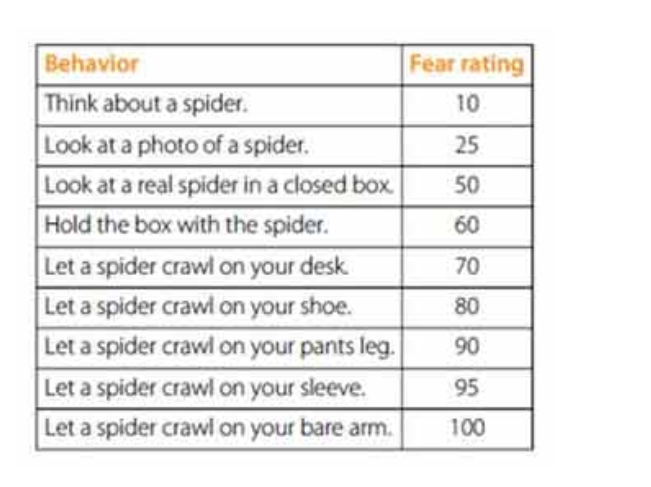
Thanks Adrienne. So I need a hierarchical list of distance/contact for each trigger, like your spider list. That's a rather general sample, as mentioned it's missing some elements so there may need to be some sub-steps depending on the individual. Every dog needs an individualized plan based on several variables. An anxious dog like Finn has a whole load of triggers, so that's a lot of lists: cats, pigeons, cars, bicycles, noises outside, neighbours coming out of their drives, postman, other dogs, kids running around, doorbell etc. When there are many triggers, it helps to focus at just a few at a time and tackling the most urgent/most needed first. For example if you meet cats on every walk or the neighbors come out of their drive every day, that may be prioritized over kids who may be running amok in your home in a blue moon ( you can always manage the situation if needed in the case of surprise guests). You can still though work with kids in less direct ways by walking Finn nearby schools or parks where they play or watching them from a window and practice desensitization/counterconditioning exercises/obedience cues like starting with Look at That https://www.braintraining4dogs.com/members/brain-training/university/look-at-that/ Presumably I then do some simple obedience work like sit, down, stay, heel and work up the hierarchy. It's incredibly complex. I can see why if you have a naturally calm dog by temperament that this is a much easier task with just a few triggers. But an anxious dog with a lot of triggers is daunting. And more, setting up some of these scenarios with distance will take some planning. It can feel daunting, but you can change the mindset and try to make of every experience a teaching moment. In other words, embrace the little challenges and make the most out of them. It can be rewarding in the long run seeing the little improvements pop here and there. If there is a setback or the dog doesn't respond to our cues because the dog is likely too over threshold, assess what may have gone wrong (too close, too intense exposure) and go back to lower intensity exposures and practice from there. This is behavior modification and it's more involved mere training as the goal is changing the dog's emotional response so to allow training to better sink in. Professionals involved in behavior modification undergo more training and continued education to correctly implement it. Can I ask a simple question? If I embark on this, and work through lists slowly, is it real that he might eventually be compliant and sit when say a cat runs across the road in front of him, or when a neighbour comes to the fence to chat he'll stay by me and not dash over to greet them wildly? With dog training and behavior modification no guarantees can be every made on the outcome. There are too many variables involved, and this is why main dog training organizations emphasize the importance of not offering guarantees/ results. However, I love the saying "when there is a will, there is a way." Those who are committed and results-oriented and diligently work on the issues, *should* eventually be rewarded with some promising results when behavior modification is implemented correctly. It doesn't happen over night, you just tend to see some desired behaviors pop up here and there, sometimes surprisingly right after you feel like things aren't improving and feel discouraged. In response to your example, about sitting when a cat runs across the road, or not dashing over to greet, consider that this is advanced training in front of strong distractions so it takes some time and practice to get to this level. We work directly on things like this when preparing dogs for service dog training (we have people come shake our hands and talk, while our dogs must sit, practice a lot in the real world going to stores, dog parks, farms, etc.) and this is not covered much in the average basic obedience class. Things to consider: -You'll likely need to rely on strong reinforcers so to make sitting more appealing than chasing the cat/going to meet your neighbor. -You'll need to take baby steps as mentioned, starting with distance from the neighbors/distance from cats. -You'll need to tackle any underlying anxiety if that plays a role (some dogs aren't comfortable sitting/laying down in presence of certain stimuli/situations when they're not entirely at ease, and may do better being trained walking past them ignoring them-attention heeling). -If you want your dog to hold a long sit stay while you're holding a conversation with your neighbor, you'll need to also factor in duration. If it's too long, dogs may struggle/grow frustrated as it feels like punishment if their stay hasn't been conditioned/reinforced well enough. -If there is an element of anxiety in greeting/needing to lick excessively to appease, you can sometimes find a middle-ground and rather than asking a sit/stay, using a cue like "leave it" or a smacking sound reinforced with a treat tossed the opposite way, although you may have to keep reminding this several times because that need to appease/greet is so strong. Some dogs also don't feel calm enough until after they have smelled/greeted. -If you want to make people less salient, lowering the excitement arousal in dogs when they meet them, it can help practicing walking past people and ignoring them. I like to use setups for this. Like with dogs in service dog training, I like to use friends/other family members to practice walking by, then I add in gradually excitement such as them looking at my dog, making remarks, walking towards us, stopping to talk, shaking my hand, gesturing, talking excitedly etc. I also find walking to crowded places like farmer's markets, helpful as there are too many people and it's hard to focus on all of them. Of course, if a dog is too emotionally aroused/ anxious about being around people, I will skip this until the dog is more comfortable otherwise there are risks for 'flooding.' -You may have to use management like keeping your dog on leash when you're talking to your neighbor when you don't have time to train/before he is ready. Same with the cats, you will have to prevent too close encounters by distancing yourself. -In severe cases, if anxiety is present and puts a dent into potentially making any progress one may need to use calming aids/possible prescription meds from a vet. -For cat chasing, you may need to some foundational work on the side as well such as impulse control games and practicing cues like "leave it" having a helper drag a string attached to a stuffed toy or using a remote-controlled car, generously rewarding for complying. However, realize that if a cat suddenly dashes right directly in front of him, you may not have the time to even say "sit. " The dog may react quickly and unexpectedly due to the adrenaline rush, sort of like we may instinctively dodge down/cover our face if a large bird comes too close to our face. In some cases, despite our attempts, things may not work as we would like. These failures though doesn't mean we have a 'bad dog." Ricochet is a dog who was meant to be a service dog, but despite all the training she received by a service dog organization, she had to be removed from the program because her desire to chase birds and other wildlife was too great. This led to a "career change", letting her become a world-wide known surfing dog who is still an inspiration helping many with disabilities.
-
Hi Penelope, you are very welcome! Looking forward to your updates. Feel free to post any challenges or if you're stuck on anything or need clarifications and we can always do troubleshooting. You're not alone! Best, Adrienne
-
I am back, I seem to have missed a few things. Destructive behavior is chewing anything; carpet, wooden trim, furniture, books, cabinets, door knobs - you name it she still tries to chew it. She has great chew toys made for super chewers that she loves and appropriate toys. She just can't seem to leave anything alone. She roams the area she allowed in and just tries to chew on everything. When dogs are adolescents, they are known for going through what they call a "second teething stage." It takes place between the fourth and ninth month, and your pup may be more destructive than ever now since she's blessed with stronger jaws. It may help to swap the chew toys with food puzzles (Kong Wobbler, Kong, Buster Cube, Topples) to keep her more interested in these. Some dogs may stop chewing things if Bitter Apple Spray is applied, but some dog actually like the taste and will chew regardless. Since she's so mouthy, maybe you can clicker train her to do some tricks that use her nose/mouth (like pick up toys, ring stackers, turn on the light trick). In many cases, these dogs with so much energy and so interested in being around us are misunderstood geniuses that can achieve high results if provided with guidance. She doesn't sleep during the day. At times she will lie down but doesn't sleep. Has comfy beds and quiet areas to retreat to. She loves to be petted and mouths me, doesn't try to bite. She seems to have a sweet nature. She is out of her crate. I have made her an enclosed area of about 4 x 6 on tile, with a comfy bed and her water. she even has a window. She can see the middle of the house so she isn't isolated. It's important that dogs and puppies get sleep during the day! She may be too aroused/excited to relax or may have deep fear of missing out (FOMO). These dogs need to learn how to relax. Here are some tips. -Bring your puppy to a quiet place where they usually sleep (crate, exercise pen). Remember though that puppies being very social, are always happiest being near you. -Remove access to overly stimulating toys. -Encourage calming activities by offering snuffle mats, Licki-mats, and food puzzles. -Provide a chew toy or edible chew to gnaw on top of a mat/ dog bed (these can act as pacifiers). -Talk to your puppy in a quiet, soothing tone of voice. -Act calm. This will help your puppy calm down too. -Close all curtains and blinds. -Turn lights off (or place a blanket over the crate). -Play calming music (like Through a Dog's Ear) so to cut down on any residual background noise. -Praise your pup when showing calm behaviors. Anxious pups may benefit from calming aids such as DAP diffusers, DAP collars or DAP sprays. Calming supplements for dogs may be sold over the counter-check with your vet first. She crowds me a lot - no personal space. This guide may help: https://www.braintraining4dogs.com/members/archive/following-owners-around-house/
-
Molly seems to just be hyper-focused on whatever and doesn't hear me or listen. And if I go to her and gently take her collar to remove her from whatever she is chewing on, she tries to bite me immediately. Sounds like you will have to go back to basics and desensitize and counter-condition her to collar grabs. After that, you will also will have to toss a treat or toy when you take her to the area you wish to allow her to cool off. You want her to enter the area voluntarily because great things happen there. Here is a guide on how to create positive associations to collar grabs, it's under "rewarding collar grabs." https://www.braintraining4dogs.com/members/archive/exercises-to-teach-puppies-to-tolerate-touch/ Here is a troubleshooting guide on when dogs don't listen to us: https://www.braintraining4dogs.com/members/archive/ignoring-commands/ She crowds me a lot - no personal space. Doggy Dan said to gently push them a little away from you and ignore them, she bites. Ignoring her doesn't work as she just keeps nosing you or shoving you or biting (not hard now but still annoying). When training and doing behavior modification, it is best to avoid touching the dog as much as possible. When we use our hands for collar grabs, to push them away, or even to remove burrs from their fur, they come to form negative associations with our hands and this can trigger more nipping. Puppies need to learn from a young age that our hands are good, and that there's nothing to fear when we touch them, handle their paws etc. More on this is covered in the handling section. https://www.braintraining4dogs.com/members/archive/exercises-to-teach-puppies-to-tolerate-touch/ The touch and treat game can come handy. This games turns touching your puppy in different places into a fun game. The goal is to create positive associations. Aim for a lovely positive conditioned emotional response where your puppy goes from disliking or dreading being touched to looking forwards to it because of all the great associations: https://www.braintraining4dogs.com/members/archive/conditioned-emotional-response-cer/ Touch and Treat Game 1)Start by touching your puppy briefly in areas he's less likely to react and feed a treat. Rinse and repeat several times looking for that lovely conditioned emotional response. 2) Gradually move to areas where your puppy may dislike being touched like the top of the head, ears or paws. Always feeding a treat to create positive associations. If your puppy tries to nip, split the exercise into smaller steps. For example if your puppy tries nipping when you try to pat the top of the head, start petting the nose lightly or sides of the head and giving a treat until he's comfortable with that before progressing to petting the top of the head. Another game that may help involves desensitizing to our movements. I call it the "observe and behave" game. 1) Ask your dog to sit and stay 2) Wave your hands/arms around very lightly in front of your dog. Click (or verbally mark) and treat for resisting the urge to nip. You may need to be initially very quick to praise and feed a treat so to catch your dog before she has a chance to think about nipping. If she struggles, practice by presenting lighter versions of the movements. 3) Practice with more and more attractive movements, going gradually. If any any time she struggles, keep taking a step back and work on lighter/less arousing versions before progressing again. The goal is for her to learn that the game is to resist the urge to nip no matter how distracting the movements. You can get creative then and practice with other distracting things like resisting to nip a string that you drag, a cheap necklace you dangle near her face, or flapping pant legs. Ideally the handling games are done when we first get our puppies, but I have used these exercises with dogs even 8-12 months old and they responded well, although it took a bit longer. I asked earlier how your dog's bite inhibition was because pups may occasionally nip us when we do these exercises, so it may be difficult if they have little inhibition. However, the ultimate goal is to minimize the chances of nipping by using baby steps and keeping an eye on the dog's body language. If too much nipping occurs, we need to make the exercises easier or do some troubleshooting. Please use caution and get professional help if your pup nips hard or shows signs of aggression. I hope this helps, please let me know if you have any questions and keep us updated! Happy training! Adrienne Disclaimer: behavior modification comes with risks. If your puppy or dog shows signs of potential aggression (lunging, barking, growling, snapping, biting) for safety, please consult with a dog behavior professional who uses force-free behavior modification techniques (no shock, prongs, or physical corrections) for direct in-person guidance. Articles, videos and general info found in the forums or course (or any online source) are not meant to replace in-person training/instruction. By using this course and forum, you are waiving any liability claims or other type of claims related to any dogs' behavior against you or others.
-
When she was younger and would bite me, I would yip like a dog and she would immediately go after me even more. As if it set her off or she was thought it was a game but leaving me bleeding everyday Yelping can work for some of the mellower dogs, but in others, it can actually increase their arousal levels making us sound like a squeaky toy and they indeed, can come to think it's all part of play. And much of the time outside, she suddenly begins jumping on me and biting at me. I have tried to turn away and ignore her and she bites my legs or tears at my clothes. The only way to stop her is to try and grab hold of her and drag her into the house and into her pen and ignore her until she calms down. At 6 months she is already 65 pounds and 25 " at the shoulder so she is a challenge. She's fine sometimes and always when playing ball but I don't want to have to play ball every single time we go outside. Many puppies and young dogs associate yard-time with time to act hyper. The extra space is inviting for stretching those legs and throwing a party. Owners of two dogs know this well based on how they automatically start romping and playing rough when they open the door that leads to the yard. For many dogs, the yard is the canine equivalent of an amusement park, where they get to do their favorite things. Many puppies get a case of "zoomies" when they're taken outside. They'll run around and try to engage their owners in rough play. It's not unusual for them to suddenly launch on their owners and nip in hopes of some interaction. This can start early in puppyhood, but it can exacerbate once adolescence is around the corner if not tackled early. From 6 months upwards, teenager dogs are bigger and stronger so they may appear more intimidating than a small puppy tugging at your pant legs. In particular, puppies and young dogs may launch themselves against their helpless humans when they have pent-up energy and don't know what to do with it. This may be the case when dogs haven't been exercised enough or haven't received enough mental stimulation after days of being confined at home due to bad weather. Many puppies and young dogs also crave interaction and attention. If you go out in the yard and start attending to your garden or sit down planning to read a book, your puppy may try to get you to interact with him. Puppies who deeply crave attention may do anything for a little attention, even if, as mentioned, that happens to be attention of the "negative type." In other words, just looking at them, scolding them or pushing them away qualifies as attention to them. And the more you try to push them away, the more they'll engage with you. And if you decide to ignore them, you will have to expect a full blown 'extinction burst.' Which is the behavior getting worse (rougher nipping, more jumping), before getting better. For example, if a dog was used to pawing at the owner to be petted and the owner complied most of the time, once the owner stops petting, the pawing may increase considerably. This is an extinction burst, which is the dog’s way of saying “hey, I am here, don’t you see me? I guess I must increase my pawing and nudging behavior since it is no longer working to get your attention.” How do you deal with an extinction burst? By continuing to ignore the behavior and not rewarding it in any way. Rewarding at this point would undo all of the hard work. However, this may not be easy to endure if the dog bites hard and if you try to leave he attaches to your leg. So how to tackle this behavior? Here are some ideas/tips. In most cases, you will need to take a multi-faceted approach, tackling the issue from a variety of angles. -Prevent Rehearsal of the Behavior Dogs are quite routine-based animals. They like to know what's happening next and they can quickly settle into new habits if we don't nip things in the bud. The more your puppy rehearses out-of-control behaviors involving you in the yard, the more ingrained and habit-forming it will become. Soon, getting out that door will become a cue that "wild play" is on. It therefore helps to prevent undesirable behaviors from establishing, and if they have already established, taking a variety of steps to provide outlets and suitable replacement behaviors that dog finds more satisfying than engaging in rowdy play. -Provide Outlets for Pent Up Energy Make sure your puppy receives enough exercise and mental stimulation throughout the day. During the day, offer brain games, food puzzles, durable toys to chew, walks, play productive games that don't involve nipping you directly (fetch, tug, flirt pole). -Ensure Enough Sleep Also make sure that your puppy gets enough sleep during the day and night, at 6 months, your pup has still a lot of growing to do. Not sleeping enough is one of the main causes of pups acting cranky and misbehaving. You want nice and deep REM sleep with the body twitching to consolidate what he has learned during the day. -Create a New Yard-Time Routine On top of the above activities provided during the day, you also want to have a plan in place for when you need to take your dog out of the yard so that your dog has something else to do rather than just think about nipping. Following are several options involving the use of kibble/treats. If you are concerned about calories and your dog loves her kibble, you can use kibble only. This is a great way to put your dog's food to good use rather than just letting your dog wolf it down within seconds from a food bowl. Keep some extra kibble in your pocket just in case so that you're ready to redirect your dog as you see her approach you with an intent to bite! -Turn Yard Time Into a Treasure Hunt Game Strategically hide around the yard a variety of kibble/treats so that once out, your dog has a fun treasure hunt game waiting for her. It may not be easy initially getting her mind off of nipping you, but you can introduce this game by grabbing some kibble as you head together outdoors and tossing some around the yard in a sprinkler manner, as you point and tell her happily to "go find em!" Once your pup is done, the moment you notice her approaching you, you can toss more around for her to find. End the session by opening the door as your dog is searching those last kibbles, and then toss some kibble indoors so that you can both re-enter together without any nipping involved. At some point, once your dog learns the ropes of this game, you can also hide the kibble in the yard in many places *before* taking your dog outdoors so once you both head out, you can just tell her to "go find em!" and watch her go on a longer treasure hunt. Here is a guide on treasure hunt game: https://www.braintraining4dogs.com/members/brain-training/elementary/the-treasure-hunt/ -Turn Yard Time into a Treat Toss Game This is a more dynamic game which allows your dog to also get a little workout. As in the treasure hunt game, grab some kibble as you head together outdoors and toss some around the yard in a sprinkler manner, as you point and tell her happily to "go find em!" Then, when your dog approaches you, ask her to sit, and toss one kibble far in the yard. Once she eats that, she'll likely come back to you. Rinse and repeat several times so that your dog is yo-yoing back and forth between sitting and chasing kibble. When it's time to go inside, as she catches that last kibble, open the door and ask for a final sit and toss the treat indoors. -Provide Independent Activities Of course, we can't always be out there tossing balls or treats for our dogs, so it can help to encourage independent activities that don't involve us. You will need to find activities that surpass the reinforcement your dog gets from interacting with you though, so this may need some experimenting. You can try the following: -Provide a stuffed Kong with goodies to keep her occupied. Freezing the Kong provided longer entertainment. -Provide a durable and safe edible chew like a Bully stick or Himalayan chew. -Try a Bubble Making machine for dogs. These make bubbles that are bacon-flavored. -Try to use remote chasing toys such as Play Bone or Wicked Bone. Supervise to ensure the toy isn't chewed. I am not sure how these fare with outdoor play and powerful chewers. -Swift Paws is on a very pricey side, but it has many owners enthusiastic about it, especially for rainy days or if owners can't exercise their dogs as much due to recovering from a surgery/mobility problems. You'll need to allow your dog to take breaks and talk with your vet before use if you have a developing puppy as you don't want to cause damage to developing joints due to all the fast turns. -Since your pup is part herding breed, she may enjoy herding balls. The sport of Treibball keeps many herding dogs happy. At home, you can try a product like Jolly Pets Push n Play, but check with the vet as well. Games That Keep the Mouth Busy -Tug is a good game, but it needs to be played by the rules. -Flirt pole poles are great to divert you dog's attention from you to the flirt toy. I use them to train good impulse control as well putting the cues take, drop and wait on cue. Make Nipping Less Fun/Reinforcing -Avoid shoes with laces -Avoid necklaces, put your hair up and avoid wearing loose clothing that invite dogs to tug (like pant legs and long skirts). -My favorite option for leg nippers is to wear tall Wellington rubber boots when heading out. There are hard for them to grasp so at least your feet, ankles, lower parts of the legs are no longer attractive. -Stick nearby the door: as soon as she shows an intent to nip, "timeout" by removing yourself rather than removing her. Most dogs want us to be out with them. If repeated several times, while offering them alternative things to do, they may get the idea that we don't appreciate this kind of rough interaction. General Bite Inhibition Games: https://www.braintraining4dogs.com/members/archive/bite-inhibition-games/ To lower arousal levels: https://www.braintraining4dogs.com/members/brain-training/high-school/jazz-up-and-settle-down/ Impulse control games; https://www.braintraining4dogs.com/members/archive/impulse-control-frustration-tolerance/
-
Thank you for the extra details, they are very helpful! Please see my annotations in non-bold under yours. Her bite inhibition has gotten better over the last month - she likes to mouth me a lot. But when she lunges at me she bites harder. Without her baby teeth, she doesn't seem to break the skin as much. Still not desired behavior from her. One more comment that might be of interest. When you feed her anything from your hand, she is extremely gentle. OK, I am glad to hear that her bite inhibition has gotten better, and that she's able to take treats gently. The fact that she bites harder and gets rougher when she lunges is because she's over threshold. https://www.braintraining4dogs.com/members/archive/threshold-levels/ So the key here is to work on lowering those arousal levels which often takes a multi-faceted approach. At 6 months, your pup is now an adolescent, and just as it happens with human teens, this is a stage where we often encounter challenges, so much so that this is the developmental stage where most dogs are relinquished to shelters. Here is a general guide on what to expect during the adolescent stage, the good news is that knowledge is power and there are several strategies we can use to ameliorate the situation. https://www.braintraining4dogs.com/members/archive/survive-dogs-adolescent-stage/ Housebreaking went easily and quickly and learning to sit and stay also. If she doesn't follow through the first time, I have offered her a treat and I realize through your training I need by this time not to show it to her. But she will sit quickly when I put down her food bowl and wait until the command ok and when going outside I have her sit and stay so she follows me outside, no treat is offered. She's getting to do something of value to her. Yes, we need to fade those treats so that the dog doesn't become overly dependent on them. This could turn training into an act of bribery, where the dog doesn't perform the behavior because the treat is not visually present. This isn't really a dog being stubborn, it's just that the dog truly believes that the presence of the treat is a cue and part of the training. More about this is covered here; https://www.braintraining4dogs.com/members/archive/dog-listens-treats/ and here: https://www.braintraining4dogs.com/members/brain-training/polishing-up-training/fading-food-lures/ Correction so far has been following Doggy Dan's website in the beginning - creating the "pack leader" relationship but very loving and calm. She simply didn't respond and seemed to be constantly challenging me for authority. At first distracting her while telling her no as a puppy, then telling her no and giving her a time out after a few months. The belief that dogs challenge us for authority is based on the outdated belief that dogs are trying to be alpha and they perpetuate flawed dominance myths. These type of beliefs promote an adversarial relationship with dogs as they make us assume that dogs are constantly vying for top spot, when in reality, in most cases, dogs are simply engaging in undesirable behaviors because there is type of reinforcement at play. More about this is discussed here: https://www.braintraining4dogs.com/members/archive/dominance/ One main problem with saying no is that dogs are not really given the opportunity to engage in what we would like them to do instead. This creates a behavior "vacuum." Other problems with saying "no" include: Risking bad timing Risking the dog associating our presence with something negative. Risking dogs behaving only in our presence. Risking not providing enough clarity (exact circumstance, exact behavior.) The word may lose meaning/value over time For attention seeking dogs, saying no can be a form of attention The word no doesn't offer any additional direction. In lieu of no, I find a more specific cue such as 'leave it" to provide more information and "drop it" if the dog happens to get something he shouldn't have. These give dogs more direction on what we expect from them, and reinforcement maintains its value. These are covered here: https://www.braintraining4dogs.com/members/brain-training/obedience-101/take-leave-it/ https://www.braintraining4dogs.com/members/brain-training/obedience-101/drop-it/ For example, I have been trying to keep her out of the kitchen the entire time I've had her. Put a boundary line down so she could see where to stop, a comfy place nearby so she could see me but after 4 months she still ignores this. Would guide her out, tell her to stay and she is right back, over and over. 3rd time put her in time out for a few minutes, she immediately goes right back as soon as she comes out of time out. When you have to rewash your hands 12 times in 6 minutes, it can make you crazy ! It sounds like she is very drawn to you and wants to follow you around. Sounds more like anxiety-driven than a dog who is being disobedient. Does she act anxious when she is left home alone? Does she follow you around room to room? Are you allowing her sometimes yes and sometimes no in the kitchen? When you aren't around is she allowed to go there? Does she eat food like crumbs or steals stuff on the counter? Inconsistencies/anxiety are often at the root of this behavior. I also bought several books that were recommended and same issues - never info on how to deal with this type of attitude. I recently took her to a beginners obedience class for 5 week whose website said they would address biting, jumping, chewing etc. But all they taught was sit, stay, and leash walking. When I asked for help with the problems I had, they said to carry 5-6 tightly rolled up newpapers in your back pockets, taped, and without letting the dog see them, throw and hit the dog when they are doing something wrong. No help there. So sorry to hear you haven't received details on how to work on her behaviors, and that you were given bad advice. I will provide some information on what typically causes dogs 'to talk back" and how to deal with this type of attitude and will cover more in depth some of the other issues you mention shortly in another post. So as mentioned, it's important to point out that the term dominant has been misused for a long time and this label has blurred the real motives behind many dog behaviors. This misuse hurts many dog-owner relationships, because it promotes conflict (we need to put our dogs into place because otherwise they'll take over and become alphas!). On top of conflict, it can cause dog owners to build up resentment and frustration. It's therefore important pointing out that by "talking back" to you, your dog is not really trying to challenge you. Rather, the talking back is a form of communication. Many dog owners are relieved when they hear this. What is your dog though trying to say? Let's take a look at some possibilities and dynamics that may going on. Please note that these are just general dynamics/examples and don't necessarily apply to your specific situation.. 1) A Desire to Play Young dogs have a lot of energy and steam to burn and their desire to play is sometimes so great, they'll do anything that grants any form of interaction from their owners. It may therefore happen that such dogs will "misbehave" on purpose just for the fun of it. It may start like this: the owner sits down on the couch to watch TV, but the dog has lots of energy and would like to play. The dog therefore starts barking at the owner, but the owner ignores. So the dog escalates and starts nipping at the owner's arms. The owner gets upset and yells "No!" at the dog and angrily tosses a shoe his way. The dog grabs the shoe and start chewing on it, and the owner frustrated yells at him, the dog runs with the shoe and the owner angrily starts chasing him around the house. In this case, the dog has attained what he wanted, or at least some desirable consequence: interaction and a fun game of chase/"keep away!" 2) A Matter of Reinforcement Many good and bad behaviors in dogs repeat, strengthen and establish courtesy of reinforcement. Reinforcement takes place any time something the dog perceives as good follows a behavior. So in the example above, when the owner gets angry, he tossed the dog his shoe (a toy!) and then tries to chase him to get it back (a game of chase!) So the scene repeats over and over every evening or when the dog feels bored and wants to play. For many dogs who are young, overly energized, bored, understimulated, anxious, owner attention is very valuable and any type of attention will do, even if it's attention of the negative type (like getting angry and frustrated). When owners get angry and frustrated, they make eye contact with the dog, talk to him, push him away or even try to grab them and chase them around (either because they have grabbed something they shouldn't have and want to retrieve it or to try to get a hold of their collar to close them in timeout ). These all qualify as forms of attention for attention-seeking dogs so they'll keep on misbehaving just to get that. This is similar to toddlers who start misbehaving when mom is on the phone just to get a slice of her attention. These toddlers aren't challenging their mom's authority, they just like the attention they receive. 3) Anger/Frustration Becomes a Part of the Game As owners keep on getting angry and frustrated, dogs may interpret it as part of the game. Indeed, if you watch their body language, you'll often notice that they play bow and emit high-pitched playful barks in hopes of getting their owners to interact with them. 4) Escalation To Anger At some point, as these young dogs don't seem to get our point across, it's easy to fall trap into the need for escalating our anger. This is where dog owners may start getting more and more frustrated and may feel the need to use harsher methods. They may start considering using a shock collar or holding their dogs mouth shut when they bark back or nip or may use an alpha roll. They may enlist the use of trainers who use physical corrections or tools that cause discomfort/pain. These interventions though risk making matters much worse. 5) Increased Arousal Levels When we start getting more and more fed up, our dogs perceive our emotions. This leads to a vicious cycle where the more fed up we become, the more we increase the arousal levels in the dog. Also getting angry and frustrated with our dogs, proves reinforcing to us as well, considering that we vent and let go of the bottled emotions. As we get more and frustrated though we may use harsher methods and by doing this we prove to our dogs that we are unpredictable and not trust worthy. From their perspective, we go from playing with them, to scaring them. 6) The "Fool Around" Response In some other cases, there may be chances that when dogs sense we are getting frustrated, fed up and angry, they get stressed and respond through what's known as the 'fool around' response. The fool around response is one of the 4 F's of survival, that is fight, flight, freeze and fool around. Dogs who bark and play bow in response to an owner's building frustration may therefore simply be a dog responding to their cues in a stressed way. These dogs may be hoping to calm the owner down, sending appeasement gestures his/her way, only that these are misunderstood. 7) Offense is the Best Defense When we get frustrated, angry or employ harsh methods (for some soft dogs even raising our voice can be harsh), in future interactions, dogs may no longer bark or nip us to play, but they may bark/nip to defend themselves. Such dogs may have a history of being yelled at or owners may have used physical reprimands such as scruff shakes, muzzle grabs, alpha rolls and being roughly pulled away by using their collar. Even talking to our dogs in an intimidating tone, moving angrily around them or yelling at them, may be enough to turn a dog defensive. Soon the dog learns to utilize the "offense is the best defense" approach. How to Deal With Dogs Who Talk Back As seen, dogs may "talk back" for a variety of reasons. Following are several tips. -Embrace Cooperation Rather Than Conflict To change the way a dog reacts to saying no, it's important creating a foundation of trust and mutual cooperation. Understand that your dog is not purposely acting defiant, he simply doesn't understand what you would like him to do and is confused in the process. Yes, he or she may have high energy levels, but just need you to channel them in more productive ways that are acceptable to both of you. Consider that many times dogs who are hyper are also stressed, so by reducing the conflict and working more on relationship-building and trust, you are more likely to reap the rewards, than getting angry. -Prevent rehearsal of the problem behavior The more a dog rehearses a problem behavior, the more it puts roots and establishes. Through strategic antecedent arrangements (preventing the unwanted behavior from happening, providing outlets for natural behaviors) and replacement behaviors we can change their undesirable habits into desirable ones. The process doesn't happen overnight, but with time we should see gradual improvement. Teach Alternate Behaviors Dogs who "misbehave" are in desperate need of gentle guidance. Consider thinking in terms of teaching your dog what you would like her to do rather than not do. If your dog jumps and nips on you first thing in the morning upon greeting you, consider carrying some kibble in your pocket and as soon as she moves towards you say "sit'" and toss a kibble at a distance. When she returns to you, repeat. Rinse and repeat until you have established a new fun routine. This prevents rehearsal of the problematic behavior, while also giving your dog a workout using a portion of food she needs to eat anyways-a win-win! I will go more in depth on the other things you mentioned shortly!
-
Hi Penelope, I can feel your pain because I have worked with dogs who are this way and it's no fun being filled with scratches and black and blues from all the nipping. I have a few questions to better understand your situation: How is her bite inhibition? Does she break skin? What do you mean that she sits and stays when treats are involved? Are you showing her the treats and if she doesn't see them she won't stay? Can you provide more details on the ways you have used to correct her so far? Saying no? Raising your voice? Deepening your tone? Grabbing her by collar (does she try to nip or run away)? Chasing her around? Have you used any type of physical corrections like scruff shakes, holding the muzzle, pushing her away? When you correct her you mention that she ignores you, but then you also mention that after that she's lunging and biting. What happens right before she starts lunging and biting? Are you showing any signs of frustration for her ignoring you? What destructive behaviors does she engage in exactly? How much does she sleep a day? Does she have a quiet spot to retreat to? Are you able to pet her or does she nip your hands when touched? Are you able to take her on walks? Thanks!
-
Sounds great! Keep us posted on how things go with Atari! Happy training!
-
Thanks Adrienne. So I write a long list of distractions/triggers and put them in categories on a list of 1 to 10 and work through them. That’s what I had in mind. But you mentioned distance and duration which adds layers of complexity You make valuable questions and the topic is far from being simple because there can be so many things to factor in. In other words, we sort of need to put ourselves in our dog's mind and perceive things from their perspective. So I have cats on the lane, which I might write down as an 8 on the list of distractions because he definitely won’t listen to me when he’s focussed on them. But if they’re 20 meters as opposed 1 metre away it might lower the distraction level to a 4. So this now confuses my record keeping which I was hoping to do, because the higher distractions can be almost at any level depending on distance away. How do go about recording this? Sorry for not being very bright. No worries! Things can get quite complex considering that it's not easy to control the environment and things may overlap. So every list should be compiled tackling a specific issue. So you would have a separate specific list for walking past cats, and a list for coping with kids. At the top are the easiest tasks so we work from top to bottom. So with cats as an example, if Finn is OK with them at 20 meters and is in a responsive state, that would be put higher up the list. If he reacts to them at 1 meter away, that goes lower down the list-BUT we have to consider other variables and not work on multiple challenges at once. So if the cats are walking/running around at 20 meters that's more complicated than if they are stationary/lying down so we would need to work around that and increase distance so to not make things too difficult. Here is a sample of a hierarchy list, source Simply Psychology. This list is rather simplicistic because it doesn't consider other factors such as size of the spider/hairiness, how far the photo or box is, how long the spider is allowed to crawl (duration) etc. So if for example, we want to increase the duration of the spider crawling, we may temporarily lower criteria and start with a smaller one on the arm for for 1 minute and gradually build up to allowing a large tarantula on the arm for the same amount of time.

-
Hi there! I am glad to hear that Atari is keeping on doing so well with your kitties. So I guess not the last update for Atari after all... she's been doing really great with the kitties. We have been letting them out every night for about an hour and they walk around and she follows them and smells. They swat at her and sometimes hiss on occasion but for the most part, they just keep walking around her and even trying to play with her. She just follows them and smells them. She sometimes hits her threshold where she will sort of follow them quickly - not quite a chase but bordering on a chase and then we end the interactions. Most of the time though, she ends up sitting down or laying somewhere and they stare at each other calmly or she will even look away for a bit. Then they start walking around her again and she follows them more. They seem to be trying to get her to engaged though because no one sits still for long. We watch almost the whole thing but feel ok doing our chores as we prepare for the next day and just always staying close and within earshot. No one gets too intense and the cats are very comfortable. They walk with their tails straight up and body relaxed and can always escape over the gate if they get annoyed with her. Atari has her ears and tail up like she's excited but she doesn't express any sort of aggression or hunting stance and if they swat at her she does not react at all. If the cats hiss like they are getting annoyed, we end things. Each night seems to be better than the previous one and we can see that in the near future they will all hang out without being so excited. It's good that your kitties are giving warning signals (without causing harm) when they feel your pup gets a bit out of line, and it seems like Atari is being overall respectful of these signals. Cats with an intent to harm may aim for the eyes and cause painful corneal scratches or worse. I am sure she gets her moments where her instinct to chase gets the best out of her, but it seems like you have it under control and your cats are feeling more and more comfortable around her-and if for some reason they have had enough, it's good that they have learned how to auto-distance themselves. It also helps a lot that you are being so observant of their body language! Close supervision is always good so to step in if your cats are getting annoyed, and you are doing a great job in intervening quickly to ensure everyone's' emotional being is being considered. It's ideal if we can intervene so the cats don't constantly feel like they need to take the matters in their paws. However, we have had three incidents where she has peed in the house now. She went almost 4 months without an accident (aside from occasional excitement peeing when she sees new people). Puppies are known for attaining enough muscle tone to hold their pee around the age of 5 to 6 months old, however, it's not unheard of for some puppies to still have accidents at 8 months or even up to a year. However, in general, experts seem to agree that a dog can be considered fully potty trained when he/she hasn't had any accidents for 6 to 8 consecutive weeks. Atari is 9 months now, and hasn't had accidents for 4 months, so that fits the bill as being fully potty trained. These accidents therefore should capture our attention and should be carefully evaluated. The first two times it was right near the sliding door to the backyard and we did not see her do it. We had left the room for a moment and came back to the puddle both times. We figured maybe she had needed to go because she had not been outside in about 4 hours (should not be an issue though as she can go like 10 hours at night) and she's 9 months old now. Being that these accidents occurred by the sliding door may be indicative of some effort made to at least get the closest to the backyard as she could. Being that nobody was around, it could be that she did give some signals (whine, paw at the door, pacing but nobody was there to attend to them). This can happen. While dogs can hold their pee for 8-10 hours at night, things are different when awake. Indeed, several puppies as young at 12-16 weeks are capable of holding it in the night. Problems arise when puppies and young dogs are active. It could be she got too distracted being around the kitties to think about needing to potty, or maybe being active and playing caused her to drink an unusual volume of water, creating greater pressure than usual and urgency. We started taking her outside to pee before we let the cats out and that seemed to stop it. However, last night, we forgot and she did it again and this time in the living room. I was there this time. The little white cat was laying on the couch. Playfully swatting her with no claws. She was sniffing the cat with tail wagging and they were happy/relaxed. Then suddenly Atari took a step backward and peed. I don't see any sign of aggression or stress from her. She loves the "kitty time" - she even sits at the door during the day sometimes and cries for me to let them out. I call her away and she stops. But I feel like she likes seeing them and they like it too. Being that Atari seemed relaxed and happy, I agree with you that this peeing doesn't sound likely to be due to stress. She has been around the cats for long enough to have accepted them by now, and unless there was some change lately (new move, different routines, fearful event, new baby) there shouldn't be reason to engage in stress peeing. Could this be territorial somehow? Not sure if this is something to worry about and how to even fix it? The real goal is that the cats can hang out with her all the time and not just for an hour a day. In the case of territorial marking, we generally tend to see the following patterns: -Sniffing prior to peeing -Peeing on objects the dog may be protective of like sofa, beds, couches or certain areas considered the dog's "turf". -Revisiting the same spots to sniff and mark again -Small urine volume compared to physiological peeing (not to be confused with an interrupted urine flow as in the case of a dog who notices us watching them if they have associated our presence with being scolded/seeing us get frustrated for peeing). Being that the first two accidents occurred by the sliding door letting to the yard, and that the third accident occurred quite suddenly, I am more prone to thinking that these are pee accidents, possibly triggered by her being distracted. A further convincing point, is the fact that it seems that taking her out before playing with cats has cut the number of these accidents, and that exact episode when she wasn't taken out prior to being allowed "kitty time" triggered an accident. So I would suggest making it a routine and keeping on taking her out to potty before her allotted time schedule with the cats. However, just in case, it may be worthy giving her the benefit of doubt and making sure there's nothing going on medically. Female dogs can be prone to urinary tract infections due to their shorter urinary tracts and there can be other medical reasons for a housetrained young to have accidents. Are we making a mistake by letting her smell them and follow them? We were doing the whole training thing while they walked around but we couldn't stop the cats from trying to play with her so we gave up and that's how we ended up where we are.... thanks for your time. Dogs live in an olfactory world and use their noses to explore and learn many things about their surroundings. By just smelling they can gather a lot of info about many things. By smelling the cats it's likely that Atari gets to know cool stuff like what they ate, how they are feeling and possibly many other things we don't know. As long as her following them doesn't turn into pestering them and ignoring possible "leave me alone" signs, I don't see any big harm. It sounds like your cats are teasing/luring her to follow them around. Some cats many actually like being followed/chased as a form of play, but mostly when they have come to trust the dog enough. For other cats being chased is perceived as the dog being hostile. Some others are fine with the dog, until he's chased, triggering them to get defensive, losing the initial trust they developed which took so much to build. Things can get further complicated when one cat is fine with it, but another cat is not as the dog may feel compelled to chase both. There can be therefore a thin line between dog behaviors the cats may be fine with and others that are too much. I think on top of carefully monitoring, I would still every now and then intervene so to polish those nice responses you have so nicely trained such as leave its, recalls, targets etc. It's good to maintain these responses at a fluent level as a backup, even in dogs who have proven to us they can behave well around cats. They can come handy in a variety of circumstances so we want to prevent them from potentially weakening and extinguishing. I am sure you are already doing this, but just pointing it out for other readers (not sure why text turned red, sorry!) Further general tips that come to mind for preventing future pee accidents: -Close supervision is a must. Make sure to watch your dog carefully. Observe each move to prevent accidents in the home. The problem with dogs who soil indoors is that it can develop into a habit, so the earliest it's tackled, the better. -Frequent Potty Trips While dogs may be capable of holding it for long periods of time when sleeping, when they are active and playing, they need to go more often. Watch as well her getting thirsty and drinking a large amount of water at once as that may require further potty trips. Provide interval potty breaks to prevent accidents due to an overly full bladder. -Ensure Outdoor Elimination. In dogs who soil in the home, it cannot be emphasized enough the importance of regularly accompanying them outdoors to ensure they have successfully eliminated before being allowed back inside. Dogs who are sent out alone are often assumed to having gone potty, when they have not. Or they may have gone, but only partially, without fully emptying their bladder. Praise and Reward Outdoor Elimination . On top of ensuring successful elimination, accompanying them outdoors provides us with the opportunity to praise and reward them. This helps emphasize that going outdoors is rewarding. However, care should be taken in praising and rewarding the dog immediately after elimination and not when the dog is heading back inside or doing something else. -Clean Up Messes Carefully. Make sure to clean up messes with an enzymatic cleaner so to not leave any residual odors which can trigger successive episodes of urine marking in the area. Use enzyme-based products to ensure no odors linger. -Avoid showing any signs of frustration when your dog has an accident. This risks only making matters worse. A dog may start hiding to pee or and if the root cause of the peeing happens to be stress or anxiety or if your dog is prone to submissive urination, this approach risks exacerbating the problem. I hope this helps! Keep us posted on how things go! Best, Adrienne
-
Barking when left alone
Adrienne Farricelli replied to JIM STEFELY's topic in Dog Training & Behavior
Thank you for the extra details, they are very helpful! There has been a lot of discussion about separation anxiety among vets and behavior professionals, and the conclusion is that, it is now more accurate to use the term "separation related problems" considering that there can be various forms. For example, in isolation distress, the dog struggles being left alone, but the company of any human will alleviate their stress (making doggy daycare a sensible option), whereas, in dogs with "true separation anxiety" the affected dogs are described as being panic-stricken upon being separated from a particular person (or dog) often requiring months or even years of behavior modification along with the use of medications. Then, you may have cases where the dog barks for several minutes or maybe howls upon being left alone, but then settles and even naps, which may be classified as a case of "non true separation anxiety" although there may be a few minutes of mild initial distress. My Rottweiler Petra was this way, recordings showed her howling the first few minutes, then laying down and napping. Based on what you have described, it sounds like your Aussie may be displaying signs of mild anxiety (you mention he is able to nap) possibly due to noises/sounds but also intermixed with the fact of being alone. Some key elements of the "true, full force separation anxiety" are missing (destruction, salivation, having accidents around the house), however this doesn't mean he isn't suffering, nonetheless. Some dogs do fine with noises sounds when we are home with them, but then when left alone they feel more anxious about them without our reassuring presence (lack of social support). So I would say this sounds like a reaction to noises issues, aggravated by the fact he is left alone, so there is likely some separation-related problem intertwined. It goes without saying, that steps must be taken to prevent this from aggravating and morphing into more prominent signs. As dogs react, they become hypervigilant and as time goes by, they may react earlier and more intensely, with possibly other signs developing. It is also true that sometimes in dogs being anxious when separated from their caregivers, they may manifest their distress in uncharacteristic ways. For example, some rather than pacing and becoming destructive, fall into a semi-depressive state. Help is often not sought because they don't wreck much havoc as other dogs do. Yet, these dogs are also suffering, albeit in silence. In this case, it can help to take a multi-pronged approach so to cover multiple basis, so here are some tips. -Ensure your dog gets enough mental stimulation on top of exercise. I know you mentioned that whether he has exercised or not doesn't matter, but mental stimulation is often the missing link that can make a difference. Aussies are herders and they thrive on having a "job' and this includes keeping that brain busy, on top of the body. Therefore, after having drained a dog's energy, allow some 20-30 minutes of "cool down" prior to departure (no play, training, walks, or direct interactions) and then, 5 minutes prior, you can leave some "safe" puzzle toys around so that the dog can keep occupied rather than thinking about barking. A good level of improvement can be attained by stuffing Kongs with the dog's meals in strategic ways so that the dogs would spend time getting all the goodies out. A Kong Wobbler is a great food dispensing toy that can be used to feed bored and lonely dogs. This toy has a small hole in it and dogs will have to push the toy around to let the kibble fall out. I like to add in a few pieces of cookies so that that kibble doesn't come out too readily which makes it a longer-lasting toy. I also like to hide kibble/treats around the home in some hard-to-find places before leaving so to trigger a fun treasure hunting game. I have the dog hold a stay as I place them in various areas, and then tell them to go as I exit the door. I start this with brief absences, then increase, but practice with some shorter absences mixed in the between so that the dog doesn't detect an increase in difficulty. https://www.braintraining4dogs.com/members/brain-training/elementary/the-treasure-hunt/ Many dog owners complain about their dogs finishing their food puzzles rather quickly. A solution to this may be freezing the dogs' Kongs with goodies that require repeated licking in order to melt. For example, you can soak some kibble, mix it with canned dog food or some peanut butter and the stuff that in a Kong and freeze it. Some dog owners have had success by investing in automated food dispensers that come with a timer so to dispense at regular intervals. Now, not all dogs will eat food when left alone if they are anxious. It sounds like yours takes the treats, so that's a a good sign. You can therefore try to experiment by leaving some long-lasting goodies/food puzzles and see if there is any improvement. I would keep the initial departures very brief and record and watch it live to gauge how things are going. If you can watch remotely, you want to strategically plan your return just *before* he's almost done so that he doesn't have time to start barking and you won't return when he's barking as he may come to associate his barking with you returning. The goal is to never let them experience full levels of intensity of anxiety when we are away. We want them always under threshold so that they can develop coping mechanisms. https://www.braintraining4dogs.com/members/archive/threshold-levels/ Another important thing to consider is giving these food puzzles as well every now and then when you are home, otherwise, you risk creating a pattern where he'll learn that leaving food puzzles are a cue that you are about to leave. It doesn't appear though that any of you pre-departure cues (like putting on shoes, getting car keys) are particularly worrying him at the moment, but it's good to still practice caution, just in case he's just suffering in silence when he lays down on the bed/couch. -Use of background noise. I know you tried the radio, but it may be worthy trying to experiment a little more, and possibly in conjunction with leaving some goodies. Here's the thing: A high incidence of noise phobias have been found in studies to occur concomitant with cases of separation related problems. So possibly try experimenting playing some calming CDs for dogs (such as Through a Dog's Ear) or YouTube music videos specifically made for calming dogs or keeping on some white-noise producing machine or white noise channel on You Tube. You may need to work on adjusting the volume strategically so that it's just enough loud to override any outside disturbances. Other ways to drown noises is picking a room to keep him that is farthest from the busiest road, keeping in a dog-safe basement (away from antifreeze or other chemicals), making sure all windows in the home are closed to buffer sounds. -Technological help. Nowadays there are also great gadgets that can further help. For example, the Furbo Camera allows us to watch the dog remotely, panning so to offer 360 degree views, and also allows us to talk to the dog and toss treats. The Manner's Minder Treat dispenser has a function that delivers treats after the dog had been quiet for some time to reinforcer quiet. There's a down side for this though, that is worthy of mentioning: it can keep dogs more awake in expectation of random food being tossed here and there. So since your dog has shown a tendency to eventually nap (or at least try to), this may be too much for him, so this may work better with dogs with more severe cases of anxiety where they are panting and pacing and not napping at all. -Try calming aids: There are several calming aids for dogs who have a tendency to be anxious or fearful and bark as a consequence. Several are available in pet stores or online. For example, pheromone-based plug-ins such as Adaptil can provide a calming effect on dogs. There are also several calming supplements over the counter such as (Zylkene or Composure) that may help. It may be worthy of discussing this with the vet. Several cases of separation related problems may require prescription medications along with behavior modification. If one rarely goes out, vets can prescribe "situational meds" which can help lower a dog's threshold for those occasional outings. You can show your vet the most recent recording of how your Aussie mix is acting when left alone and then at the vet's discretion he may suggest whether he/she feels he may benefit from this. He may not if he's relaxed enough to be able to actually nap. -Desensitization and Counterconditioning Fear or anxiety-based barking may require the intervention of a dog behavior professional for safety and correct implementation. This requires that anxiety-triggering stimuli are identified so that dog owners can reproduce them (by recording them and replaying them) following an intensity gradient that can be controlled (starting at low volume, then gradually higher). Prior to initiating the process though it's important that, exposure should be avoided or at least the stimulus is reduced in intensity so to prevent rehearsal of the problem behavior. If you can identify noises that he finds troublesome when left alone, you can see if you can create more positive associations through the 'hear that method" in your presence and then work on this remotely (with you in another room using a remote treat dispenser that you can control). Here's the guide: https://www.braintraining4dogs.com/members/archive/fear-noises/ The goal is to create so many positive associations, so that, that time he's left alone, he doesn't mind it too much because it has assumed a strong history of positive associations. -Consider possible sounds when absent. Sometimes, when we leave the home, there may be sounds we aren't aware of. Like our phone may ring, a smoke alarm battery may cause annoying beeping, somebody may ring our bell and this may trigger barking as they're used to us attending to these things. -Rule out medical issues. Sometimes as dogs get older, their senses decline (vision, hearing) or they may have joint pain, and this makes them more insecure when left alone. I have heard of an older dog who once put on pain relievers for her arthritis, she stopped getting anxious when alone. Also, some dogs with skin issues may too, be more anxious. So it's always good to ensure all is well in the health department and vet can also help in the "diagnosis of separation-related problems, if present. Something to keep in mind is that, behaviors that are triggered by underlying strong anxiety of being alone can take months, years, and in some cases a lifetime of careful management/behavior modification, whereas if the root cause lies elsewhere (like just reacting to random noises, having pain) progress can occur in just weeks/months. I hope this helps, let me know if you have any other questions. Keep us posted on how things go! -
Barking when left alone
Adrienne Farricelli replied to JIM STEFELY's topic in Dog Training & Behavior
Hi there, welcome to the forums! So sorry to hear that your dog barking when left alone. I have a few questions to further understand the situation. Separation anxiety shows many signs in common with other forms of barking. Differentiating them is not always easy. I know you said that he barks when left alone in the car, but many dogs bark in that circumstance too, but don't suffer from separation anxiety when left alone at home. 1) Just to clarify, it's the Australian shepherd mix that is exhibiting signs of separation anxiety? 2) How long have you had him and has he always behaved this way? Is this a new behavior? 3) If this is a new behavior, have there been any recent changes in his life? (recent moves, new baby, loss of pets, medical issues) 4) Does he tend to act clingy around the home, following you around or following other family members around? 5) Does he show signs of getting nervous as you get ready to head outside? Like when you put on a jacket, tie shoes, grab the car keys? 6) Does he engage in overly enthusiastic greetings upon coming back home? 7) Based on your recordings, would you say that the barking is continuous without any breaks? Or does he bark, then naps and then maybe barks 2-3 times and goes back to napping, repeating over and over several times? I know you said that, based on the recordings, he's only quiet for 5 minutes, but you also said he lies down between barking sessions, so if you are out for say an hour and he's only quiet 5 minutes, does that mean he's barking for a whole 55 minutes? 8 Any drooling, pacing, panting? Does he have any accidents in the home when alone? 9) Does your recording pick up any noises that he may be reacting to? 10) When he lies down does he ever get to really nap? or shows signs of trying to nap? Does he try to nap and then his ears orient towards something and he quickly gets up and barks? 11) Does he take any food while he's alone? Like if you leave him with something durable to chew, is he able to enjoy that? 12) Is he reactive towards noises/any noise phobias? 13) Do you live in a tight-knit neighborhood? Has anybody ever complained about the barking? Thanks! -
If his bite inhibition requires some level of refinement and he goes into frequent nipping mode, you may want to work a little bit more on perfecting that and providing alternate ways to interact with you that doesn't involved biting your hands. Hand feeding treats and bite inhibition games can help provide some guidance: https://www.braintraining4dogs.com/members/archive/train-dog-take-treats-gently/ Here are some games: https://www.braintraining4dogs.com/members/archive/bite-inhibition-games/ and here is a handling guide for pups who struggle with being touched: https://www.braintraining4dogs.com/members/archive/exercises-to-teach-puppies-to-tolerate-touch/ The Touch and Treat Game is a more generalized version. Here's more about it: This games turns touching your puppy in different places into a fun game. The goal is to create positive associations. Aim for a lovely positive conditioned emotional response where your puppy goes from disliking or dreading being touched to looking forwards to it because of all the great associations. More about this here: https://www.braintraining4dogs.com/members/archive/conditioned-emotional-response-cer/ 1) Start by touching your puppy briefly in areas he's less likely to react and feed a treat. Touch/treat, touch/treat. Rinse and repeat several times looking for that lovely conditioned emotional response. 2) Gradually move to areas where your puppy may dislike being touched like the top of the head, ears or paws, always feeding a treat to create positive associations. If your puppy tries to nip, split the exercise into smaller steps. For example if your puppy tries nipping when you try to touch the top of the head, start petting the nose lightly or sides of the head and giving a treat until he's comfortable with that before progressing to petting the top of the head. More tips: -Don't wrestle with your puppy and don't play rough physical games. Avoid provocative gestures like tapping your puppy on the nose, giving scruff shakes or muzzle grabs. -Make it a habit of capturing your pup's calm behaviors, by telling in a calm tone of voice "good boy" every time he sits or calmly settles on his mat. You can even deliver a kibble or two when he's in this relaxed state. Skip treats as these are often too interesting and risk to arouse him from his relaxed state. -When puppies don't sleep enough they can get cranky and this leads to them turning into nipping machines. Many puppies and dogs are too overstimulated by things in their environment to fall asleep. Providing them with a quiet place to settle can help them relax. -If your pup breaks skin and acts aggressively, please seek professional in-person help.