Adrienne Farricelli
-
Posts
731 -
Joined
-
Days Won
46
Everything posted by Adrienne Farricelli
-
I edited to fix a typo of time, was saying 5-6 seconds, but then 10 seconds. If possible, I would stick closer to 10 to play it safe, especially with the very attentive breeds who are more likely to make connections. Another option to prevent a behavior chain is to add in a behavior, so after he's lying nicely on the mat, as you approach with the Kong, you can ask him to give you paw or hand target and then give the Kong so to reduce chances of being associated with the previous behaviors of offering behaviors.
-
Most likely, he's wondering why he isn't getting his Kong as early as before. In general, we should ignore these attempts of getting our attention, wait for them to settle (ideally lying down) and then after settling, waiting like 10 seconds (to prevent a behavior chain) before giving the Kong if you're at the 2 minute timeframe. The delay of 10 seconds is to prevent a chain of the dog learning to purposely offer behaviors and then lying down to get the Kong. In other words, we are trying to get the dog to forget about the previous behavior (offering behaviors) so he doesn't think he is being rewarded for that, but mostly for lying down. If you are far from the 2 minute, you'll then have to keep on ignoring hoping that he eventually gives up trying and settles on the mat. However, if this is happening at a high level of intensity or too often, and the exercise appears to create too much frustration, we may need to go back to the drawing board and evaluate why the exercise is too difficult for him. He may need to learn more how to relax on a mat and build duration on mat time (out of the kitchen context) and do more impulse control exercises and learn the art of delayed gratification. He may not be ready for this level of training yet.
-
Thanks again Adrienne. It’s very hard to find specific triggers, it depends on his mood, the type dogs, what people are wearing, the type of noise. He meets some people really well, but family and friends who come to the house he’s completely OTT and strangers have a huge variation in his reaction. We met a teenager on the lane who asked to pet Finn and he did a roll over and loved the tickle, but he met a boy recently who was visiting next door who had long flowing auburn hair and he wouldn’t go near him, barking the whole time and backing up. Some dogs he’s friendly with, others he’s reactive, some frightened of. Some noises he barks at, others he’s not worried. A really low flying Chinook helicopter came over the garden last week and Finn didn’t even bat an eyelid. I’ve had dog barking playing on Alexa and my phone since he was tiny and always treated him. We go out and hear a dog bark behind a fence and he pretty much ignores it. Another time he can hear one in the distance and he focuses in it. As a complete amateur I find it confusing. With such variability, it helps to play it safe and desensitize and create positive associations with all triggers so that you have all basis covered. In other words, when he sees people, prevent any potential barking and toss treats on the ground. So a boy comes to visit, keep him at a distance from the door and toss treats for him to gather. Feed treats on walks every time he sees a dog and keep him at a comfortable distance. He hears barking in distance or close, feed treats regardless. He’ll always react to cats and rabbits though, he always reacts to noises of people/cars near the house if he’s in the garden or inside and he always reacts to the doorbell going off. We’ve tried sneaking around and ringing the doorbell many many times as a training aid and he’s often quiet because he knows it’s us somehow, but if we’re both inside he barks like crazy. Lol. Is the barking at people approaching the house short lived? Are you able to get his focus? Most dogs will naturally bark when a car or person approaches our property, as they are taking on their "watch dog" duties and try to alert us. If we can block it to 2-3 barks max, say thank you and feed some treats to let them know we are aware, then that is a more controlled form of barking versus a dog who is freaking out. I tackle barking at people or cars approaching with a smacking sound, firstly practicing from behind a window to a very fluent level, before practicing outdoors. https://www.braintraining4dogs.com/members/brain-training/university/look-at-that/ If he spends time in the yard outdoors on his own frequently, I find that dogs are more likely to engage in barking as they start feeling as if they need to take their "matters" in their own hands. With the door bell, you may want to disable it to prevent a guest from popping up outside of the training and triggering rehearsal. If he's fine with one of you doing the ringing, but struggles when you' re both inside, you can have a recording of your door bell play while you're both seated (have treats ready in your pocket) and then progress to having a volunteer practice ringing the bell. Always keep treats ready for the training and in case an unexpected guest arrives. https://www.braintraining4dogs.com/members/behavior-training/barking/doorbells-knocks-on-doors/
-
A friend had to return a Malamute to the shelter (they're in Alaska so it's all Huskies and Malamutes instead of pits there, from what I gather) because the pup wasn't a good match for my friend's husband. That got me to thinking, if trainers could whisper into our ears as we're looking at all those soulful eyes, what advice would we hear? Great question! But as you can attest, there's no easy answer with all the variables in mind... Just like we can't predict how marriages/relationships may go (especially nowadays, where people split for the most futile reasons like keeping the toilet seat up or down!), things get even more complicated with dogs. Things that can turn helpful: Behavior assessments: that is, shelters that employ behavior professionals to assess dogs and carefully screen for things like resource guarding. They may use tools like "assess a hand" to screen for resource guarding, or use fake dogs to assess for dog-to-dog aggression, but these don't always give accurate results. Rescues that don't conduct behavior assessments and no kill shelters may be sometimes risky. Sure, they are great in saving lives, but that can also mean potentially adopting out dogs with even serious issues. Several shelters/rescues have gotten in trouble for bites happening just hours or days post-adoption. Still, it's a good idea to hear what the shelter workers have to say. They have interacted with the dog the most and may have access to the dog's history. If the dog was fostered, the foster family may be able to share many details. Last Petsmart adoption event I attended, I had two fosters I had kept for several weeks, and I was able to provide ample of info and even videos to the new owners and they were happy to get so many details! The dog's history. A good question is why was the dog surrendered in the first place? Often dogs are surrendered because of behavior problems. Sadly, not always such problems are revealed by those surrendering the pet, and it's like passing a hot potato over and over. And the more the dog is re-homed, the more the problems are likely to exacerbate! Common issues for surrender: The dog did not get along with other pets in the household The dog did not get along well with kids The dog was not house-trained The dog was too hyperactive/boisterous for the owner's taste The dog did not listen The dog acted aggressively The dog caused allergies The dog was not a good "fit" The dog was not well- trained The dog suffered from separation anxiety The dog required too much time The dog was too destructive Go Beyond One Visit- Like you did, one visit is often not enough. Multiple visits can help, but still we need to factor in the honeymoon period, during which the dog is at his best behavior and this can last even months. Back to marriages, it's like dating, you can't know a person just first the few dates; it may take years of marriage for the real personality to emerge. Sure, many dogs become more relaxed and happy as time goes, but some others may revert to the problematic behaviors that caused them to be surrendered in the first place. The power of fostering. I think that a good way to get to know well a potential dog is to offer fostering. This way one, can have a better feel of how the dog truly is, perhaps even past the "honeymoon" period. Some general suggestions: Ask if the shelter temperament tests the dogs upon arrival. Check if the shelter has a good reputation. Enter the shelter with an open mind and be rational; don't let the cuteness factor exclusively affect you! Ask to meet the dog that interests you in another room away from the kennels Ask if the dog has been tested for resource guarding and other forms of aggression Ask to take a dog your are interested in out on the leash (note: pulling is rather normal for a shelter dog) Ask if the dog in question is good with kids/other dog/cats/other pets etc If shedding is an issue, ask how much this dog may shed Do your home work on the breed (more about this below) Breed Research- While the cuteness factor is often the driving force in dog adoptions, it's important to make rational choices and learn more about breeds and their characteristics. For instance, in adult guardian dogs, it's quite normal for them to be a standoffish, taking a wait-and-see approach. Small dogs may also be shy considering their diminutive sizes. Even though purebred dogs may offer more predictability as to what temperament to expect, there can still be individual factors at play which can make pups of the same litter behave quite differently from one another. Mixed Breeds Mixed breeds are more of a challenge because their mixed ancestry makes it more challenging to know how they will turn out. Knowing what breeds they are composed of can help, although not all DNA tests are totally accurate. I must say, that many of the strongest successful dog/owner relationships I have seen involve mutts! Red Flags of possible problems-Lastly, I am not really big into making red flags because shelters are a very unnatural place for dogs to be and they are known to trigger stress and potentially cause dogs to act in uncharacteristic ways. In general, I feel that any extremes can be red flags, but of course, dogs deserve being evaluated in more natural settings, giving their mind and bodies a break from all the noise and stress. I would see as red flags extreme shyness, overt aggression, excess hyperactivity. These are likely too much for the average prospective owner or those with busy families and kids, but some (depending on what's at play) may be ok in a family with more experience/willing to commit to work on the issues. It goes without saying that, choosing a dog in a shelter takes a lot of research and understanding. Many dogs have some level of "baggage" which are issues one may have to work through. However, the experience of adopting a dog, training him and giving him a chance at life can be remarkably rewarding. This is why people that start adopting from shelters do so again and again!
- 1 reply
-
- 1
-
-
Esther Shares, Gertie Does Not
Adrienne Farricelli replied to JMFS's topic in Dog Training & Behavior
Petra and Gertie are kindred souls. Gerts Never tires of being pet. Esther doesn't, either, but she has to calm down before we will appease her. Once she's settled, though, her head is in someone's lap. Gertie would be an excellent therapy dog, but for that initial, "omg, I am Sooooo happy to see you," wiggle butt behavior. We're working on that with Leah, and she Is improving. I have been thinking about that, every time you talk about her, reminds me of Petra, they sound very similar in many things. That's great you have Leah for working on that. It helps so much working on it with compliant people. I had to work on that a lot with Petra too,and my work would have been cut out for me if only I had the right people. At that time we lived in a small, tight-knit town and people and kids were crazy for her and it was so hard telling them to not approach her when she was so wiggly butt and eager to meet and greet. We had just taught her not jump. Not only they didn't listen, but they also treated me as if I was Miss Authority, telling my dogs "oh, no biggy, you just want to come and say hello to me! Aw, we love doggy kisses, give Aunt Mary a kiss, would ya..." Things got much better taking her on walks in the city and teaching her that not everyone needs to be greeted, and if she ignored people and other dogs walking past them flawlessly, she got liver fed at a rapid speed in a row. We struggled a bit though when we had the occasional person making eye contact with her and saying "oh, what a pretty dog!" and she knew they were talking about her, and that was a predictor of attention, so I had to have several friends practice saying stuff like that and me practicing on getting her to ignore.I didn't want her though to ignore all people though so I progressed to putting "go say hi!" on cue so she would wait for me for permission. If we can get Esther chill before Gerts is out of service age I would like to do it. It's a good way to get Me out in the world, too, so it's therapeutic for everyone. That would be great! If you want to go that route, I highly suggest doing the Canine Good Citizen test. It prepares them for this kind of work, and getting them used to being around people shaking our hands and ignoring and many other helpful stuff. I can post a guide for preparing for that if you would like. Leah had an interesting tid bit - she learned in her courses that black dogs are often animated because their facial features are harder to read. As though they're cognizant of that need. It sounds reasonable and far fetched at the same time - are dogs really That aware? I think we haven't even scratched the surface of most animals out there. I have heard that too, but then wonder, how in the world do they know they are black? The only thing that I can think of is that they may, by chance, notice how thier body language isn't read easily, and therefore may have to emphasize their body language to get the message across. On the other hand though, on black dogs certain traits are naturally emphasized, for instance, by contrast you notice more the white of their eyes, and their pearly teeth. Liz Palika though, in a book I have, speculates that those copper or brown markings found on a Doberman, Gordon setter, Rottweiler and Bernese mountain may have the purpose of helping to emphasize when they snarl, while the markings above their eyes (called pips) may help emphasize their eye movements. Frogs, for example, since I'm learning about them. There's a gal on YouTube I watch whose frogs are the cutest. When she feeds them, if another frog takes the food intended for someone else, the someone else will often bite the offending frogs head as though to say, "you jerk! That was mine!" Her frogs beg, as does ours. They're surprisingly entertaining creatures. If we could handle them more frequently than every few days (their skin is porous and our oils are bad for them in addition to their potential to carry salmonella) I think we could teach them so much. They sound fascinating! There's so much interesting stuff going on in the animal world. I can say Esther is getting Much better with people. Major improvement there. She's not going to go up to people willingly, but she no longer cowers. She's still timid, but that's disappearing faster and faster. Whew! So there's a positive. She's not an unchanging she devil after all! 😆 Glad to hear that she's coming along nicely! Rofl, y'alls' couch looks like ours - a giant sleeping ghost. I love my dogs, but the hair, snot, drool, and dirt can go away! So just add one more jog near the window there and you've got our couch. I have Amazon and Chewy boxes aplenty so maybe I'll go that route because I can see Esther squeezing herself into any openings - she's impressively bendy for a dog. She does okay with the sounds - that one is easy for me to train. It's the sight that I struggle with because I'm not quick enough, and then of course the combination. Hmmm, what do you suppose would happen if volume was on my computer, and visual on the husband's? We sit back-to-back so she would have to turn her head to give each one attention. Last night I put my foot down and Esther stayed in her kennel with her Orka tire and a treat. We made it through two shows before she started fussing. Given what others are working with around here, I'm thankful for that. I am not too sure how it would work out with volume on your computer and the visual on your hubby's. I would imagine she would respond to whatever she finds more salient. The bark could become a predictor of the visual images being played on the other screen. That's actually great that she did well crated with the food puzzle and you were able to watch two shows. When she started fussing, do you think that was because she was tired of being crated and wanted out? Or she finished her food puzzle and got bored? Or was she attending to something on the TV? Was her crate facing the TV? How far? I was thinking, an alternative to the cloth over the TV can be a Thunder Cap, which is meant for the dog to wear. It doesn't block all visual, but enough to maybe give you a starting point. I have seen dog owners use it with success for barking at things dogs see from a car. Of course though, it doesn't work for every dog. If Esther still struggles with muzzles she will likely object to this, and it needs a slow introduction with treats just as with a muzzle. Also,some dogs may freak out when they can't see, so it doesn't necessarily work for every dog. Abbi is still a mess during the day, panting like crazy. The nutty thing is that picking her up and walking her around doesn't work, but taking her over to watch Esther play with her tire stops the panting. I'll take it! Her veterinarian gave us Sileo to give to her, but when the husband gave the correct dosage she fell asleep on his lap and peed a little on him as she slept. He said it was pretty scary because she was so limp. He's picking up the Valium or Xanax today (hoping it's Valium because Xanax didn't do much for her). I hear you, brings me back to when I had to give my cat Acepromazine because she got easily car sick. Vet gave a low dose and high dose, and one day I needed the high dose because of a longer tip, and she got so sedated, I was worried sick because she was so limp. The medication was called "Killitam" and I thought it almost "killed" my cat. Acepromazine is now for a good part frowned upon, as it sedates, but it messes with a pet's perception and it's believed to increase sensitivity to noises and more awareness despite being ataxic and unable to do anything about it. -
Hi Leah, I am glad you found the info helpful, feel free to post here on the forums with updates, questions or if you need some troubleshooting. Welcome to the forums! Best, Adrienne
-
Oh my, what a cutie! I have a soft spot for Malinois, they are so smart and eager to work. Thanks for posting Roxie's picture, it's nice to put a face to the pups we talk about!
-
You are very welcome! Keep us posted on how things go with Roxy!
-
Lovely work with the flirt pole! With dogs who find it difficult to lie down outside of the home, it can be a matter of not feeling too safe (they feel vulnerable in that position), but sometimes it can also be a matter of not liking to lie down on certain surfaces. If he's not feeling safe, there's more to work on at an emotional level, finding out what triggers concern them and helping them feel more comfortable in their surroundings. Careful with the collar grabs. If you are already dealing with a dog who dislikes handling, it requires a more gradual, systematic approach, compared to practicing collar grabs in dogs with no history. They need extra care to establish positive associations and progressing slowly at a comfortable level. As always, make safety top priority and consult with a behavior professional if there's aggression/risk for aggression.
-
You are very welcome! Based on your video, with your good timing and ability to train a difficult task in such a short time, and the fact that you have already overcome some significant challenges, I don't see you as a novice. You are doing a fantastic job and your determination to help Finn succeed is to be commended!
-
Hi there! Welcome to the forums! This is a great question, but I am afraid I won't have an exact answer as to how long a puppy of this age can be left alone, in the sense of being left alone and being totally comfortable and fine with it. The fact is, there are many variables. In other words, while a 5-month-old chow chow can be left 3 hours alone with zero problems, that doesn't mean that a 5-month-old Labrador retriever will do the same. We will therefore have to keep in mind a dog's individuality and several other factors. For instance, can a 5-month old be puppy be left alone for 3-4 hours without having problems holding it? That answer will vary. In general, we expect a puppy to have full bladder and bowel when he's around 5 to 6 months old. More precisely, we expect a 5-month-old puppy to be able to "hold it" for at least 8 hours when crated at night, and at least a max of 5-6 hours if crated during the day. However, not everything is cut and dry when it comes to living creatures, and there may be variations based on individual cases. It's not unheard of for some puppies to still have accidents at 8 months or even up to a year! Smaller dogs are notoriously known for taking longer to be potty trained compared to larger dogs, but even here, there may be exceptions. Of course, in order to up the chances for success, it's important to ensure that the dog is officially "empty" before being crated, meaning he has peed and pooped prior. This is where training a dog to go potty on cue comes handy. https://www.braintraining4dogs.com/members/advanced-potty-training/potty-on-command/ The use of a crate is key here as it helps the puppy "hold it" considering that, dogs who are introduced to the concept of a crate from an early age, instinctively avoid soiling the area where they sleep. On top of this, the crate restricts the pup's movement and makes them less likely to want to drink a lot or eat which are all factors known to increase the urge to potty. Keeping in mind your pup's age, his size, and the fact that you report that he is able to hold it through the night, it sounds like he'll likely be OK to hold it for 3-4 hours. Consider how he is doing throughout the day. Can he hold it for that length of time once he's peed and pooped and is therefore officially "empty?" If so, he'll likely be fine holding it that long during your absence. Having covered the topic of how long 5-month-old puppies can generally "hold it," the next question is how will he fair being left alone? This is where things may get more complicated. Even here, there are no ballpark figures considering individual factors such as the dog's breed and temperament, age, level of training obtained, and how much exercise and mental stimulation the dog obtains during the day. Breed-wise, according to research conducted by board-certified veterinary behaviorist Dr. Lisa Radosta, gun dogs like Labradors, Weimaraners etc. tend to suffer more from anxiety when left alone. This likely because of their genetics, considering that these breeds were being selectively bred for increased sociability, but it can also result from their upbringing, starting with the interactions with the breeders. A Labrador retriever or Weimaraner is expected to be more likely to suffer from anxiety being left alone for some hours, compared to a more independent breed such as a Chinese Shar-pei or an Akita. Age-wise, at 5 months, pups start becoming more independent, especially if breeders and owners were diligent in fostering that in them starting from an early age. Starting at roughly 4 months, pups go through the flight stage period, a time where they are more explorative of their surroundings. Training-wise, dogs should be ideally trained gradually to accept being left alone starting from a young age. In a perfect scenario, breeders start introducing young puppies to a crate so that they feel more comfortable in it once they're sent to their new homes. Once in their new homes, once puppies appear to be more comfortable in their surroundings, they can be gradually habituated to us being out of sight starting with very brief periods of time, and then gradually increasing the time. This is accomplished by creating positive associations with being left alone (giving the puppy access to something they love like a durable chew or several treats scattered on the floor to hunt for, contingent upon our absence), but in a strategic way so to always keep the pup under threshold without experiencing acute stress. Puppies are also encouraged to engage in independent play and exploration at a distance from owners and games such as hide and seek. The use of a baby gate, can turn handy for several exercises. I am glad to see you have been using one. More about these exercises can be found here: https://www.braintraining4dogs.com/members/archive/exercises-to-prevent-separation-anxiety-in-puppies/ Exercise/mental stimulation-wise, on top of dogs suffering from anxiety when left alone, another common issue is dogs being destructive when left alone. This is often confused for separation anxiety, but in a dog who is destructive because of feeling bored, the anxiety element is missing, and these dog are more likely to focus on destroying things like pillows and remote controls versus windows and doors. If a 5-month-old puppy therefore needs to be left alone, it is best to ensure his needs for exercise and mental stimulation have been met considering that a bored and under stimulated youngster is more likely to act destructive. Keeping a 5-month-old crated is a win-win considering that it helps keep the pup safe, while also keeping your belongings safe from being chewed on and destroyed. Now, if your puppy hasn't been left ever alone, without you out of sight, and you will be leaving him alone for 3-4 hours cold turkey, I would expect some reaction of some sorts, from barking (or being destructive if not safely crated) and then possibly settling in the best case scenario, to being stressed the whole time or even panic-stricken in the worst cases. So leaving him alone this way is sort of a shot in the dark. With the recent pandemic, and many dog owners working at home, there has been a surge in cases of separation anxiety. Your best bet, if your puppy was never left alone before, is to take a step-by-step approach considering that you don't know how he may react. You may therefore want to start with very short absences and build from there. The tricky part is working at a level that doesn't cause your puppy stress. If you notice signs of stress, you need to take that as a sign that you have progressed too quickly. Take a step back and work on briefer absences, being careful not to progress until you have attained a calmer response. When progressing to going out of the door, and leaving briefly, it helps to use some type of remote monitoring system so that you can carefully gauge his emotional state. One of my favorites is the Furbo camera which even allows you to toss your dog treats. If your dog ever looks overwhelmed, decrease duration, if he seems OK, you can gradually increase it. Be careful though to mix in shorter absences now and then so that your puppy doesn't predict a pattern of increased difficulty which can trigger stress. More in depth protocols if you notice anxiety, are covered here: I hope this helps, keep us posted on how things go, and feel free to post here any additional questions or updates. Happy training! Best, Adrienne
-
Wow, that's brilliant! I love how he is being a "perfectionist" meticulously ensuring the toy fits well in container. You have done a great job in raising criteria and letting him understand the goal of the exercise! Finn is very smart, and I love all the happy praise you give you him. You clicker timing is also spot on. I really didn't see any evident signs of resource guarding here, perhaps because you were really quick to get the toys, while he was facing away getting the treat. The only thing that makes me wonder is, whether after you took the ball, and he emitted that little bark and seemed to lose a bit focus, was because he was expecting having the ball tossed back? Just an assumption... I would like to offer a little piece of advice just for added safety, mostly based on the history of guarding toys- if I may. I would suggest to avoid lowering the hands to pet him at the end, as it may be misinterpreted as you trying to snatch the toy since the toy was right under him. He could have reacted to that or could have tensed him up or triggered him to pick it up in fear of it being snatched. Praise with pats is great, but with these dogs best to do that away from toys. I often seem overly cautious, but also must think proactively- if there are other readers who own resource guarding toys-, we need to be extra careful with what we do with our hands at all times when toys are nearby. It's easy to forget at times. It he's struggling with the ball being removed, and that evoked that little bark, it may also help to toss 3-4 high value treats so to have a little more time/distance to remove it and also to offer a more fair exchange and see if that helps. Of course, continuation of the game is also a reinforcer on it's own, but it's always good erring on the side of generosity when it comes to resource guarding. We therefore need to be careful on how he perceives the game. If he seems to struggle somewhat, we need to heed with caution so to not "poison" the game so to say. If he feels "tricked" and perceives the game as to "every time a treat is tossed, my ball goes then missing" and it results in a barking protest, a little grunt, a sneeze or even a disappointed look in his face or anything that causes him to lose focus on the next task, we should take that as a sign that more work needs done to establish a more solid trust history, aiming for a happy +CER. In-person professional assistance can help with this considering that things can get tricky. You're resource guarding advice is top notch. We've been working on this solidly, but still have ways to go. We do drop everyday and exchanges, but it's heavily ingrained. It started when he was very small, probably our fault. Our last dog was a Beagle and be was so gentle you could anything with him, so we weren't prepared for Finn. At about 16 weeks he picked up thorny stick on a walk that had fallen from a hedge, worried he would hurt himself, I made what I now know to be a classic error and reached for it. He bit me quite hard in the thumb and drew blood. It was a shock. Our beagle never even mouthed as a pup. I am sure that came as a big surprise. It can be truly shocking! I was shocked too when my sweet Rottweiler Petra emitted her first growl when we gave her a bone and she was quite young too. I wouldn't think it's your fault. There can be a lot going on such as genetics and their early upbringing in the breeder's home. It sounds like it came unexpectedly, and you just wanted to keep your pup safe. A few weeks later he bit me again trying to take his collar off. That's when I started googling hard and reading up on dog training. We're careful now and have worked really hard on handling and resource guarding. He sits quietly while I take leads and collars off these days, but I still treat him. He hasn't bitten me since and is turning into a very loving dog at 2yrs 5months. I trust him now, but I still never remove anything without trading and always try to give stuff back to him. He's very good at dropping things from socks to balls but you know it's still there by his frustration at bringing balls or frisbees all the way back and when he steals things, like a cloth say, he sits with it and puts his head over it if so much as move in his direction. I liked your idea of putting peanut butter on a toy and yesterday used that as a trade and he loved it. The biting when taking the collar off sounds more of a handling issue. Some pups struggle with this, holding still and us fumbling to remove it which can be a challenge with some young pups who won't hold still. This is why I like to introduce collar grabs from a young age so to create positive associations with us holding the collar and practice them with recalls. https://www.braintraining4dogs.com/members/brain-training/obedience-101/recall/ More exercises for prevention: https://www.braintraining4dogs.com/members/archive/exercises-to-teach-puppies-to-tolerate-touch/ But it sounds like you have done a brilliant job on this and am super happy to hear you have solved that! Giving a treat for maintenance is good because they may still struggle with that and you can't really predict how he may feel one day about it. We haven't reached the 'tidy up game' yet on your brain training challenges. But yesterday, for fun I tried to do it with some free shaping to see what happened. I used his up turned step, after some handling work, as a box. I'll send you a video of it. Finn is so clever, he's almost sentient. He seems to know what I want without speaking. He's incredibly challenging, but small improvements are a delight. We love him and dearly want to be fix him. Working with a clever dog has its good sides and some challenging ones. The good is that they're very quick into learning new behaviors, they're creative and offer behaviors trying to get things right. The downside is that they are often "one step ahead of us" and they often get our creative juices flowing because we may need to take steps to keep their interest alive and not getting them bored with certain exercises. Happy Training, and keep up the great work! Best, Adrienne
-
Esther Shares, Gertie Does Not
Adrienne Farricelli replied to JMFS's topic in Dog Training & Behavior
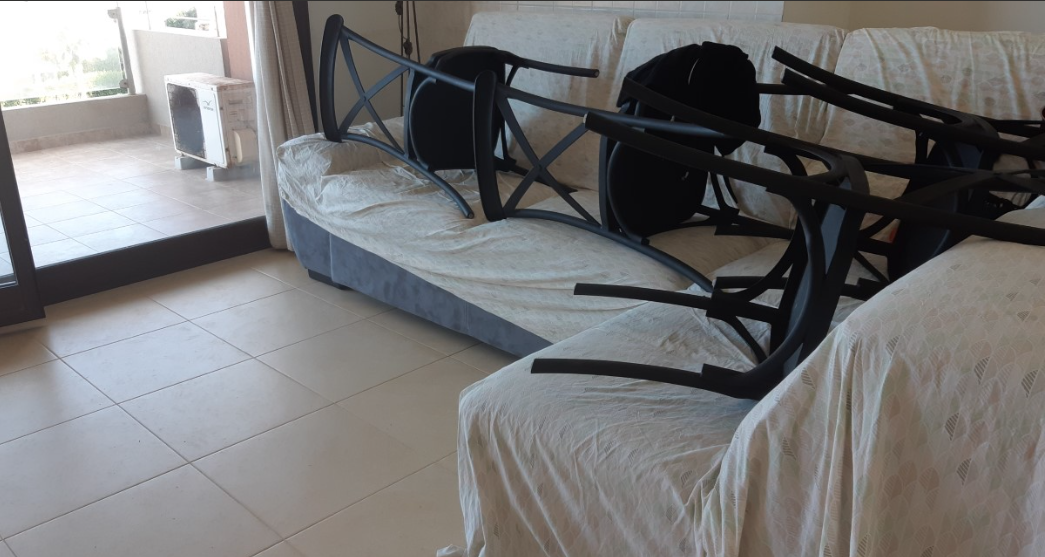
We tried the dimming and husband said, "nope," to that one. Esther still reacted anyway so we need to go the towel or sheet route. In some cases, you may need to implement several changes at once and then wean them off gradually. You will have to see what works for her. For example, combining the dimming, the cloth, the distance. But prior to that, before adding visuals, you may want to work on audio recordings of dogs barking, starting at low volume, dogs barking/ treat, dogs barking/ treat (paying attention to be fast enough to treat before she has the opportunity barks, but ideally at a level that doesn't evoke barking in the first place) and teaching her to lie on the mat in order to get the treat until you have a solid response. If the trainers can help you out on this to at least to get you started, that would be great. You can also post videos here and we can do some troubleshooting if you're stuck. I was afraid I might be rewarding the barking, doggone it. My biggest worry is that the husband grabs her and in my mind I'm thinking of a redirected bite potential because she's so worked up. He's not hearing me on that - kind of like the gal in your example. He thinks he's impervious or exempt, which he is not. He always pulls her towards him and her face is Right next to his. Maybe I need to start with my phone, then work up to the 10" tablet, then the 12.4", then my monitor . . . if my words are falling on deaf ears. I'd like him to still have ears to ignore me with than have Esther rip one off! In a calm state she would Never, but hyped up like that I'm not so sure. Yeah, it's best not to touch when they're so worked up! The thing is not getting her that worked up in the first place. I hear you. My hubby sometimes also did things that made me cringe. Like with Einstein, hubby would sometimes pet him for very long while watching TV, which was OK for the most part, but as he got older, I started seeing subtle signs of him not wanting to be pet for that long. So I had to tell my hubby several times to stop petting at a certain point, but hubby was convinced he still wanted to be pet. So I told him to start doing the "consent test." In other words, stop petting him and see if he asked for more. Several times, I was right, he didn't nudge for more pats and feel asleep eventually, but sometimes he surprised me, and when I thought he had enough, and my husband stopped petting him, he actually asked for more. For Petra, her sister, the consent test was never needed. She would always ask for more. We had to train her a "that's enough" cue. She was the biggest lovebug. The type of dog that would love to snuggle for hours. I always thought she would have made a great therapy dog. She loved kids and seniors and would flop to the ground for belly rubs. I mean she would be next to the couch wanting to be pet until she fell asleep and would keep her paw up during sleep so to keep contact with the person. Great idea about asking the trainers. In front of him, lol. I like the upside down chair idea. Right now they're next to the treadmill to keep her from hopping off the sides, but since I'm holding for an in person visit I think I can use them on the couch instead. It's a biiiiig couch (loveseat with chaise lounges on each side) so I may need to put some pillows or blankets there as well. Or maybe drape a blanket over the chair legs so it looks solid. My brain wheels are turning now. 😄 We too have a big couch and with our most recent boarder, the owner no longer wanted him on the couch since they had a baby. So no more couch privilege. The couch also had an extension, but we removed it because we didn't have enough chairs. Boxes or piles of heavy, old Encycolpedia books may have worked too though, although not sure whether he may have messed with them. This is how it looked like for the several weeks he was with us. We gradually started removing a chair at a time during training and worked on making his Kuranda bed the best place on earth.
-
Esther Shares, Gertie Does Not
Adrienne Farricelli replied to JMFS's topic in Dog Training & Behavior
I am afraid that the issue here is some inconsistencies with management and techniques and the fact that if you're using redirection too often, that is likely causing the behavior to persist. In other words, if she's barking and you're redirecting her with treats, she's being exposed to stimulation levels that allow her to go over threshold and she gets to rehearse the behavior, and on top of that, she's rewarded. Sure, redirection to a sit followed by a treat may be needed in critical issues, such as when your dog has her paws up the counter and is about to steal a big steak, but other than this occasional mishap, it should be limited considering that, if you make it a habit, you may pave the path for a behavior chain. This especially applies to those smarty pants dogs who chain things together, including the unwanted behavior. Esther sounds like a dog capable of making this connection. In an ideal situation, we therefore want to redirect her *before* she barks and the timing of this can make a lot of difference. The problem with redirecting her when she's barking and feeding treats is that you risk reinforcing the barking. And when barking is reinforced, it persists. So if we catch her *before* the barking happens, we end up reinforcing only a minimal part of the unwanted behavior such as getting ready to move forward or staring intently, but at least, the barking in not part of the equation. Then as we progress, exposing to low-level exposures that are less stimulating, positive associations set in and we can decrease the desire to engage in the unwanted behavior. So if we happen to occasionally redirect too late when the dog has already barked, we need to take that as a sign that we need to work more systematically so to not allow rehearsal. This can mean keeping at a farther distance, using a baby gate, finding ways to make the TV less salient and giving her something appealing to do like chewing on a long-lasting edible. Have you tried the cloth trick? Dimming the TV? Practicing with the volume off? Identify what she's OK with and what she still struggles with to do more troubleshooting. The ultimate goal should be teaching an alternate, incompatible behavior with the barking at the TV such as going to the mat and receiving goodies there. When trained well and at a fluent level, we can then turn the dogs barking on the TV or the animals fleeing into the new cue that tells her to go to her mat to get a goodie there. At some point, we can then progress to having her lie on the mat for TV time and learn to ignore it because there are more interesting things going on in real life (like that super enticing stuffed Kong offered on the mat). The plus thing is that, by sending her to her mat for TV training you are also encouraging her to not lie on the couch (you can be sitting there, with hubby and bulky stuff besides you), so it's a win-win! With no more access to the couch, tasty stuff offered on the mat, the couch and TV should automatically become less and less salient. Since your husband is insisting in the habitation procedure, I would suggest having one of the trainers you have employed (or even better both!) share their thoughts about it in person. You can just casually say something along the lines of "My husband and I are really struggling with this behavior, and since we are not getting the results we want, hubby wanted to try this, what are your thoughts?" Often times, when a professional is employed directly (and also there's a financial investment) they get more attention, and compliance is more likely. I don't know yours, but some husbands also are not much into reading, and may be more likely to heed advice given in person. I have been trying to convince my husband to fix the sink by reading one of those "how to' articles" and he never took a look, but there comes a neighbor and tells him what to do and there he was finally giving it a try! And of course, it was exactly what the article said to do... roll eyes... The trainer can then offer her preferred approach, and it's fundamental that it is followed carefully. Management is something that looks so easy-peasy to implement, yet it's one of the most difficult to comply with. No feeding dogs at the table to stop begging at the table, and one just feel like giving something super good just that "one time" because the dog has been good that day. Soon, the behavior makes a comeback stronger than before. If Gertie is interfering with the training, she should be away from the area. When working on the issue, we need full concentration. And of course, you don't want her to unnecessarily plump up her out too much as that can cause problems in her joints and a host of other problems. In regards to not being on the couch, you will need to place bulky stuff on it to break the habit and at the same time work on making her bed the best place on earth. I like to use upside down chairs, but you may find these helpful too: This is my favorite, it's just bulky and leaves no space for the dog to jump up: https://www.amazon.com/Couch-Defender-Keep-Furniture-Brown/dp/B009JHYVNM These others ones use some sort of mild aversive, they either produce a crinkly noise dogs or have spikes which dogs avoid jumping on instinctively. I don't recommend using the ones producing shock. The biggest flaws of these is that some dogs learn how to move them. You may need to supervise to make sure she doesn't try to do that and find ways to make them more stable or try something else. I am so sorry to hear about Abbi's seizure. Poor Abbi. That must have been scary. Hopefully, it disn't last too long and was an isolated event. Glad your vet provided you with the Valium, in case of need. I love Steph's statement: "we can't train the dumb out of people, but we can train our dogs to ignore the dumb." Brings me back memories of when I worked for an animal hospital and there was this Malamute who was visibly uncomfortable around people. This lady approaches him and he's snarling and growling, and there she is still sweet talking and even wanting to pet him to "reassure him" that she's friendly! The owner fortunately body blocked her before we stepped in and told her to back off! I am sure Gertie would love freestyle dancing and so would you! Petra was my freestyle girl and we took part in some events. There are even online contests where you can compete for ribbons. The bow and dance videos in the video archive and the leg weaving exercises in the Brain Training section can help you get started. Einstein was instead my Rally obedience partner. There are online events for that too with a judge. Kaiser got really good at Rally O and we earned a ribbon, but we then has to suspend when he tore his ACL, and when that finally healed, then his IVDD kicked in on and off. I wished we started earlier when he was younger and full of energy. I am glad that Monkey and your frog are doing well! -
Ideally, we want cats and dogs introduced as puppies and kittens, but that's not always possible. With your pup being young and full of energy and your indoor cats being seniors, it can be rather stressful on your cats which can react defensively. It is therefore important using lots of management when we can't train, and then, when we can, schedule various training sessions. Working with two-different species, you'll need to work on two levels. One of them involves working with your cats, the other entails working with your puppy. This can turn out being a good couples' project. Making Life Easier for the Cats For a good part, helping puppies and cats get along involves making life easier for the cats. Following are several tips that can help the cats acclimate better: Gradual introductions: cats do best if they are given some time to get used to seeing and hearing the puppy. Rather than letting them meet face-to-face and hope for the best, keep both in separated areas so they can see and hear each other, but without interacting directly. While, in general, a dog requires about a month to adapt to a new addition, cats may need many months to adjust. It is best to go slow. Slower introductions are more likely to succeed. Do scent swaps: while in their own areas, provide the cats with a blanket that smells like the puppy, and provide the puppy with a blanket that smells like the cats. Reward the pets for interacting with the blanket or simply place some treat on top. These scent swaps help all parties acclimatize to each others' smells. Ensure your cats keep getting attention: you had your cats first, so they can easily feel stressed by the presence of a new puppy. It's therefore important to continue giving the cat the attention they were accustomed to prior to getting the dog. Make sure to dedicate some time in playing with the cats and giving them attention. Confine your puppy. If your cats used to have the full run of the house prior to getting your puppy, don't make their world smaller by confining them in a small area while the puppy enjoys the run of the house. Rather, confine the puppy in an x-pen or use baby gates. Puppies do best in smaller areas of the home for ease of potty training and to grant them a puppy-safe area. Create a space with a double partition. If your cats seems stressed by your puppy continuously trying to get to the cats behind the baby gate, create a space with a double partition. This allows a sort of "buffer" "between the dog and cat. Help form positive associations with the puppy. Feed your cats something delicious every time they see the puppy. You can use some gravy stuff to put on food on your finger and let the cat lick it every time he/she sees the puppy using the open bar closed bar method:https://www.braintraining4dogs.com/members/archive/open-bar-closed-bar/ Provide escape routes/safe areas. Cats need areas they can retreat to if they feel the need to escape. Baby gates/ pet fences that allow the cat to escape but keeps the dog contained, also lots of vertical options such as cat trees, tall furniture, cat escape hatches etc. Stopping a Puppy From Chasing Cats The cases of puppies wanting to chase cats pose challenges, because we can't remove a pups' instinct to want to play, chase and interact. It's sort of expecting kids in daycare to stay away from each other with each being kept in their own area. With puppies being super social, all they want to do is play, explore and interact. Your best bet in these cases is training your puppy some impulse control and obedience cues to follow and learning to respect kitty when she has had enough. Following are several general tips. Train your puppy. Puppies see cats as play mates to play and chase, and some cats get stressed if all the puppy wants to do is chase. It's very helpful to train the puppy some impulse control and basic obedience. Many cats find puppies less threatening if the pups are able to sit and lie down on cue: https://www.braintraining4dogs.com/members/brain-training/obedience-101/sit/ https://www.braintraining4dogs.com/members/brain-training/obedience-101/lie-down/ Training your puppy to lie on a mat can also come handy for this: https://www.braintraining4dogs.com/members/video-archive/train-dog-go-to-mat/ Leave its and recalls come also handy in case the cats appear to be want to be left alone. All these skills will be helpful for the pups' entire life Leave it: https://www.braintraining4dogs.com/members/brain-training/obedience-101/take-leave-it/ Recall: https://www.braintraining4dogs.com/members/brain-training/obedience-101/recall/ Smacking sound. I find that many dogs respond better to a smacking sound rather than leave it when it comes to certain very salient distractions. Here is how to train it: https://www.braintraining4dogs.com/the-airplane-game/the-smacking-sound/ Always start your training in non distracting areas and gradually move to more distracting areas slowly. If at any point you move to a more distracting area and the dog acts out, then you have to go back to the last spot she was listening and train longer there, before moving forward. Also, remember as you start moving to more distracting areas, you need to up the ante of the reward. So for non distracting areas you can use soft dog treats broken up to smaller pieces, but when it is more distracting you may need to up that reward to chicken or low sodium beef hot dog slivers. Tip: if you ever find yourself saying "leave it" or any other cue repeatedly with no response, take a step back and either manage or train for that situation to eliminate the need for saying it repeatedly. The more you say it with no response, the more your cue weakens. The more you get a response, the more you empower it. On top of that, if a dog hears us saying leave it, leave it, they start thinking the new cue is leave it-leave it and therefore won't respond to leave it any more when you say it only once. Practice with a remote-controlled car. You can introduce a remote-controlled car to practice training cues such as leaves its, recalls, smacking sound responses and down stays on a mat. Start with a leash and then practice off-leash. You can even put a stuffed animal atop the car so it looks like an animal from a distance. Start with leashed introductions. It is best if your puppy has exercised enough so that he has drained some excess energy. Keep the pup on leash in the house when around the cats and use your trained cues as needed rewarding accordingly with tasty treats. How long you'll need to keep your pup leashed will vary based on several factors, the most important being the comfort level of the animals involved and their safety. With older cats, you'll need to go more gradual as they may struggle to move away/jump as readily as younger, more agile cats. Have your pup drag a leash. When your pup and cats seem ready, and you want your pup to be around the cats but with still some level of control, you can let him free (always under strict active supervision) for short periods of time, but let him drag the leash so you can intervene swiftly as needed by holding on top or stepping on the leash. If all goes well, after several days, gradually increase duration. If you don't trust your pup to this point, and worry about not grabbing the leash too quickly, you can use an indoor tether clipped to the back ring of a harness, always under strict supervision. Watch your cat's body language. This may apply to younger cats... Puppies like to play a lot, and some cats can like to play too. Some cats do well playing with pups (some cats seem to purposely enjoy provoking pups) as long as they have a place to retreat to as needed and that the puppy learns to respect when the cats have had enough. There should be breaks within the play. Use calming aids for cats. If your cats appear very stressed by your puppy, you can always use some calming aids such as pheromone diffusers (Feliway). Always put safety of your animals first! It is tempting to get complacent at some point an assume that all is well, but any time dogs and cats are left together there are chances for mishaps and even scary accidents. The cats kept outdoors may be at more danger as the pup develops as they may not be received as part of the social group. They may also be more likely to run around and trigger a desire to chase. Your pup's husky ancestry may come to life, and huskies unfortunately don't always have a great rep with cats, especially the outdoor ones or the cats of neighbors they haven't been raised with. Dogs and cats should never be left together unsupervised. Most dogs will want to chase fleeing cats and a puppy may react differently to a cat running in the yard versus in the home. I hope this helps!
-
Where does a puppy sleep?
Adrienne Farricelli replied to ANNE SWANSON's topic in Dog Training & Behavior
Hi Anne, Did you try this recently, or are you referring to River's first nights at your home? Have you tried keeping her right next your wife's side of the bed? I read in your previous post that last night you waited for her to fall asleep and then put her in the crate and closed the door with your wife sleeping a foot or two away and made it through the night. You can try to repeat this every night and then gradually move the crate closer and closer to the bedroom or gradually have your wife sleep farther and farther away. At some point, she can then then try to sleep far away enough that she can tip toe in the middle of the night back to the bedroom. -
Hi Everyone, So again to clarify the pictures posted were of River's mom and dad. Not River. River is def 12 weeks old. Ah OK! So the parents are a husky and a mixed breed of unknown ancestry. I am dying now to see pictures of River to see how she has turned out! I am enamored with genetics and indeed vent this passion by hybridizing plants in my spare time! We have had the puppy a month and she doesn't hate the crate. She gets all her meals in there and even goes in there when you ask her to ' go to her room ' . But she does hate being locked in there when no one is in the room next to it, and even sometimes when there IS someone there. We have had the diffuser and a heartbeat puppy for weeks now and do throw a stinky human shirt in there with her. We have also played the dog music from you tube. When I say we have tried it all, we really have. But still look forward to suggestions. To further explain, we have two crates. One is much smaller that we have used in the past to catch the outdoor feral cats. The other is for a grown dog. Last night we waited for her to fall asleep and then put her in the crate and closed the door. My wife slept on the couch a foot or two away. We did make it through the night. That's were they have both been sleeping for a month. We don't have very much room at all in our bedroom for a playpen etc. Might be able to squeeze the small crate in but as she gets bigger it won't work. OK, this paints a better picture of the situation! So can you keep her in the crate right next to your wife in the bedroom like she is doing with her sleeping by the couch only that she's next to side of your wife's bed? From what it seems, you have tried crating her before, but that was in the living room and kitchen. Most young pups will object to that and may cry themselves to exhaustion. This stress can wreck havoc on them and cause more problems along the road. It can make a whole lot of difference having her move to your bedroom. All that crying is mostly because she's a young pup and their survival instinct is to not want to be left alone. Things tend to get better as the pup matures if we work on fostering more independence, and we can always move the crate farther and farther away gradually, as well as working with the exercises posted above. Since we have solved the age puzzle, knowing that she is so young, you will also find these exercises helpful: https://www.braintraining4dogs.com/members/archive/exercises-to-prevent-separation-anxiety-in-puppies/ She isn't doing too bad with one of our old cats. Sometimes she just gets a bit overexcited and wants to play with him. When that happens we just separate them and put the dog behind a baby gate somewhere and give her no attention. If there is something else I should be doing please let me know. I will be posting some tips for the cats shortly in your other post about the cats.
-
Wow that's an amazing response. I loved the puppy thread you linked and can see that you're making a real difference to people's lives. Incidently, the video with the model car is exactly what we did when we got the robot vacuum cleaner which Finn freaked out and barked at initially. It's common place now and he doesn't even bother about it at all. Which leads on to my first comment. I can see that working well for these new modern vacuums! You did a great job if he has now totally habituated to it. With cats it'll be more challenging due to their unpredictable movements, scent, furry appearance etc. We must remember that we are working with breeds that are highly attracted to movements and with collies, they have that strong, ingrained instinct to want to herd. You're right setting up training distractions is the key but it requires imagination and effort. This is an area we're struggling with. The flirt pole idea, furry animals and scents is definitely a great suggestion for the cat problem. The internet is full of dog training videos of how you start a process, but now how you continue and polish it, and that's the hard part. This is one of the reasons we decided to invest in your site rather than use free videos, because the 'exam' part gives you a goal to work to. We're on college level and Finn can pass all the exams well up to there. Congrats on reaching the college level so quickly! Finn is getting closer to turning into a doggie Einstein! For sure, videos and other material can be extra helpful, but they can lack the individualized approach needed when things don't work out as hoped, unexpected challenges present and with dogs having their own individual quirks and personalities different scenarios and situations may present. I noticed you mentioned sneezing as a frustration behaviour. We never knew this. It explains a lot. Finn has always been a resource guarder and we've played fetch since he was a small pup. But he's always dropped the ball/frisbee 2 or 3 yards away. He comes for the treat, but wants to go back and get the toy. I wait with the treat behind my back not looking at him, he goes and gets the toy and brings it to my feet sneezing the whole time. I praise and give him the treat, but it's never moved on from there. Sounds like a touch of possessiveness over the ball. Other typical signs include getting the ball you toss them, but then, they take off with it playing with it at a distance from you or possibly lying down to chew on it. Dogs who resource guard balls will likely also move away with the ball if you show any interest in the ball such as looking at it or moving towards the dog. So it sounds like there may be some conflict going on here. He has desire to have the treat, but doesn't want to leave the ball behind. Being possessive over toys can indeed put a dent in training a dog to fetch as it's supposed to be played (bringing the ball to the owner). In these cases, we should avoid chasing the dog to retrieve an item he wasn't supposed to have, as this can instill in them a fear of losing possession and a need to protect certain items. These dogs therefore need to learn the value of trading, but starting with lower value items first. Balls are tricky because the movement adds a lot to their value versus stationary things. So we need to factor in movement versus just working with stationary things like say bones or food bowls. It's a good idea to therefore start working to establish a strong history of trust around toys. Below are some general guidelines, but you want to work with a professional for safety if the resource guarding is there. Always make sure that whatever is traded is always superior in value than the toy. You may need to use longer lasting treats that are in a toy such as a stuffed Kong for swaps. This way you're trading for another toy, but with the extra value of it containing food. More tips of swaps are found here: https://www.braintraining4dogs.com/members/archive/overprotective-of-toys/ I recently worked with a dog who was possessive over a ball and it took some time as it was a strongly ingrained behavior he had practiced since a puppy. I had to work on various levels. I started with low value toys first, then gradually higher value when working on drop its and also worked on approaches. I therefore started with asking drop it using lower value toys. Here is the drop it guide: https://www.braintraining4dogs.com/members/brain-training/obedience-101/drop-it/ With drop its and approaches, to instill trust, I avoided to unnecessarily take the ball away. I just made it clear that it wasn't my intent to get it and that I was simply feeding treats and allowing him to go back to it. This way he got the message that not only, I wasn't interested in stealing the ball from him, but was actually bringing goodies. Possessive dogs may develop a fear of being "tricked" into getting a treat and us snatching things away from them while they're distracted, especially when only a treat is tossed and it's low value and doesn't fair well in comparison to the dog's perception of value of the ball. The treat can also come to signal that all the fun time is over so the dog may not be too happy about it after several reps. With approaches, I did approaches staying at a distance and tossed him treats and allowed him to always go back to the ball. I made sure to be generous and waited for all tension to melt away aiming for a positive conditioned emotional response (+CER) https://www.braintraining4dogs.com/members/archive/conditioned-emotional-response-cer/ I then gradually got closer, always tossing several treats and letting him return to the ball, and therefore never touched the ball, just approached him when he had a ball, tossed several treats and let him return to the ball. This was to further prove to him that I had no intent to take the ball away, but only to add resources. I looked again for thar lovely +CER. I then started raising criteria, I started adding very gradually moving my hand towards the ball when the dog was facing me coming back to it at a distance, and tossed treats (pieces of roasted skinless chicken) and rinse and repeated several times let him yo-yo back and forth as he watched me. Again, I looked for the +CER. Then, I progressed to doing the same now very lightly touching the ball, always waiting for the +CER of the dog waiting eagerly for me to touch the ball so to get the treats, then holding the ball, then tossing the ball along with several treats and leaving. All to let him know that, even if I touched the ball, I was not taking it away and actually was adding treats and more fun. The biggest fear of these dogs is not getting the ball back so we need to convince them otherwise. I also practiced having balls on the floor and asking him to sit and watch me approach them and tossed treats his way every time I touched one. I then progressed further to rolling a ball and having him sit and watch me pick it up and then released him by tossing treats and the ball. We then reached the point where I could ask sit on the couch and get a ball out of my pocket, ask him to hold the ball and drop it in my hands and me dropping it closely and him returning it and then gradually a little farther. Many dogs do best being taught fetch using back chaining: https://www.braintraining4dogs.com/members/brain-training/einstein/the-tidy-up-game/ If I ever had to remove the ball for good for some reason, I used one of the strategies mentioned in the earlier article making sure to offer a superbly fair exchange: https://www.braintraining4dogs.com/members/archive/overprotective-of-toys/ Another option is trading for exchanges is trading the ball with another ball in what is known as the "two-ball method." Simply toss the ball, when your dog gets it, show him you have another ball, but don't throw it until he drops the ball that's already his mouth. Even better, fill up a bucket with balls and keep trading. Repetition after repetition, your dog will understand that in order to chase another ball, he must first bring back/drop the one he already has. He'll likely eventually learn that there's no need to take off and hold on to the one ball when there are more and more coming! If you use the two-ball method, avoid falling into the temptation of pretending to toss the ball to get your dog to drop so you can snatch the ball from him. This leads to suspicion in the dog and a future reluctance to drop. Now, consider that although fetch seems rather a simplistic game, but it's really quite complex, especially in breeds that weren't selectively bred for it (like golden retrievers or Labrador retrievers) or those with possessive tendencies. It's actually a chain of several behaviors and they each have to be taught well otherwise things may not work out, and with possessive breeds you first have to establish that trust. A word of caution though is needed here, as possessive dogs can bite. These cases are best worked along a dog behavior professional using force-free behavior modification for safety and correct implementation. There are always chances for a mistake on our side or the dog misinterpreting our intent and the possibility of a bite if we raise criteria too fast, fail to miss a warning sign from the dog, and don't work at the dog's comfort level. When we use new toys or add movement such as tossing a ball, it's possible for possessive behavior to make a comeback if we have failed to work at that level or because of a temporary phenomenon known as spontaneous recovery. c) One of the reasons beginner trainers like us get so confused is because with an anxious, reactive hyper dogs the unwanted behaviour traits are many - resource guarding, constant alert barking, poo eating, wild greeting, grooming, chasing animals, nipping, unpredictable reaction to other dogs, anxiety separation etc. All those behaviours have to be managed and corrective training put in place. Relaxation is our No1 priority as you say, and we've worked very hard on that. Yet everyday seems to bring a new challenge. Yesterday he was sick and had runny poo yet again from his obsession with cat poo, fox poo, sheep poo and cow poo. We never knew there was so much about until we had Finn, lol. We watch him like a hawk, but he finds the smallest amount in the grass by the side of the lane somehow. I hear you! With many issues it can be overwhelming and difficult knowing even where to start! Some dogs are a work in progress. First and foremost, emotional issues such as fear, anxiety and over excitement need tackled as these can interfere with the ability to learn. We can then always use management for those issues that we want to tackle later on (e.g. walking on leash for poop eating/ to prevent chasing animals, using daycare for when we must leave the dog alone for longer that he can tolerate. Erecting a fence can solve many of those issues. d) For attention training we're going to take this approach from your advice: work hard on the kissy noise until its fluent, mild distractions - once engaged with the kissy noise follow it with an incompatible behaviour command to become salient eg sit, for more difficult distractions - try and anticipate then use the kissy noise followed by tossing treats away from the distraction to yo yo him back and forth to you. Use set up training to desensitize in order to try and lower his threshold levels in the real world. Many, many thanks. You're very welcome! I think more than sit, a more dynamic cue such as attention heeling can help. When they see cats, these dogs are ready to pounce into action, so asking them to sit still may cause them to shake from all the anticipation and desire to chase. It can be extra challenging to stay still when all their bodies want is to chase. I have found it to be more helpful in these cases to ask for more dynamic cues. For example, in the case of a dog who is quivering in anticipation to chase a squirrel, you may want to stick to a "find it" cue tossing several treats to the ground and releasing your dog to hunt for them or doing some steps of attention heeling with you holding treats at eye level and then tossing the treats ahead of you. Let me know if you need any help or have further questions! Best, Adrienne Disclaimer: behavior modification comes with risks. If your puppy or dog shows signs of potential aggression (lunging, barking, growling, snapping, biting) for safety, please consult with a dog behavior professional who uses force-free behavior modification techniques (no shock, prongs, or physical corrections) for direct in-person guidance. Articles, videos and general info found in the forums or course (or any online source) are not meant to replace in-person training/instruction. By using this course and forum, you are waiving any liability claims or other type of claims related to any dogs' behavior against you or others.
-
Puppy and her old family
Adrienne Farricelli replied to ANNE SWANSON's topic in Dog Training & Behavior
Hi there! I still struggle thinking of her being 12 weeks based on the pictures you sent here. Now that you say she's a runt, I am stumped even more because she looks so big and I personally don't even see any husky in her. She looks somewhat similar to a client of mine's dog who turned out being a lovely Australian cattle dog mix, but your dog has more white. I suggest seeing the vet and having a physical done and getting her teeth checked to get an accurate age. There are also DNA tests to have an idea on what breeds she may be, but your vet/vet staff can also give you some ideas by looking at her and doing a physical (weighing her, looking at the color of her mouth, and other characteristics). Many times, you may get different opinions, depending on who you ask. Walking your dog (once you know her exact age and vaccination status) playing with her, and interacting with her can help as she gets used to her new place. She likely has lived with these dogs for some time and therefore feels as if they're her social group, her "pack". With time, she should bond with you more and more and miss them less. I wouldn't encourage these interactions if they result in her being bullied and causing her to feel scared to that point. You also don't want to allow her to be in the position of rehearsing fighting back to defend herself. If you can find a nearby daycare run by dog trainers, that would be an optimal solution, as they can monitor play and ensure no dog gets bullied or put into the position of needing to act defensively.
-
Where does a puppy sleep?
Adrienne Farricelli replied to ANNE SWANSON's topic in Dog Training & Behavior
In a perfect world, breeders will accustom their puppies to a crate from a young age. This is something that is very basic and easy to teach when pups are young. Breeders who habituate their pups to the crate when in their care, allow new owners to have a lot of the big work cut out for them as the crate provides a sense of familiarity and helps ease a pup's transition to a new home. Therefore, it can be said that breeders who accustom their young pups to a crate allow new dog owners the perk of only dealing with getting the pups used to a new place versus getting used to a new place, and being crated on top of that, which can be much more stressful. Without the breeder's collaboration, you are right, it is not easy. We try to do what we can to accustom them to the crate during the day so to prepare them for the night. With some difficult pups I need to use some extras such as DAP diffusers and a stuffed animal that emits warmth and mimics mother dog's heartbeat. The first couple of nights I may need to talk to them to help them feel reassured. I may dangle my hand towards the crate to help them out. Most of time, they're fine after the first 2-3 days. Fortunately, there are educational courses for breeders out there now and they emphasize the importance of getting pups used to being crated and tackling many potential issues early. Once the pups are in our care, we can then take further steps to help foster more independence: https://www.braintraining4dogs.com/members/archive/exercises-to-prevent-separation-anxiety-in-puppies/ In some desperate cases, some owners of small pups opt to keep their new pups in a soft travel crate (like a Sherpa bag) on the bed and gradually wean them off, some others let them sleep in the bed and gradually wean off, while other just enjoy it so much their pups sleep on the bed for the rest of their lives. It goes without saying that the process of weaning a pup off a bed isn't without hassle. Pups grow to want to be close to us, smell us, feel our warmth, and the process of weaning them off can be rather challenging to the point of one wondering whether it was ultimately worth it. -
Here are some general guidelines for dogs who struggle being left alone. This is just a general sample, therefore not to be used as a recommendation for a specific case, considering that every dog is different and needs an individualized approach under the guidance of a professional.. What's needed? Interactive toys, treats, food, a mat, baby gates, vet-prescribed medications for the most severe cases, possibly vet-recommended calming aids/nutraceuticals for the milder ones, and some technological gadgets such as remote monitoring devices and/or automatic treat dispensers can be used in the exercises. Although optional, the use of these technological gadgets come extra handy considering that they allow to monitor dogs remotely so to evaluate whether it's a good time to raise criteria or whether a dog is being pushed too hard. A safezone will also need to be established. This safezone is the dog's confinement area where the exercises will be performed. For comfort, it is best to use an area that is central to family activities such as an office, kitchen or living room. Dogs who enjoy their crate, exercise pen or playpen and love to lounge in it, can have it placed in the safezone as long as these enclosures remain open as some dogs with separation anxiety suffer from concomitant containment phobias. A safezone should be blocked out by a baby gate or in homes with open-plan layouts, a super wide gate may be needed. 1: Protocol For Clingy Dogs Who Follow Owners Room- to- Room One thing many dogs suffering from separation anxiety share is extra clinginess, so much so, that many dog owners have started to nickname their dogs "Velcro Dogs." These dogs follow their owners from one room to another and like to sleep by their owners' feet so to be the first alerted when their owners are about to get up and walk around. This component of treatment for separation anxiety in dogs needs its proper protocol since it would be non-productive starting practicing outdoor absences if these dogs aren't even able to tolerate brief absences within the home. The goal of these exercises is to gradually build on distance until the dog can be left in a room while the owner is in another. On top of these exercises, it's ideal to encourage these dogs to sleep at night on their own bed or mat and sleep there as well during the day (rather than sleeping constantly on the owner's lap, glued to the owner's body or at the owner's feet). Note: some dogs are particularly attached to one person. To start the exercises easily, it is best to start with the person the dog is less attached to and then progress using the person the dog is attached to. Step 1: The first step entails having the dog to be able to relax and cope without following their owners everywhere. These dogs need to learn to perform brief sit/stays or down/stays on a mat or other comfy place while the owner walks around, but initially remains always in the dog's sight. Here is how to train these: Sit: https://www.braintraining4dogs.com/members/brain-training/obedience-101/sit/ Down: https://www.braintraining4dogs.com/members/brain-training/obedience-101/lie-down/ Stay: https://www.braintraining4dogs.com/members/brain-training/obedience-101/stay/ Stay on a mat: https://www.braintraining4dogs.com/members/video-archive/train-dog-go-to-mat/ Initially these sit/stays and down/stays should be very brief for just 1-2 seconds while the owner just takes a step or two away in various directions and then returns to reward. Criteria is then raised with the owner just walking a few steps away (3-4) and then returning to reward. Gradually, distance and duration can be added, but it's important to make sure to not make increases in time and distance predictable as dogs will soon come to predict this increase in difficulty and may grow incrementally anxious. To avoid this, mix in shorter (less time) stays and closer stays (less distance) frequently. For example, 2 second stay, then 4, then 3, then five, then 1, then 4, then 6, then 2 etc or 2 steps away, then 1, then 3, then 4, then 1, etc. Distractions at some point can be added as well. Clap your hands as you walk away, count to five out loud, turn your back to your dog, lift your arms, walk around your dog etc. If your dog ever breaks the stay just say a casual "oops" and send your dog back to the area where he was asked to stay. Resume the exercise, this time making it a bit less difficult before progressing to asking for more. Many clingy dogs follow their owners every time they get up from sitting. If your dog gets ready to follow you every time you are sitting on a chair or couch, and you put your hand on the arm rest or put down the remote, practice sit/stays and down/stays as you repeat these actions over and over. Then increase criteria, and start to get up repeatedly from your chair/couch/. Then get up and take a few steps and may be even walk around your dog and go back to sitting. These exercises should be done until fluent and the dog appears totally relaxed and no longer eager to follow. End the sessions with a jackpot of treats. Step 2: Gradually increase distance/duration. With longer duration, it's best to request down/stays to prevent tiring. Take more steps away (from standing or sitting) and for gradually longer times and start going out of sight. Ask your dog to down/stay on a mat as you briefly get out of view behind a wall or door for a split second, then return and reward. Repeat several times as you gradually mix in shorter absences and longer absences and shorter distances with farther distances, making sure to not allow you dog to detect an incremental pattern of difficulty. You can mix in brief errands too such as opening/closing a closet, grabbing a beer from the fridge or closing a window as long as they don't cause you to be out of sight for too long. These exercises should be done until fluent and the dog appears totally relaxed. Always end the sessions with a jackpot of treats. Step 3: Increase more the distance and duration. Install a baby gate, hide several treats around the enclosed area, send your dog there and have your dog explore his new confinement area and find the goodies. Leave the baby gate open for a couple of days so that the dog can freely visit and discover goodies in there Next, practice briefs stays as you get in and out of the baby gate and return. Stay always in sight. Gradually increase the time you stay out as always mixing in briefer stays with longer ones, but not more than a minute in length. At some point, get out of the baby gate and start preparing a stuffed Kong that can be easily unstuffed in just a minute or so. Place the stuffed Kong behind the baby gate where your dog can see it and smell it and cannot get it. Your dog should try to get the Kong. Wait for a little bit of frustration to set in such as your dog trying to paw it or whine. Grab the Kong and give it to your dog as you remain in view at a distance behind the baby gate for 1 minute. Return inside. Repeat, reloading the Kong again making it more challenging to unstuff and then less challenging, so that you can increase the the time you stay out as always mixing in briefer stays with longer ones. Try to return when you know your dog is just about to finish unstuffing his Kong. Step 4: Start incorporating the treasure hunt game, using a portion of your dog's meals as outlined in the course. https://www.braintraining4dogs.com/members/brain-training/elementary/the-treasure-hunt/ Have your dog sit/stay or down/stay as you get a portion of your dog's meal allowance and hide the kibble around. Have your dog watch you in anticipation and then as you leave the room and release your dog. Allow your dog to hunt as you are briefly out of sight. Return and repeat the exercise hiding the remaining portion of your dog's meal allowance and leaving as your dog goes on his hunt. As always, gradually increase the time you stay out of sight, mixing in briefer stays with longer ones, but not more than a minute in length. Alternatively, in lieu of the treasure hunt game, you can stuff a slow food dispenser such as a Kong Wobbler, Buster Cube or regular Kong with the kibble and let your dog work on it while you are away. At some point, start delaying your returns a bit so that your dog has finished hunting or eating from the Kong but doesn't appear to anxious about running out of food and being alone. 2: Protocol for Uncoupling Pre-Departure Cues Dogs in general are masters in reading body language and learning all the cues that culminate into our departures. It's therefore not surprising when they start acting nervous when dog owners get up, have breakfast, and then put on makeup, shave, brush hair, put shoes on (as in your case!) and grab the keys. These are all pre-departure cues that put dogs on high alarm, as these cues have been chained one to another and associated with departures. Uncoupling these associations requires some work. The work encompasses desensitizing to the pre-departure cues and breaking up their associations with the departures. These exercises are done when not leaving the home. Make sure that you therefore have time set aside for this. To start, compile a list of behaviors you perform normally when heading out and identify the ones your dog seems to react to. Then, place them in order chronologically, starting with the one that is farthest away from leaving the house. You will then work on exposing your dog to these behaviors starting with the first and then chaining them one by one until the dog becomes uninterested in them as they lose value due to them no longer leading to departures. For instance, if your list looks something like this: put on shoes, grab briefcase, grab keys and walk out the door, your exercises will look something like this: (please note, sit on the couch/watch TV is an example, you can do many other things that your dog associates with you being home like knitting, washing the dishes etc.) In your case though, you may need to work more on the shoe component taking a very gradual approach so not to evoke anxiety. Your vet may recommend meds to lower the threshold. Put on shoes, sit on the couch, watch TV (when you sit down and watch TV or read a book or go prepare a meal, do so for a few minutes each time) Put on shoes, grab briefcase, sit on the couch, watch TV Put on shoes, grab briefcase, grab keys, sit on the couch, watch TV Put on shoes, grab briefcase, grab keys, walk towards the door, sit on the couch, watch TV Put on shoes, grab briefcase, grab keys, walk towards the door, touch the door knob, open the door slightly, close door, sit on the couch watch TV Put on shoes, grab briefcase, grab keys, walk towards the door, touch the door knob, open the door, take a step out, then back in, close door, return, sit on the couch watch TV Put on shoes, grab briefcase, grab keys, sit on couch, walk towards the door, touch the door knob, open the door, take a step out, close the door (with you outside), quickly reopen door, close door, return, sit on the couch, watch TV. Put on shoes, grab briefcase, grab keys, sit on couch, walk towards the door, touch the door knob, open the door, take a step out, close the door (with you outside), lock the door, unlock the door, return, sit on couch watch TV. Put on shoes, grab briefcase, grab keys, walk towards the door, touch the door knob, open the door, take a step out, close the door, lock the door (with you outside), and increase duration of staying outside gradually, but for no more than half a minute (always mixing in shorter absences in the midst of longer ones), then unlock the door, return, sit on the couch, watch TV. Note: If your dog seems upset by any of these behaviors, you may need to split them further. For example, if your dog is doing well up until you start opening the door (like you catch your dog whining), then, you may want to split the action of walking to the door in further segments (e.g take a few steps towards the door, return, sit on couch, then, walk to the door and stand in front of it, return, sit on the couch, then, walk to the door and touch the knob for a split second, return, sit on the couch, then walk to the door and open the door a bit for a split second, return, sit on the couch. Do this until the door can be successfully opened without the dog worrying about it. 3: Exercises by the Door Monitor your dog for signs of distress These exercises are more difficult, and therefore, require dogs to be very well proficient at the previous tier level. Dogs should therefore have reached a point where they are fine with being left alone for up to half a minute as the owner stands behind the closed door. Because these absences are longer and more distractions are added (car engine starting), it helps to provide some high-value long-lasting goodies for the dog to consume such as a strategically stuffed Kong with layers (e.g a layer of cookies stuck at the bottom, kibble mixed with peanut butter, a cookie stuck midway, canned food, another cookie at the top). For longer absences, on top of a Kong, an automatic treat-dispenser set to release treats at frequent intervals can turn helpful. When providing goodies to consume for these absences, it's important to provide them as well while you are at home to prevent them from turning into a pre-departure cue signaling to your dog you are about to leave. At this point, it may also be important to use some form of remote monitoring so to assess how the dog is doing and keep tabs on progress and/or setbacks. Body language should be carefully assessed. Anytime a setback is noticed, it means that one must work more on a lower level until the dog is perfectly comfortable with that level. For example, if the dog becomes anxious upon being left alone for 8 minutes, more time should be spent practicing at lower times. Increments should be done in seconds rather then chunks of minutes always mixing in briefer times to make the exercises as variable as possible. Build the time gradually up to 30 minutes if possible. Arrivals should always be no big deal. Ignore your dog as you walk in and just go straight to the couch. Example of exercises: Put on shoes, grab briefcase, grab keys, walk towards the door, touch the door knob, open the door, take a step out, close the door, lock the door, start car engine, then unlock the door, return, sit on the couch, watch TV. Put on shoes, grab briefcase, grab keys, walk towards the door, touch the door knob, open the door, take a step out, close the door, lock the door, start car engine, spend a bit of time in the car, then unlock the door, return, sit on the couch, watch TV. Put on shoes, grab briefcase, grab keys, walk towards the door, touch the door knob, open the door, take a step out, close the door, lock the door, start car engine, move the car a bit ahead and then back into parking space, then unlock the door, return, sit on the couch, watch TV. Put on shoes, grab briefcase, grab keys, walk towards the door, touch the door knob, open the door, take a step out, close the door, lock the door, start car engine, drive the car around the block and then back into parking space, then unlock the door return, sit on the couch watch TV and so forth. Gradually increase more time spent away, mixing in shorter absences. A Word About Treatment For Separation in Anxiety in Dogs It's important to consider that slow and steady wins the race in behavior modification. It will take time, commitment and determination to attain results with the dog being calm enough to cope with gradually longer departures. The goal is to get a dog to be calm and reward that. Setbacks are always possible during behavior modification no matter how well planned the program. To reduce the chances of setbacks, it is best to perform separation anxiety exercises with the help of a professional for in-person evaluations and coaching. Some of the more severe cases may require prescription medications (prescribed by a vet) to help the dog relax enough and open the lines for learning to take place. Calming aids may help too for milder cases. These may include: -Using a recorder you can program to play every thirty minutes a recording of your voice. -Calming supplements such as those containing L-theanine (ask a vet for recommendations) -DAP diffusers such as Adaptil/Comfort Zone -Adaptil collars -Dog calming CDs (like Through a Dog's Ear) or calming music for dog on YouTube -Puppy toy with heart beat (Snuggle Pups Behavioral Aid) -Thundershirt, Anxiety Wrap, Storm Defender I hope this helps, let me know if you have any questions or concerns! Best, Adrienne *Disclaimer: certain types of training/behavior modification come with risks. If your puppy or dog shows signs of potential aggression (lunging, barking, growling, snapping, biting) or severe anxiety, for safety, please consult with a dog behavior professional (DACVB, CAAB or dog trainer specializing in anxiety/aggression) who uses force-free behavior modification techniques for direct in-person guidance. Articles, videos and general info found in the forums or course (or any online source) are not meant to replace in-person training/instruction.
-
Hi there! Welcome to the forums! I keep looking at your pup's pictures and don't really see a 12 week puppy. Your "pup" looks much older than that! Can it be they told you 12 months? I would suggest having a vet take a look at her and her teeth to get an estimate of her actual age. With this in mind, most likely your dog has never been crated in her life and that can explain her strong reaction. Even puppies who have never been crated when they were in the home with their breeders, may strongly object to being crated. With these dogs we need to go super slow and at their pace. If we let them too long in the crate and this causes them stress, their anxiety will worsen and they will then dread being closed in it. I would go back to basics and keep the crate door always open and let her find goodies and toys in it. I would latch the door so that it always remains open. I wouldn't close her in it until she shows signs of being more comfortable in it and going inside it on her own. Even when she's fine with that, she'll need to be closed for very brief periods that she can tolerate, avoiding letting her reach the point of feeling anxious. Most dogs want to sleep nearby their family, and they suffer greatly when they are separated. Being that she lived with her littermates and mom before, she likely had all the company she needed and now she is suddenly fearful of being left alone. One idea that comes to mind is getting a tall and sturdy exercise pen and keeping her in it besides your bed with a comfy dog bed inside it, hoping that she doesn't try to knock it over or jump over it. With your reassuring presence nearby, she should be satisfied of not being alone, although I am afraid of her wanting to go after the cats and trying to knock it over, so your are between a rock and a hard place right now. Do your cats sleep on the bed? If your dog is jumper, you may need an exercise pen with a cover, or you can try a fabric playpen. I have been keeping dogs for board and training in my bedroom at all times in fabric play pens for years, but I always monitor new dogs carefully (I am a light sleeper) to make sure they wouldn't try to chew or dig. https://www.petco.com/shop/en/petcostore/product/pet-life-all-terrain-lightweight-easy-folding-wire-framed-collapsible-travel-pet-playpen-pink-and-grey Please though consider that I haven't tested play pens in a bedroom with cats, so I am not sure how much predatory drive your dog has and if at night she may persist in trying to get out. So keep this possible danger in mind. The safety of your cats comes first so you'll have to use your judgement based on how your new dog acts. A day of training, walks, play and brain games helps a lot to have dogs willing to sleep. A DAP diffuser plugged in the bedroom helps as well. Some dogs struggle a bit the first 2-3 nights, but as the routine set in, they ger better and better. Letting them know you're right there next to them, and letting them sniff your hand often helps the first nights. With some extra space in a play pen compared to a crate and no previous history of feeling stress in it, she may be more accepting of it. However, consider that some dogs have concomitant containment phobias and may struggle being enclosed no matter where the owners are. If she appears super anxious and unable to settle within a reasonable time, despite the food fed in it, the lights being turned off, your reassuring presence and a day of providing lots of fun, then we may be back to the drawing board and will likely have to find another solution that doesn't involve any type of confinement until she does better with it or another strategy is found (such as keeping her loose in the bedroom and erecting an ex-pen around your bed with you and your cats. You may need multiple panels for this. This though needs to be evaluated carefully for safety in case your cats may jump over the pen or your new dog may jump over it-so several things to consider. And of course, it can be very inconvenient if you need to get up at night to use the rest room!) And of, this works well only if your dog is not the type of dog that in the middle of the night will start chewing on stuff! So if you try the play pen option, make sure to toss a super duper tempting long-lasting goodie in the pen at nap-time (like a bully stick, large cookie) and establish it as a routine. To help pave the path for success, during the day, you can do the first 3 exercises of love the crate, but using the play pen: https://www.braintraining4dogs.com/members/video-archive/love-the-crate/ Even better, try getting her to use the play pen open for a few nights when you still sleep on the couch before moving it to the bedroom and keeping it closed. Simply, lie down on the couch, play the pen next to you and toss food in it and see if she'll lie down in a comfy bed/mat next to it. If you need smaller steps, lie down on the couch with the mat next to the couch and encourage her to sleep on it and feed goodies on it and praise her for using it. Then, after a few nights of sleeping on the mat, place it in the open play pen and see if she's willing to go inside to sleep on the mat, you can place treats on the mat to encourage her to use it there and sleep on it. Then after a few nights of that, start closing the play pen. Then, move the play pen with the mat in your bedroom and keep the pen closed. You may need further intermediate steps based on how she reacts. If at any time she appears stressed, take that as a sign that you need to take some steps back and proceed more slowly. Here is a guide on training a dog to lie on a mat: https://www.braintraining4dogs.com/members/video-archive/train-dog-go-to-mat/ to get you started. A safer option may be erecting a tall baby gate by the bedroom entrance so that your dog cannot get into the bed room and keeping the exercise pen behind that so she can still see you and feel reassured. You can talk to her to let her know you are near the first days to reassure her. This option though isn't without risk if your older cats are agile enough to jump over the baby gate and into the play pen. Dogs suffering from anxiety of being left alone need to first feel safe and reassured especially when they are new to our home. Then, we need to take a very gradual step-by-step approach to get them to progress. So we can start with her being in an exercise pen/play pen in the bedroom taking all safety precautions as possible and then gradually moving it farther and farther away if you do not want her in the bedroom long term. As we tackle this night-time issue, then during the day, we want to work on gradually letting her feel more and more comfortable being left alone and fostering in her some more independence. I will be posting some protocols for dogs suffering from anxiety when being left alone in the next post.
-
These livestock guardian pups grow so fast! My ex-boss from back when I worked for an animal hospital recently got a Pry and just a few weeks ago he was on her lap and now he barely fits in the reclining chair! Lupo is adorable and glad he is developing a deeper appreciation of food! You asked: "He has "stay" down pretty good. My question is when I am 50ft away and I release him, he will come to me. Should I give him the treat when he comes back to me or should I be walking back to him to release him and give him the treat." That's a great question you have there! Now, this depends on what you want to are trying to accomplish. If you are just practicing a stay, then yes, walk towards him, reward him with a treat for maintaining position, and after giving him the treat, release him by saying “done!" or whatever release cue you are using. If you are doing sequence cues, that is, asking several cues in a row, (in this case a stay and come), your come cue supersedes the release so you can give a treat to him when he reaches you. We can get lovely recalls with stays incorporated because the dog gets a double whammy of rewards: 1) being freed from the stay position and 2) the treats for reaching us.
-
Thanks very much Adrienne, to answer your questions: The normal walk from our house first thing in the morning is down a country lane with 4 houses at various points and they all have cats. None of them seem afraid of him. Often you don't see them. Sometimes they're in the lane sitting maybe 80 metres away. Then he's not too bad. But he starts pulling. I do the usual stop, then the kissy noise for attention and see if he'll come back by my side, he sometimes looks at me and comes back after several seconds of staring. If it goes on too long, I'll pat my leg to get his attention and maybe walk him around in a circle or throw treats behind for the 'get it' if he's really stuck. That usually works. When I get his attention he usually pulls again, and so it goes on. Eventually the cat usually moves as we get closer. But some walks they appear onto the lane out of a hedge maybe 5- 10m away and that's when he goes crazy, desperately lunging and pulling and wheezing against the collar. No matter what I try, he's gone. Very occasionally they sit quietly on a high fence and with effort we can walk past on the other side of the lane. He does a lot of huffing and puffing, extra sniffing and exaggerated movements but we get past. He's fluent with 'get it' if there's no or mild distractions. The postman was in the lane yesterday. His van was outside and he came out of a house about 10m away. Finn pulled and barked, I threw treats behind and the 'get it' worked well. He came back to my side as he drove away. If there's ever anybody he knows on the lane walking towards or away from us he pulls to try and get to them, else he walks quite well. We practise loose leash walking every day. Thanks for the extra details, they are very helpful! So the good thing here is that you know that there will be cats in this area so predictability gives you power and a certain level of control over the situation. What I would do in such a situation is work more on your "get it" in less distracting situations. I think what you are missing is a middle ground. If "get it" is working well continue to use that cue. Personally, I prefer to use a kissy, smacking sound as I feel dogs respond better to a sound in these emotionally charged situations. You could make the smacking sound and then toss the treats away from the distraction. Here is the guide on conditioning the kissy sound: https://www.braintraining4dogs.com/the-airplane-game/the-smacking-sound/ So if you're stuck, I would suggest working more systematically on this. Here are a few suggestions: -Practice your get it/kissy sound around less intense distractions. For dogs who like to chase cats or other critters, I like to have a helper drag around a stuffed animal attached to a string. First at a distance, then closer, then the helper also drags it around in tall grass. - I also have helpers also toss rocks (without the dog seeing) in tall grass on an opposite field and practice with that while the dog is on leash. Soon, the dog realizes that the sounds of grass being moved by the tossed rocks doesn't produce prey and learns to attend less to it and pay more attention to my cues and the treats I have. - Get a flirt pole and do some impulse control flirt pole exercises using the leave it and drop it commands. There are many flirt poles on the market nowadays. They are simply a stuffed toy attached to a sort of fishing pole. I like to drag it around telling the dog to "leave it" and then "go!" to get it and "drop it". Once the dog drops it, I give in exchange some tossed treats. -Try using a remote control car. One of our members has done a wonderful job with that. You can read more tips on cat chasing in this thread: -Until you have a good response to these cues, it is best not to allow rehearsal of the cat-chasing behavior as it can become rather habit forming. In other words, he'll grow more and more excited as he reaches the area and gets to practice ignoring you. You'll therefore need to strategically plan your walks so that you can avoid full intensity exposures to them-at least until he's better trained to control his chasing impulses. This may take some tactical approaches. Scanning for their presence as you walk, can help you better gauge as to how far to walk around them to not evoke the pulling behavior. If there is no space to walk around at a distance, then driving past the area and starting the walk farther ahead can be a good compromise. This temporary avoidance is basically management. Management is a temporary measure until the dog is better trained and for those times when we don't have time to dedicate to training. -If at any time you are stuck in a pattern where he eats the treats and then goes back to pulling right afterward or trying to chase, try to add duration into the exercise. For example, rather than tossing the treats immediately, hold them up at eye level and have him look at you while walking past them and then toss them away from the cats. Or rather than tossing them all together, try to toss one after another so to keep his focus on you longer. You want him yo-yoing back andforth between the tossed treats and you, rather than the tossed treats and the cats. -Catch him *before* he enters a non-responsive state. Dogs with high predatory drives tend to enter a sort of "trance-like" state where they are non-responsive. It's important to catch them before they get to this state and are still under threshold. -Remember to reward with high-value foods. Very important is to use very high value rewards for choosing to leave it or walk nicely on a loose leash. These rewards need to surpass the adrenaline surge associated with the fun of the chase. I like to feed several treats in a row (I use the super duper high value foods like strips of baked liver) to leave a strong impact. -Don't forget about scent. Dogs with predatory drive are blessed with strong noses so you may want too practice with scent too. Find some toys made out of rabbit fur online, you can practice with that (since the fur retains some odor) by creating set-ups. You can have a helper on walks place the fur in a bushy area (prior to you walking by), and you can practice walking by that area and doing leave its, steps of attention heeling initially at a distance from the bush (always with the leash) using super value treats to reinforce good choices. At the supermarket there's so many people and cars around he doesn't pull much as we walk around because there's so many, it's overload. If someone speaks to me and wants to pat him because he is very cute, he'll pull towards them and do his usual going down and rolling over. At the park he's very wary, watching other dogs and people. But these days he can walk quite well. Sometimes if another dog is barking a lot it can throw him off and he starts to pull a lot. It's his anxiety coming out. Mostly he doesn't seem frightened though, he normally wants to go towards the distraction. Once though, walking on our lane late evening when it was dark, a guy came the other way. It's normally very quiet and I hadn't seen him before. As he got a few yards away it became clear he had a black spaniel with him we hadn't seen in the gloom. Finn suddenly freaked out, and tried to run away. I was worried he'd choke himself. It took a long time to calm him. And we had similar incident when 'the hunt' came through our garden. About 20 fox hounds burst through our hedge ran around and leapt the fence chasing the horses that had taken a different route across the fields, a guy blowing his bugle. Finn was by our open back door and fled into the house barking and panting. He wouldn't go out for some time. Management and training under less intense situations is key. There are many steps you can take to manage your dog's environment so that he's not overwhelmed by distractions and feels safe. Here are management options until you have a better response around. Scan your dog's environment. Basically, be your dog's eyes and ears and intervene quickly to prevent exposure to overwhelming stimuli. Walk at a distance from other dogs. Use an emergency U-turn if you see dogs coming your way and your dog's isn't ready for such intense exposures. Here is a guide on how to train that: https://www.braintraining4dogs.com/members/archive/emergency-u-turn/ Of course, keeping your dog away from all of his triggers won't do much to fix the problem, but at least it prevents it from establishing and getting worse. The earlier you intervene in taking measures to prevent rehearsal, the better, since your dog has less chances of rehearsing the behavior allowing it to put roots. As the saying goes "best to nip the behavior issue in the bud" than dealing with a deeply entrenched behavior. Management is therefore a temporary measure that should be in place as you systematically plan and take steps to implement training and behavior modification techniques. Management works great also for those times when you do not have much time for training, but don't want your dog to go over threshold. Your goal is to therefore keep your dog as consistently relaxed as possible during the day, and then dedicate some time systematically exposing your dog to his triggers (through organized setups) so that he's aware of them but under threshold. Signs a Dog Is Over Threshold The dog is exposed to the full intensity form of the trigger. The dog is overwhelmed, overly excited and unable to concentrate. Signs a Dog in Under Threshold The dog is exposed to a less-intense form of the trigger. The dog is alert and aware of the stimulus, but responsive. Signs a Dog is Neutral (Baseline) The dog is not exposed to the any trigger. The dog is comfortable and in a relaxed state, dog feels safe and not over stimulated as there is no triggering stimulus. Paving the Path Towards Learning Now, to the juicy part. While management of the environment prevents your dog from going over threshold, you may at some point be ready to take some steps on changing your dog's behavior. How can you do so though if exposure to the trigger will cause your dog to go over threshold? The answer is by implementing behavior modification. Most behaviorists use a variety of techniques, and these often include methods based on operant conditioning, desensitization and counter-conditioning. The choice of one over the other may vary based on what is causing the dog to go over threshold. Let's take a closer look at several useful methods. Operant Conditioning: this is simply training. In behavior modification, dogs can be trained to engage in alternate behaviors that are incompatible with problematic behaviors. Several impulse control training exercises may turn helpful in teaching dogs better self-control. Now, in dogs who are fearful/reactive towards other dogs, it may be difficult to get them into an operant state of thinking since their minds and bodies are in a fight or flight mode, so they need some extra work first. In dogs who are just excited, and maybe a bit frustrated because they can't go and meet other dogs (barrier frustration), a little distance and training to engage in an alternate behaviors through differential reinforcement (my favorite lately is attention heeling) using super high-value treats may work. More about strategies to work on barrier frustration are covered here: https://www.braintraining4dogs.com/members/archive/barrier-frustration/ Differential reinforcement: https://www.braintraining4dogs.com/members/archive/differential-reinforcement-incompatible-behaviors/ Desensitization: the process of exposing the dog very systematically to his triggers in a manner that the dog is under threshold. This is best done through organized set-ups since we have more control over the environment. Often, distance can be a great place to start. For example, with a dog over threshold with dogs 40 feet away, it would be important to start with strangers at 30 feet away. The dog and dog owner team can be instructed to walk perpendicular to the reactive dog (not frontally which is perceived as more threatening). Desensitization to be effective should be coupled with counterconditioning. More about desensitization: https://www.braintraining4dogs.com/members/archive/desensitization/ Counterconditioning: the process of pairing a trigger with something the dog finds very reinforcing (often tasty food). The goal is to change the dog's emotional response to a trigger from dreading it, to actually looking forward to it. In order to work best, should be coupled with desensitization. Back to the example above, as the stranger is introduced at 30 feet, the dog is fed tasty food. Then, the distance can be reduced gradually, always feeding the dog tasty morsels and watching for signs of the dog going over threshold. Here is more about counterconditioning: https://www.braintraining4dogs.com/members/archive/counterconditioning/ As you pair the sight of other dogs with food, you want to aim for nice +CER: https://www.braintraining4dogs.com/members/archive/conditioned-emotional-response-cer/ There are several techniques that incorporate desensitization and counterconditioning, here are some: https://www.braintraining4dogs.com/members/archive/open-bar-closed-bar/ https://www.braintraining4dogs.com/members/archive/treat-retreat-game/ Progressing Too Quickly: A Common Mistake Desensitization and counterconditioning is over all a pretty tedious process, some compare it to "watching paint dry." The first exposure sessions should be rather short, about 10 or 15 minutes at a time, once or twice a day, every day being preferable. The biggest mistake is moving too fast through the process which can cause setbacks. If the dog reacts at any time, that's a sign we have progressed too fast. We would therefore take several steps back into the process and resume from there before trying to progress again. Do not progress to the next level until your dog ignores the stimulus or at least shows just mild interest. With time, the dog should progressively show signs of tolerating more and more exposures. Need for Some Sub-steps? Some dogs are so over threshold, they need some sub-steps. For instance, before seeing actual dogs on walks, some dogs can benefit from first watching them from a window, then on a porch, and then in front of the driveway. This is the exercise Jennifer discussed about above: https://www.braintraining4dogs.com/members/brain-training/university/look-at-that/ And some dogs may need first being desensitized to the sounds of tags jingling or dogs barking, using the "hear that" method: https://www.braintraining4dogs.com/members/archive/pre-lat-look-behavior-modification/ Raising Criteria There are four types of criteria to meet when doing behavior modification: distance, duration, number of stimuli and distraction To keep the dog under threshold, no more than one criteria should be added at a time. For instance, if you start with a setup with a dog walking closer and therefore decrease distance, you shouldn't add duration or additional distractions (like a dog that barks and lunges) . A big issue with dogs who are over threshold is their level of emotional arousal. While training can help teach better impulse control, it doesn't tackle directly a dog's strong emotional reaction triggers. All dogs therefore benefit on learning how to relax. It is therefore important teaching these dogs how good it feels to be relaxed. Capturing calm behaviors as they unfold can help a ton. Training dogs to lie quietly on a mat is helpful: https://www.braintraining4dogs.com/members/video-archive/train-dog-go-to-mat/ Massage and TTouch are useful too. I hope this helps you! Keep us posted! And Let me know if you have any other questions! Best, Adrienne
-
Thanks Adrienne, we train and practise all the time and he seems to love it. He's excellent at most of your brain training games now. But what I'm clearly not very good at is increasing distractions slowly to make progress. When we're alone like that he's superb. But as soon as another dog comes along, a seagull, a rabbit, a cat, a person, even a noise and he's immediately gone from me and I can't compete. From the sublime to the ridiculous. No in between. Distractions are something most dog owners struggle with at one point or another. Even in group training classes, it's common to hear about dog owners struggling in training their dogs around distractions of the 'real world''. I always say to embrace distractions and turn them into a learning opportunities that will help us become better trainers for our dogs. I even made a little caption for this when I was training Einstein to compete in Rally-obedience around our chickens! I know the theory of distance to distraction, but I just can't make headway. I've tried Karen Priors 'get it' game and we practise it in various locations. But we're walking along and a rabbit or a cat runs out and he goes crazy. I throw treats behind and say 'get it' and he's way over threshold panting and pulling on the leash like a maniac, lol. The bottom line here is that he's a difficult hyper dog and I'm an inexperienced trainer. I take him to parks and supermarket entrances etc but maybe I'm not doing the right thing. Would I be better breaking it down and just trying to work on getting his attention with eye contact/clicker first and foremost, rather than doing a selection like I do now eg sit, stay, down, leave it drop and even a bit of playing with a ball? How close are these rabbits or cats when you are walking? Have you trained "get it" to a fluent response at home and then in the yard, and then around gradual distractions? It is often difficult for dogs to respond to cues we haven't trained too fluently and at too high levels of distractions. How does he act in the park or at the supermarket? Is he too over threshold there too? What are his exact triggers? People, other dogs? Noises? Does he ever show signs of fear on walks?