Adrienne Farricelli
-
Posts
731 -
Joined
-
Days Won
46
Everything posted by Adrienne Farricelli
-
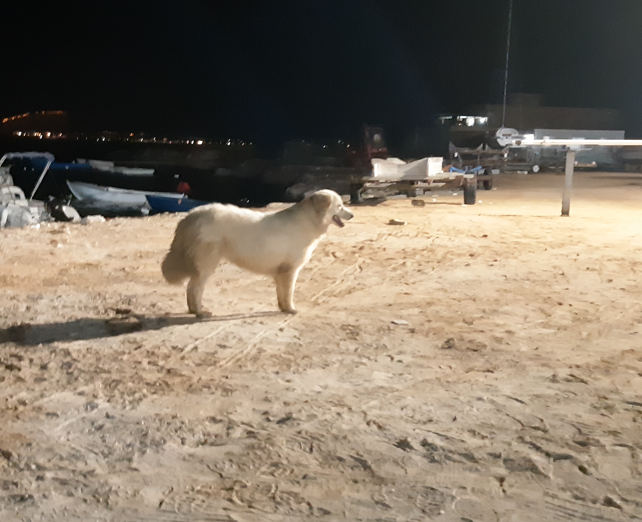
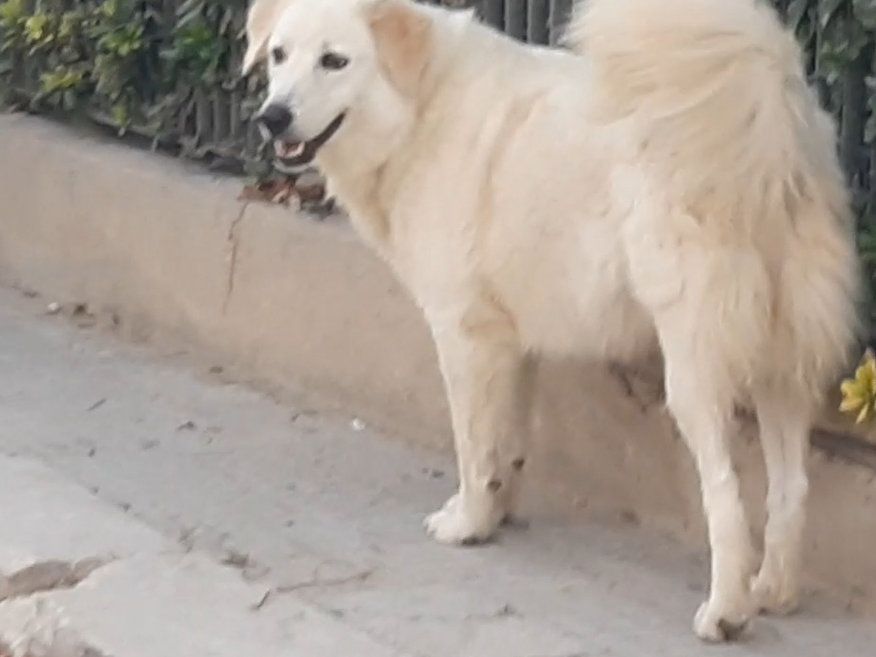
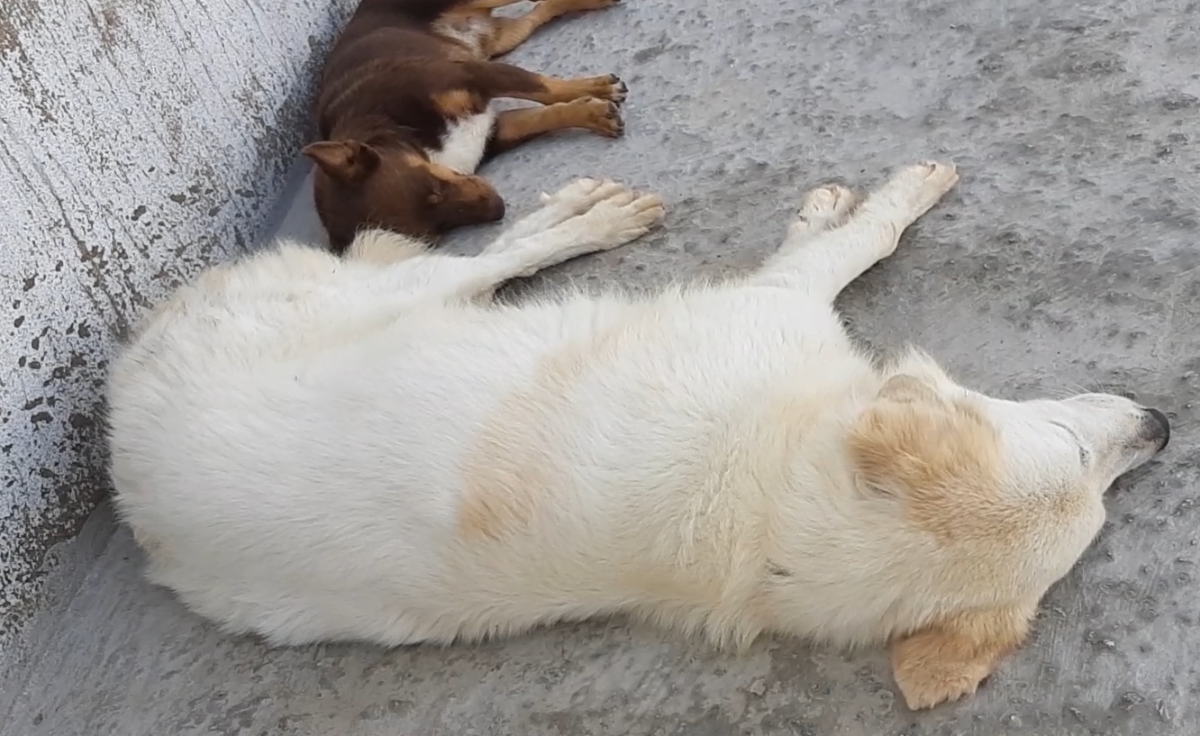
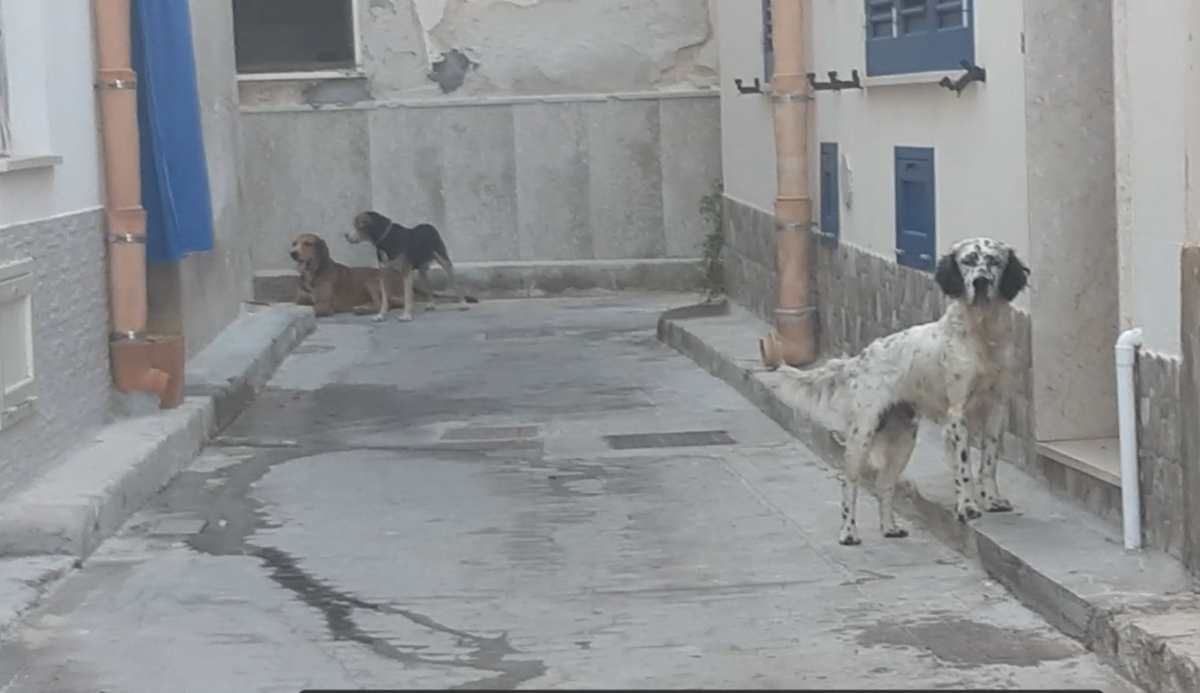
 Hi there, I am so happy to hear about "Lupetto" growing into such a lovely dog, doing well on walks, going on car rides, stoically tolerating the pain of getting porcupine quills off, and happy to meet/greet people! Keep up the great work and pat yourself on the back for a well-done job. These dogs aren't the easiest to persuade and train. We want to maintain this and praise/give treats when he sees people, because when it comes to livestock guardians, they may become more aloof as they reach social maturity. Of course every dog is different, there is a Maremma-like dog nearby my vacation home in Italy (her name is Bianca) that, every time she sees me she comes to say hi and solicits some petting and she's probably around 4-5 years old. She's a frequenter of a nautical club I am a member of and she's always social around people entering the club and even other dogs. I have never given her food, she just likes the attention and yeah, who can resist petting a cuddly ball of white fluff. 😍 To answer your question about the jumping, in general we want to wait until their growth plates close. With a large breed dog like yours, it's likely to happen more around 18 months to 24 months. I would ask your vet about this to be on the safe side, he may want to take x-rays eventually before giving the all clear. He or she may tell you whether you can maybe start with some low jumps and give you exact guidelines (like for example jumps no taller than his elbows). Something to certainly check with your vet so as to know where he is at with his skeletal development. In regards to scent training, that is surely fun! You can start with treasure hunts using his kibble and hiding it around: https://www.braintraining4dogs.com/members/brain-training/elementary/the-treasure-hunt/ and then making the game more and more challenging. Games of hide and seek are also good as they will teach him to use his sense of smell to find people: https://www.braintraining4dogs.com/members/brain-training/university/hide-and-seek/ And if you want to go the extra mile there are canine nosework kits you can purchase online and classes. Attached are some pictures of "Bianca"
-
Training two puppies at the same time
Adrienne Farricelli replied to JEANETTE PALFREYMAN's topic in Dog Chat
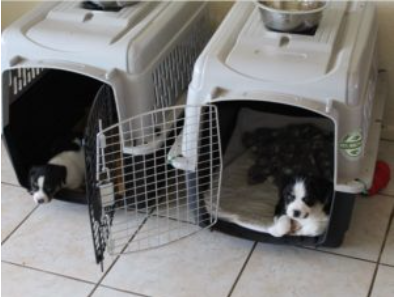
Thank you for the extra details and the video, they are very helpful! I have watched the video with no volume and then with volume. Based on this footage, I am not much concerned about this type of interaction, but would keep a close eye on them in case your male pup shows persistent signs of struggling and your female doesn't give him any breaks. In this case, because he was stuck under a furniture, where it was a bit challenging removing himself, he may have felt pressure which was relieved when he figured his way out. That brief scrolling of the fur you see for a split second once he gets out, is often a sign of a dog feeling relief from being freed from some type of pressure (we see that often in dogs after being pet from strangers and they felt somewhat uncomfortable). Once he's out from under there, he seems rather comfortable, starts exploring around and even joins her in when she discovers something. He does seem to be a bit on the lookout for her, but it doesn't interfere with his exploration/acting like a normal puppy. Your female is acting like the typically bossy female who is testing her boundaries. When she cannot get her way, she barks at him. My female Rottweiler would often pester Einstein as a pup, it was her favorite "hobby." She would fixate on his legs and bite them when he was walking and she was sometimes trying to force him to "mouth inspections." Basically she wanted him to open his mouth for her so she could sniff and inspect inside for tidbits of food. When he was reluctant to do this, she would bark at him annoyed. She would also try to steal his toys, and would try anything to trick him to let go of them such as pretending there was someone at the door, howling (so he would join in the chorus and drop a toy) and going to solicit attention from us in hopes he would join too so he would leave his toys behind. As he got older, he learned to use his voice more and more and she became more respectful of his boundaries, although he knew better not to get too close to her when she was lying down and had a particular toy or bone. From your descriptions about their interactions, it sounds he's reciprocating play with her. When in doubt, watching the body language and doing a "consent test" by removing the "victim dog" and seeing whether he's eager to return to playing with the "instigator" can help us get an idea of how he's emotionally feeling. As a general rule, if both puppies get into some conflict (mostly ritualistic without harming) and are able to de-escalate on their own, this is good conflict resolution. The puppies in this case are learning that they can have disagreements without blowing things out of proportion and they can walk away from it and be friends like before. However, if things seem to escalate, it's important for our pups to know that we'll be there for them to act as a protector who keeps them safe. This will teach them that they do not have to fight among themselves, since you'll be there to intervene and take care of problems every time. Your smacking sound is a good way to interrupt, but if they go back at it right after the brief separation, you will need to give them each their own area to chill with a food puzzle. In general, signs of concern include the following: Fights that lead to the puppies hurting each other and injuries One puppy acting scared of the other (lowered body, ears back, tail between legs). One puppy trying to avoid the other (moving always away, trying to seek protection from the owner) One puppy being much larger than the other with the risk hurting the other puppy when playing rough Something important to consider when dealing with two pups close in age is that we want to teach them to become individuals and prevent over bonding among each other. So while it may be tempting to let them play all day (which can lead to crankiness and more squabbles-puppies need to sleep a lot and another pup often prevents that), they need to learn not to depend on each other too much and to develop a bond with us. If we allow the pups to bond a lot because they are kept together, fed together, sleep together walk together 24/7 every day, this risks hindering the socialization process with humans and other dogs which can lead to nervousness/fear of new people or dogs. Among the two pups there often seems to be one that is more insecure and who tends to rely too much on the other pup's presence and risks becoming more reactive as he or she matures. So they would benefit from being separated from each other for various amounts of time. How can this be done if they are dependent upon each other? You can try by giving the dog left behind a mind stimulating toy like a stuffed Kong or stuffed Topple toy for the time being and introduce gradual separations. During these separations, take advantage for training, socialization, doing brain games etc. Introducing an older dog is likely not going to help. Many older dogs want nothing to do with puppies because they haven't learned bite inhibition yet and they have little impulse control. However, occasionally, there are older dogs who can help teach puppies, but really good "canine teachers" are not easy to come by. Your best bet is taking them to two different puppy socialization classes. Here you get to observe appropriate and inappropriate play and ways to interrupt it. Your pups will also learn proper dog manners from other dogs and not just their sibling other pup they spend most of the time with, which is important from a developmental standpoint. Some dog trainers who hold puppy classes sometimes also have an adult moderator, teacher dog, which in that case may work well. Look for a good class run by dog trainers who put am emphasis on socialization and ensure all pups are vaccinated and their quarters are disinfected properly to prevent infectious diseases. With puppies, whatever toy one puppy has, the other will want as well. Investing in one of those super long tug toys can help encourage more cooperative play as they each will tug on one side and enjoy the resistance. This can also help your Lab focus less on biting legs and other body parts of your setter mix. About sleeping in the same pen, being that they are so young, they may suffer from abrupt separations. At 8 weeks, most puppies will rebel to being left alone, this is natural because in the wild at this age, they would be very vulnerable so they have this instinct of screaming at the top of their lungs if there's no other puppy or human nearby. Things generally ameliorate once they are little older starting at 10-12 weeks and peaking at 16 weeks which is the flight stage. https://www.braintraining4dogs.com/members/archive/flight-instinct-period-4-8-months/ I would aim to gradually separate them, by practicing them being in their own crate/pen initially next to each other and giving them something to enjoy. With some clingy pups I need to buy them a Snuggle Puppy Behavior Aid which emits warmth and has a ticking heart sound. DAP diffusers may help too. Hope this helps, Let me know if you have any other questions/concerns. Picture of two eight-week old pups learning to rest in their own crates.
-
Training two puppies at the same time
Adrienne Farricelli replied to JEANETTE PALFREYMAN's topic in Dog Chat
Hi there, welcome to the forums, This isn't really easy to answer without seeing their interactions. Generally, if they are this young, for the most part they are engaging in rough play, and among the play there may also be some elements of testing boundaries among each other, and females can often be quite persistent in seeing what they can get away of when interacting with males. If he is reciprocating every now and then, then that's a positive sign of him wanting to keep interacting with her, versus the withdrawing we may see in pups who are impacted by too rough play fighting/ actual fighting. To better understand your situation, I have a few questions: 1) Are these the first puppies or dogs you have ever owned? 2) Can you define in simple words what you are seeing when they are fighting? Are they just vocalizing loudly? Barking, growling, nipping? 3) Does your male react to her when she tries to steal his toy, or does he let her have it and leaves with a fearful body language (lowered body, tail between legs). 4) Did they ever seem to actually hurt each other or cause injuries (don't test this, just base your answer off what you have seen so far). 5) Is one puppy much larger than the other? 6) When she "attacks" when he is just walking around in the yard is he carrying a toy? If not, is she trying to bite his back legs as he's walking? or does she do a sort of "mock attack" and goes to bite him on the neck area as if trying to pin him down? does she approach slowly as if stalking him? 7) If they are playing, and you remove your male from play for a few seconds (just holding on to him) does he seems eager to want to go back to interacting with your female Lab? Once you set him free again, does he go straight back to playing with her? 8 ) Where did you get the puppies from? Did the breeder or rescue mention anything about the risks of sibling rivalry/littermate syndrome? This can occur anytime two puppies close in age are adopted). About the trying to snatch treats, there was just a recent post about this: Thanks! -
Hi there! Welcome to the forums, When training two puppies, we want to start training them first individually to a fluent level before adding the distraction of each other. Here is a guide: https://www.braintraining4dogs.com/members/archive/guide-for-training-multiple-dogs/ Once you have trained to fluent level, you will also no longer be using any food lures so the problem of them trying to be close to the treat should be gone: https://www.braintraining4dogs.com/members/brain-training/polishing-up-training/ They also benefit from leaning not to try to snatch treats from each other, and that sometimes one may get a treat first, and vice-versa. I train this by having the dogs hold a sit/stay (trained individually first) and holding a treat, if one puppy breaks the sit stay, I will verbally mark with an "oops!" and walk away and then try again and again and again until both puppies learn to stay despite the distraction of my hand with a treat moving towards them. Once they grasp the idea to stay put, I will then teach the pups that if one pup is given a treat first, the other will get it right after and vice-versa which also helps the pups learn better impulse control.
-
OK, so now let's tackle the issue of fear of water. As you may expect, even this involves a certain level of behavior modification, involving a good amount of desensitization and counterconditioning. Depending on how complex her fear of the water is, this may involve a more or less comprehensive plan. If your center has a staff of trainers/behavior consultants experienced in force-free behavior modification techniques, they can help you in the process. For example, if your dog dislikes the sensation of getting wet/being bathed, then we will start with low level exposures using a water hose/sponge soaked with water and tackle this first, here is a guide for this: https://www.braintraining4dogs.com/members/archive/fear-water-bathing/ Other tips that come to mind: Start With a Baby Pool If your dog's fear of being in the pool stems from not liking water, you need to start slow using baby steps (desensitization). What better way to introduce your dog to water than with a baby pool? Get in the baby pool yourself and start pretending to dig with your hands and feet in the water and have a blast. Toss your dog treats as she watches you kick the water with your feet and let her go back and forth to eating treats and then approaching the pool. Then aim to create positive associations with being in shallow water. Once she's more comfortable, you can start with a few fun games such as bobbing for treats: https://www.braintraining4dogs.com/members/brain-training/high-school/bobbing-for-treats/ -Practice at a River/Lake/Beach Have your dog watch you have a blast playing with waves, digging with your feet in the sand and tossing balls. Then start walking more and more inside the water and see whether your dog reaches you. If she does, praise like crazy and toss the ball away from the water, towards the shore. The reason you toss it away is because you want your dog coming back on her own because it's so much fun. If you toss the ball towards deeper water instead, you risk scaring her and develop trust issues. We don't want her to get stuck in an approach/avoidance trap: https://www.braintraining4dogs.com/members/archive/approach-avoidance/ Make sure to make this a wonderful experience. -Bring Along a Confident Dog It's called social facilitation and it's the power of dogs being influenced and learning from observing other dogs. Often times, this is the missing piece to the puzzle! If your dog gets along with other dogs, and has some best buddies, this can help heaps. Therefore have a dog/dogs who loves swimming/playing in the water accompany your dog to your outings at the lake. Have your dog watch them have a blast in the water. See if that helps. Then plan on inviting this dog/dogs over in the pool to show your dog how fun the experience can be. Have your dog watch them getting in and out of the pool with ease. Watch for Your Dog Being Over Threshold Always keep an eye on your dog's body language and avoid putting her in situations that can overwhelm her and make her fear worse. Going in the water should be done on her own, free choice. We want to desensitize and not allow "flooding" which literally means putting a dog into an overwhelming situation with the risk for the fear getting worse rather than better. So if she's scratching and holding on to you as if holding on to dear life, that's too overwhelming and there's no space for learning, just sheer panic. However, since she's prone to this scratching, even when she is more comfortable in the water, it doesn't hurt to take some steps to reduce her risk for scratching others, even if just out of play. In such cases, it may help to have her wear Soft Paws. https://www.amazon.com/gp/product/B003SM5BAG I honestly haven't ever tested these in the water, but in some reviews, a while back, I recall seeing somebody mention using them to help prevent her dog from scratching the pool's lining or something else used in a pool when playing in the water. Of course, these are just general guides, you may notice that you need to overcome certain specific challenges such as helping her overcome the fear of stepping down the steps of the pool, helping her figure out how to get out the pool anytime she's uncomfortable and making surfaces less slippery if that's part of the fear. You will also have to gauge whether (once she's overcome her fears), it's safe for her to be in the pool around children or whether she may still try to engage in "rescuing efforts" or "herding behaviors' which can lead to nips and scratches which of course is not good and allows her to rehearse problematic behaviors. So here are just a few ideas! I know this is a lot to "digest", but let me know if you have any questions or need to do some deeper troubleshooting. Hope this helps, Happy training! Best, Adrienne
-
Thank you for the extra details, they are very helpful! So we are dealing with two different "issues" here: 1) getting her to be less reactive around people swimming in the pool.. and 2) getting her more comfortable around water. The two aren't necessary correlated, although your thinking makes perfectly sense as it is true that some dogs may relax more if they are sharing the pool with their owners and they understand that their owners aren't "drowning," but are actually having a good time. However, dogs who act this way when people are in the pool may do for some different reasons. We can't always though stack behavior neatly in designated "diagnostic boxes" as there are several variables and sometimes the underlying causes are actually a mix of several causes. So let's start with her reaction around people swimming in the pool. You are certainly not alone with this problem. I have known dogs who were so agitated when people were in the pool, that their constant running back and forth around the pool has caused them to develop sores on their paws that required weeks to treat. So why do dogs behave this way? There are several possibilities. Here are just a few. -Dogs wanting to join in and frustrated they cannot These are dogs are eager to dive in, but are afraid of doing so. The pool water is therefore perceived as a barrier, preventing them from joining in the fun. When it comes to a pool, they may not like jumping into deep water or they may not feel safe if they don't know a quick way to getting out. Factor in also the slippery surfaces leading to insecure footing, and steps that dogs cannot see as the last are underwater. When dogs may want to do something, but for some reason they are prevented to, this can lead to deep feelings of frustrations, which causes them to pace, whine and bark. -Dogs With a History of Separation Distress These dogs are the type that follow you around, can't tolerate being left home alone, and whine and bark, the moment owners use the bathroom with the door closed. In some dogs this distress can be so pronounced that they even struggle when their owners are in sight, but they can't be glued to them. When the owners are in the pool, these dogs may therefore show signs of distress because they can't stick to their side. -Dogs Feeling Worried About People Swimming Some dogs struggle with understanding what is going on when we jump into a pool. If there are kids playing in the pool and screaming a lot, these dogs may think that they are in danger. They may try to grab our hands to try to pull us out. These can lead to lacerations due to their teeth snagging on our skin. - Dogs Failing to Understand What's Happening Some dogs become anxious when something unusual takes place and they can't understand it. This falls under the same category of dogs who become anxious upon seeing their owners ride a bike, dance, wear a hat, do gym, use an umbrella or push a stroller. When dogs see us swimming, they don't grasp the idea that its our way to stay afloat. What they see is us flapping our arms and legs in an odd way. They may therefore respond to our pool-time with anxiety which prompts them to bark, whine and pace back and forth. -Dogs With Herding Instincts at Play Often times, dogs who bark and pace when people are in the pool are dogs belonging to the herding group (corgis, Australian shepherds, German shepherds, border collies, and of course Malinois) In this category are many dogs that were selectively bred for rounding up sheep or cattle. Their instincts tell them to have control over animals running amok and keeping a certain level of law and order. When there are several people in the pool, especially children, these dogs may therefore feel inclined doing what they were bred to do: barking, running around and trying to control movements. This reaction is not really fear-based, but triggered more by an over aroused/excited state associated with people jumping in a pool. When dealing with cases as such it helps if, on top of understanding the dog's underlying emotions and motives, we can find what ultimately triggers their reactions. Does your dog start acting worried when people are splashing? Does she struggle when there are children screaming? Does she start acting up the moment people enter the pool (even if not splashing or screaming?) Once we have identified the triggers, we know what we may need to focus the most on. However, consider that in many cases, dogs may initially start freaking out with people splashing or screaming, but then their anxiety generalizes and they'll start reacting with just the mere fact of people entering the pool. Sort of like it happens with separation anxiety, where a dog initially may have a meltdown when their owners leave the home, and they realize they're alone, but then start panicking when their owners get ready to go to work. If we have isolated a clear trigger, we therefore know what we need to work on. More than training, this type of issue requires a good level of behavior modification before we can reach a state where the dog is capable of cognitively functioning (yep, dogs over threshold can't think straight). So how is behavior modification carried out? It varies based on the dog's triggers, how over threshold a dog is and several other factors, but here are some general guidelines and tips. *Please note that the process will take several days to even weeks and structured set-ups. -Prevent Rehearsal of the Problematic Behavior One of the most important steps is to prevent your dog from engaging in the problematic behavior. The more your dog engages in the barking, whining, pacing behavior, the more these behaviors establish and become habit-forming. On top of this, stress hormones circulate in the body keeping dogs more on edge after the happening, which makes them more likely to react. If dogs are stressed day after day, the phenomenon of trigger stacking takes place. https://www.braintraining4dogs.com/members/archive/how-trigger-stacking-impacts-your-dog/ -Try Giving Your Dog Something Else to Do If your dog's anxiety is mild, you can try to give her something very enticing to chew that will keep her busy for some time (like a bully stick, frozen Kong filled with canned dog food mixed with kibble) while people spend time in the pool. For safety, since there are children, keep inside an exercise pen if she's trained to stay in one. Make sure the people stay calm and don't splash around or scream. Once your dog is close to being done with chew, have the people come out of the pool and call it a day. Repeat several times to establish a new routine. What if My Dog Won't Eat? In many cases though dogs won't be able to eat when people are in the pool because they are so deeply distraught and anxious. If your dog won't eat, take that as a sign of her being too over threshold. When dogs are in the state, their appetite is gone and they can't cognitively function. In this case, this is a sign that you need to start implementing some more in depth behavior modification strategies. -Desensitize and Countercondition Your Dog to Her Triggers This is the heart of behavior modification. Desensitization is a behavior modification method that aims to expose dogs to their triggers at lower levels of intensity. Low intensity exposures allow dogs to the ability to better cope with their triggers while remaining under threshold. You can read more about the process of desensitization here: https://www.braintraining4dogs.com/members/archive/desensitization/ Counterconditioning is a behavior modification method that aims to creating positive associations with triggers. These positive associations are often attained through the use of treats. This method works best when used in conjunction with desensitization. You can read more about the process of counterconditioning here: https://www.braintraining4dogs.com/members/archive/counterconditioning/ -Examples of Behavior Modification for dogs reactive/anxious when people are in the pool Following are some general examples of behavior modification. Every dog of course may require an individualized plan that is different based on several factors (level of anxiety exhibited, type of triggers evoking the behavior). You may need to work on several elements individually starting with the less intense ones before putting them together (e.g first start with people entering the pool, then splashing, then screaming before presenting all of these together) -For Dogs Struggling With Splashes If your dog struggles with people splashing, you would start by keeping your dog at a distance from the pool and have her watch a person place an arm in the water while she's fed super high value treats (like strips of chicken, baked liver-check with your vet if your dog has a sensitive tummy-food allergies). Once she's fine with that, you can then progress to the person moving the arm under water just a bit while keeping on feeding treats. Afterward, you can progress to the person splashing the water just a bit, then more (while always feeding treats). Next, the person can start with placing a leg in the water and doing the same exercise. You get the idea. The goal is to get the dog gradually and systematically used to seeing the person splashing and eventually swimming without feeling anxious. When using desensitization and counterconditioning to tackle triggers, I like to aim for what's known as a positive conditioned emotional response. This is what I call the "where's my chicken ''look!" More about this here: https://www.braintraining4dogs.com/members/archive/conditioned-emotional-response-cer/ -For Dogs Struggling With Seeing People in the Pool If your dog barks just seeing somebody in the pool, start this exercise indoors if you have a window that overlooks the pool. Have your dog observe the person swimming while your dog is on leash at a distance from the window, where she can the person swimming. Have her watch the person and feed treats every time she looks at him/her. The goal is to getting her calm enough to then watch the person outdoors (while still on leash) and then eventually off leash while remaining calm and looking for her treats. This exercise is explained more in detail here: https://www.braintraining4dogs.com/members/brain-training/university/look-at-that/ -For Dogs Struggling With Children Screaming/Splashing Have your dog on leash at a distance from the pool (you can start indoors) and have a child enter the pool (with a grown up of course nearby). Feed your dog tasty treats for watching the child enter the pool, then for splashing in the pool (using the above exercise) and then for screaming at a low volume, then higher volume. Then once you have fluent response add more kids to the pool doing the same. When To Take a Step Back, and When to Raise Criteria? If the dog at any times struggles with any of these exposures, it's important taking a step back and working more on lower level exposures making them less intense and ensuring the dog is fine with those before moving forward. When your dog is reliably doing fine at a certain level of intensity, you can raise criteria and move on to the next level, aways monitoring your dog's body language carefully. -Train an Alternate Behavior Once your dog is in a calmer state, you can train your dog to engage in an alternate behavior so as to keep her busy and happy. For example, you can train her to fetch balls you toss at her and have her drop them it in the pool so that you can toss them again. This can also help in the case the dog is worried about the safety people in the pool. Since play is incompatible with fear, this can help the dog understand that no one is drowning and that you're all actually having fun in the pool. -You can train her to go lie on a mat to chew on something tasty and long lasting. -You can have your dog "fetch treats" from a remote treat dispenser, or bubbles from a bubble machine made for dogs. This latter is great for dogs who love to herd! -You can train your dog to target a target stick randomly and toss treats for complying. https://www.braintraining4dogs.com/members/brain-training/preschool/targeting/ -If your dog eventually becomes comfortable being in the water, you can even have her ride on an inflatable pool float. https://www.amazon.com/gp/product/B08P6JT5XJ Anything that keeps her busy and happy and feeling involved with family time should help. -Manage When You Can't Work on the issue When you don't have time to work on the issue or in its earliest stages (when your dog isn't ready for high level exposures), it's best to manage the situation and prevent your dog from rehearsing the problem behavior. You can do this by having a family member or helper walk your dog or take her on a car ride when you are planning to enjoy the pool or have guests over enjoying the pool with you. -Make safety top priority You mentioned her biting and breaking skin, and therefore we need to make safety top priority, especially if she's around kids. Even though when working on behavior modification the goal is to keep the dog under threshold as much as possible and not allowing rehearsals, a mishap can always happen. It's therefore important having some extra layers of protection and this can be attained by: -Muzzle training, in this case using a bite-proof muzzle: https://www.braintraining4dogs.com/members/video-archive/train-your-dog-to-wear-a-muzzle/ -Keeping the dog on leash with a helper -Using a secure outdoor tether attached to the back ring of harness (always under supervision and after gauging how the dog does on this, some dogs may not be good candidates) -Work with a professional In some challenging cases, such as when it's difficult getting the dog under threshold or when there are risks for bites, a professional should be sought out for help. This is for correct implementation of behavior modification and safety. Some dogs may need prescription meds to lower their threshold initially so as to achieve a calm enough state for learning. A board-certified veterinary behaviorist is my first choice, followed by Certified Applied Animal Behaviorists and then dog trainers/behavior consultants well -versed in tackling behavior using force-free behavior modification techniques. Will be providing some insights shortly about her fear of water and increasing her confidence with that. Disclaimer: behavior modification comes with risks. If your puppy or dog shows signs of potential aggression (lunging, barking, growling, snapping, biting) for safety, please consult with a dog behavior professional who uses force-free behavior modification techniques (no shock, prongs, choke collars, or physical corrections) for direct in-person guidance. Articles, videos and general info found in the forums or course (or any online source) are not meant to replace in-person training/instruction. By using this course and forum, you are waiving any liability claims or other type of claims related to any dogs' behavior against you or others.
-
Hi there! Welcome to the forums, Lovely dog! Malinois have a soft spot in my heart, I love the breed, and although they can be challenging to own, when their needs are met and they are given the structure they need, they can be amazing dogs. She sounds very over threshold both in being in the water and seeing you all in the pool. In this cognitive state, there is little space for learning. She won't be able to do other things in the yard, while you are all in the pool, until her emotional state is tackled. I am not sure if teaching her to swim and stay in the pool with you would stop her behavior. Certainly, not until she is in a calmer state. I have a few questions: 1) Is the the agility center you take her to actually run by dog trainers? 2) Is it a dock diving center? 3) What have they done so far to try to help her overcome her fear of water? Do they use a doggy life jacket/ flotation device? 4) Do you have any beaches or lakes with shallow waters near you where you can take her with you? 5) When she did bite your son, did she break skin? I share your concerns about her biting, especially with her being in such an over threshold emotional state that even if she does have some natural bite inhibition, she might not be able to gauge much her bite pressure as if she would in other contexts.
-
Is it okay to focus on calm so much?
Adrienne Farricelli replied to SUSANNAH DARLING's topic in Dog Training & Behavior
You're very welcome! I hear you, pups are so eager to play, they don't care if the other dog is old, small, sick, or simply not interested. If she's not interested in play and just wants to retreat and have nothing to do with him, until he's better trained you will likely have to keep him under control around her (leash, baby gates, exercise pens) and invest in safe zones for the time being. It sounds like she is a well behaved dog who gets overwhelmed by rowdy approaches. Walks together, one handler per dog (once he has finished his shots and got the green light by your vet) can be a bonding activity as long as you keep your pup not so close that he tries to lunge. Car rides together to nice places (with your pup under control) can also help. Until he shows signs of being calmer around her, she likely will feel stressed around him. Of course, this is a great incentive in getting him trained faster! You will need to train him individually at first. Once he's better trained, you can then involve both of them in fun training/play sessions (like group recalls, hide and seek) which can also be a great bonding activity. On top of not letting him lunge, it helps to help her form positive associations with your new pup, such as feeding her treats when she sees him/hears him at a distance, so as to not let the negative associations of being lunged at prevail. Here are some more tips for introducing a puppy to an older dog: https://www.braintraining4dogs.com/members/archive/how-to-introduce-a-puppy-to-an-older-dog/ -
Is it okay to focus on calm so much?
Adrienne Farricelli replied to SUSANNAH DARLING's topic in Dog Training & Behavior
Hi there, Welcome to the forums, what a cutie pie you have there! You have a suspected mix of high energy breeds (maybe some border collie too?) so it's good to put an emphasis on learning how to relax and creating positive associations with that. You are using gentle training methods to let him know that you like it when he's lying down and relaxing, so there's no harm there. I would have been concerned if you were trying to instill calm by suppressing "hyper" behaviors by using scary tactics such as yelling or punishment-based techniques-which is clearly not the case. Things may change though as he matures and reaches the flight stage and then doggy adolescence, but if you keep it up, and work on impulse control training, you should be able to maintain some level of calmness (and some sanity!) during these turbulent times ahead. At this age, they don't have much long attention spans, but it's a good idea to carefully watch what stimuli or situations causes them to become hyperaroused and work on this a little at a time by presenting similar stimuli and situations, but in less-distracting, less-intense versions so as to allow them to be under threshold enough to cognitively function and be more responsive to us. Baby steps are important, if you notice signs of frustration try to make the exercise easier. You are doing a good job on this already by offering some of his food after letting him perform a calm behavior first. Puppies will bite everything they see, because they explore the world with their mouths and they are eager to interact and play. If he's biting your hands, feet etc., here are some replacement behaviors: https://www.braintraining4dogs.com/members/archive/replacement-behaviors-to-stop-puppy-biting/ and here are tips to getting puppies used to being touched: https://www.braintraining4dogs.com/members/archive/exercises-to-teach-puppies-to-tolerate-touch/ Enjoy puppyhood until it lasts, they grow so fast! Make lots of pictures and happy training! -
Esther Shares, Gertie Does Not
Adrienne Farricelli replied to JMFS's topic in Dog Training & Behavior
Yeah, there aren't too many board-certified behaviorists, but they have been steadily increasing. At least, I am seeing more around than a decade ago. I imagine them also being very busy as they're often receiving referrals left and right. Glad to hear about Gertie being on the mend! In general, I have no problem with dogs on couches, as long as the dogs given this privilege aren't prone to resource guarding the couch or people sitting nearby (against other dogs or people). Same with dogs who act pushy or won't get off when asked to. If one dog is consistently permitted on the couch, this can also appear as favoritism to the other dog, which can in some cases lead to conflict. Among Petra an Einstein's interactions, Einstein was the pushing force when going out of door or through some narrow passageways. I sometimes felt bad for Petra as he would sometimes rush through like a mini tornado, but she seemed OK with that and never gave signs of minding. Was Gertie always OK with Esther pushing her way through? The jacket phenomenon is indeed interesting. I wonder if she was switching from fight or flight mode to fool around mode, which are are both stress responses? Maybe it acted like a visual barrier, sort of like a calming cap helps dogs who are triggered by visual stimuli? A tent where she could go to when seeing a trigger and receive praise/ treats there can be a nice idea. I had a dog with storm phobias who loved it when I created a play pen covered with blankets where she could retreat to. They have cute tee-pee tents for kids that I often see, who knows if she would like something like that. -
You're very welcome! Keep us posted on your progress, Best, Adrienne
-
Dog toys for aggressive chewers
Adrienne Farricelli replied to HEATHER JOHNSTONE's topic in Dog Training & Behavior
Hi there! Welcome to the forums! Here are some toys that are crafted with aggressive chewers in mind. Consider though that there are no 100 percent safe and 100 percent dog resistant chew toys/food puzzles. Supervision is always a must. Kong Wobbler. The Kong Wobbler has survived my Rottweilers' strong jaws along with the jaws of most large dogs we have boarded and trained. It's a great way to have dogs work for their meals. Kong Xtreme. I fill these up and freeze them for a long-lasting treat. Goughnuts Topple Dog Toy West Paw makes a line of tough toys that I think may come with a warranty. -
Hi Megan, Welcome to the forums, I have a few questions to better understand the situation with your Aussie. 1) Has he always struggled being around people or is this this behavior of a more recent onset? 2) How much would you say has he been socialized so far? 3) You mentioned that he is becoming more and more wary of strangers, would you say that's because he is seeing more strangers/people lately? 4) What happened right before the bite incident directed towards your grandpa? Was your grandpa approaching him to pet him? Was he nearby you (some dogs are protective of their owners). 5) Did your Aussie give any warning signs before biting? Cowering, growling, barking? Describe what happened exactly when he "freaked out." 6) Does he seem to struggle more being around men compared to women? 7) Are there any other fears he is suffering from? Like fear of noises, startling during walks, does he spend time barking at the mailman/ delivery people/people walking by the property? Any recent stressful events? 8 ) How often do you have family gatherings as such? How often do you have people over or have him see people in close encounters? 9 ) What training cues does your dog know so far? Sit/down/stay etc. 10) What is his normal day like? Do you take him on walks, do training, play games, any doggy sports? Keep us posted on what the vet says, make sure to mention what happened exactly and all his medical history and if you have noticed any recent changes in his behavior/health. If he is muzzled trained, please have him muzzled (bite proof basket muzzle) for the vet visit for extra safety. If the waiting room causes him stress, keep him outside and let them call you when they're ready. Bring along treats to create positive associations, if he's not too over threshold to take them. Seeing a vet practice that adheres to the fear-free movement may help a lot: https://fearfreepets.com/resources/directory/
-
Esther Shares, Gertie Does Not
Adrienne Farricelli replied to JMFS's topic in Dog Training & Behavior
If Leah is comfortable working on cases of aggression, she may have several strategies to help you implement to prevent/manage resources guarding (if that's the most common trigger) and also things to do at the first signs of an imminent fight based on whether there is a tendency to "hold". However, to be honest, I still think behaviorists are the ideal professionals to work with when there's anything more on the complex side such as intrahousehold aggression, generalized anxiety, and anything aggression-related. Here's the thing: anybody can really call themselves a behaviorist. The only real professionals though that should be entitled to call themselves this way are Certified Applied Animal Behaviorists (these have an MS, MA or Ph.D in animal behavior and) and board-certified veterinary behaviorists (DACVB). A dog I have worked with was very hyper and despite all the training we did together, brain games and impulse control training, he still struggled on focusing. Something seemed off. I referred out to a DACVB in Mesa, AZ who determined that he needed a low dosage of RX meds to help his cognitive functioning and he got so much better! The difference was asday and night. Of course, every case is different, but a DACVB can rule out any underlying medical disorders or comorbid conditions that can lower a dog's threshold for aggression (like some dogs who fight and end up having underlying pain disorders, not necessarily triggering the fighting but making them more on the grumpy side and likely to react-sort of like us when having headaches or PMS, lol). These professionals have made of behavior modification their primary area of specialty. If anybody can afford them (they can be pricey), this can often save money in the long run (like seeing the right specialist and having the right diagnosis/treatment in one go, versus paying dozens of doctor visits/tests). In Florida, there is respected Lisa Radosta and several others good ones (Soraya V. Juarbe Diaz and Terry Marie Curtis). I like Leah's idea of using pepper to make them sneeze, I have been keeping pot lids and stashes of bottles of citronella spray (Spray Shield) to spray in the case they won't let go. Yeah, the wheelbarrow method when dogs are latched on can cause lacerations if dogs are pulled apart versus sort of "giving in" to the bite, so need to be careful with that. I am glad to hear that Gertie is healing nicely, at least it sounds like Esther didn't get to bite down too much being that she targeted the delicate lip area and Gertie didn't need stitches in the other targeted parts. Another good thing is your track record of fights having not occurred for such a long time. You need to pat yourself on the back for this as it's not easy if there's that tendency deep down. And it's also good that there are recognizable triggers (versus generalized fights upon just seeing each other). You are good in your observations and figuring out what those triggers may be. On top of food potentially being a trigger, you will have to factor in the stress of changes and your presence being potentially more salient than usual when you are away (sort of like a new toy versus toys being around all the time to a dog who resource guards toys). However, it can be challenging to manage and predict what will happen, especially when we have a long track record giving us a false sense of security, sort of like an unexpected bolt of lightening on a sunny day. If Gertie seems less lively than usual and is not following you to the bathroom, have her checked out a by vet in case you didn't already do so. Sometimes what may appear as small wounds, may be painful and may need a course of antibiotics. if nothing medically is found, evaluate how she's doing emotionally, perhaps she's still shocked/subdued and not comfortable moving around freely because of the fear of Esther. -
There are several sections that cover various forms of play in general under the brain training section. Here are some ( please note that some require some preliminary training skills). Treasure hunt: https://www.braintraining4dogs.com/members/brain-training/elementary/the-treasure-hunt/ Jazz up and settle: https://www.braintraining4dogs.com/members/brain-training/high-school/jazz-up-and-settle-down/ Hot and Cold: https://www.braintraining4dogs.com/members/brain-training/university/hot-and-cold/ Hide and seek: https://www.braintraining4dogs.com/members/brain-training/university/hide-and-seek/ Ball pit game: https://www.braintraining4dogs.com/members/brain-training/elementary/the-ball-pit-game/ Muffin game: https://www.braintraining4dogs.com/members/brain-training/elementary/the-muffin-game/ Magic Carpet: https://www.braintraining4dogs.com/members/brain-training/college/the-magic-carpet/ More here (under brain training): https://www.braintraining4dogs.com/members/brain-training/ I don't have an agility training section. With agility, there are several things to be aware of, such as waiting for a dog's growth plates to close which varies from one breed and another. So it would be important checking first with a vet on the ideal age to get started, I think in German shepherds growth plates close anywhere between 14 to 18 months, but of course this varies so it's best to check with your vet. However, this doesn't mean you can't starting introducing some agility equipment for them to explore. I love to introduce pups and young dogs to agility tunnels so to help their confidence and give them something fun to do. Here is how I have used an agility tunnel to help an anxious dog: https://www.braintraining4dogs.com/members/case-studies/01-sadie-replacement-behavior/
-
I have personally found that keep walking past the dog (ideally while looking at us) is easier in the initial stages. We can certainly aim for a sit and look, but later on once the dog is calmer and in a more operant state. I have found that most dogs who are reactive struggle with sitting in presence of other dogs and I suppose this can be because: 1) sitting makes them feel in a vulnerable position 2) when seeing another dog they have a surge in kinetic energy and struggle with staying still 3) it can take some time to get a dog comfortable enough to sit on walks with all the distractions going on If a dog is too close for comfort or overwhelmingly exciting for our dogs, I would aim to do an emergency U-turn: https://www.braintraining4dogs.com/members/archive/emergency-u-turn/
-
You are very welcome! Thanks for providing the extra details and clarifications. I would skip the leash pops given when he is barking and trying as much as possible to catch him *before* he has the opportunity to bark. I would try to keep him under threshold as possible and train a very fluent response to a smacking sound and feed treats contingent upon seeing another dog. This will help keep all basis covered so that you have no guesswork to rely on (is this a dog he will react to or not? when in doubt, cover all basis out-ok not the perfect rhyme, but you get the concept!) By feeding treats anytime he sees a dog, you are: -Creating positive associations upon seeing all dogs -Reinforcing looking up at you (an alternate behavior to barking) -Increasing the level of trust and bond between you and your dog -Opening the lines of communication Win-win! Make sure not to miss the "LAT on the go" method I used with Homer for dogs who keep turning around when there is a dog walking behind. https://www.braintraining4dogs.com/members/case-studies/03-homer-homers-reactivity/ You asked: just wondering is it normal for GSDs to be this suspicious or is stemming out of lack of socializing? as i said for socializing I only took him to dog parks where he used to play fine with other dogs, earlier he also attended in-person foundation training class as a pup with 7 or 8 other dogs and a few time he goes to pet smart and pet value stores with me). It sounds like you did a good overall job in providing ongoing socialization with other dogs, although dog parks as mentioned are not my favorite place for socialization as there are too many unruly dogs. However, the training classes may have helped teach him how to stay under control in the presence of dogs while maintaining his social skills and that may have helped a lot. I would keep up on taking him to classes if you can or at least work on obedience skills in presence of dogs (like when at the pet store or the pet store parking lot, or when walking him around the perimeter of the dog park despite the presence of other dogs playing at a distance in the park). In general, puppy and juvenile GSD are OK with other dogs, but as they mature, they may become more discerning about what people or dogs will become part of their social circle. Of course, this doesn’t apply to all German Shepherds. Just like snowflakes, no two dogs are created alike. Even among puppies of the same breed sharing a litter, you’ll find wide differences between one dog’s temperament and another. Generally though, we see changes around the onset of social maturity. Social maturity in dogs generally takes place between the ages around 18 to 24 months of age, although in some dogs it can start as early as 10 to 12 months and lasts up to 24 to 36 months. This is a time of changes during which the brain undergoes significant remodeling of neurons and extensive pruning of them, where some connections between neurons are strengthened and maintained, while others are weakened and discarded. During this delicate time, behavior changes take place and it is possible for behavior problems to emerge which may include the onset of fears and increased reactivity. It’s not unusual for German Shepherds to undergo changes in their sociability as they reach social maturity. While changes in sociability can happen in dogs of many breeds as they reach social maturity, it may be more pronounced in a dog breed like the German Shepherd. What changes are most commonly seen? You may notice how they may no longer tolerate certain behaviors from other dogs. If a puppy or young dog happens to jump up to his face or places a paw on his shoulder, he may be “shooed away” with a low warning growl. While your German Shepherd played with most dogs at the dog park, during the onset of adolescence through social maturity he may start getting more selective. He may prefer to play with a few good doggy pals he has known for some time and that are part of his circle of friends. You may also notice changes in your dog’s overall sociability, with your dog becoming more serious and slightly less interested in play. He may still play with other dogs occasionally, but his play sessions may become shorter as he moves on to something else like sniffing around or exploring his surroundings. German shepherds, along with several other predisposed breeds, may also tend to assume the fun police role. These dogs are attempting to establish law and order by managing the other dogs at the dog park as soon as he notices a dog playing too roughly or the beginning of a potential fight. While before he may have ignored a squabble or another dog growling, now he’s willing to answer a challenge. Of course, every dog is different so it's not easy to make predictions, but I would certainly advise to not let him rehearse the barking and pulling behaviors as much as possible as these can become habit-forming the more they are rehearsed. So lots of management, working on keeping him better under threshold and training alternate reinforceable behaviors so as to build up a repertoire of more desirable behaviors contingent upon the sight of other dogs.
-
Esther Shares, Gertie Does Not
Adrienne Farricelli replied to JMFS's topic in Dog Training & Behavior
Oh my, I am so sorry to hear this, it must be so heartbreaking after having the situation under control for so long. Poor Gertie. I agree with you that it sounds like your recent absence may have played a role in making you extra salient, but also any changes in the family dynamics where one person is away can trigger some stress, especially if there are changes in routines/boundaries/rules. You and the food nearby can certainly create a double whammy of valuable resources. You already know the drill, letting them cool down, separation, working on creating positive associations so as to try to rehabilitate any emotional scars, and trying to avoid future mishaps through management/training with help of a professional. I don't know if you and Steph ever went over teaching a steadfast response to some cue that gets their attention fast at the first signs of trouble, if so, it would be a good idea to work more on proofing that, although I know how quickly fights start and it's not that easy in catching them at earliest sign. Or maybe Esther could be conditioned to not respond to a challenge? I think this is a repeated pattern if I recall well. But now as she has grown older her confidence is up and the temptation to confront a challenge has likely grown stronger. I watched a veterinary behaviorist once teach a dog to no longer provoke/ attack the other dog when he had a toy, but to go and seek an owner who would give him a reward. The cool thing is that this was worked on at such a level of proficiency that, the dog would seek the owner even if he was in a distant room. This was the usual dynamic: Dog approaching the dog with the toy →dog with bone reacting→fight/potentially leading to dog losing access to the toy it then looked like this: Dog sees the dog with the bone→rushes to one owner→owner gives the dog access to a high-value reward. Or Gertie can be conditioned to no longer guard things from Esther if this is a common pattern. Or strict management if the fights occur in a blue moon and in the same usual contexts, so that any conflicts can be avoided. However, management is often prone to failing no matter what (statistically this is a reality, even among the most careful professionals) and when fights lead to injuries, more stringent approaches are needed so as to have backups for managing a failed management. It can get very draining as this often means implementing significant changes. But yes, your concerns are very valid, these fights are starting to get more worrisome in intensity and this makes me concerned about the common cliché' of two female dogs fighting, with the fights being triggered by the younger and newer addition and exacerbating around the time of social maturity (24-36 months). I hope Gertie heals fast, but emotionally and physically, and I would agree on the no dogs on the couch rule so as to prevent conflict over which dog gets preferential access to it. Sending you a virtual hug at this difficult time. -
Your are very welcome!
-
Please see my observations under yours in bold: I find him difficult giving a walk because he tends to bark aggressively at other dogs even if they are on the other side of the road. I am using prong collar but that’s not improving the behaviour. It has given me some control over him but how can I make him act calm (or ignore) in presence of other dogs. The prong can help give more control, it's like power steering. It can give you a better sense of control with large dogs. I know because I used to use it with my Rotties before switching to a harness. If you have been using it for some time and it helps you keep using that for the time being, but I would aim to eventually use a front-attachment harness (with the leash attaching to a front ring) just to prevent any potential "side effects' from the prong if he happens to lunge forward a lot. Is your dog just barking or also lunging (pulling towards the other dogs) on walks? If he is forcibly lunging, we want to avoid him from associating any discomfort with seeing dogs when he lunges (or from us popping the leash), which can risk turning dogs more reactive (but in a more negative way). Let me explain: In a perfect, ideal situation, it would go like this: the dog sees another dog and lunges→dog feels discomfort around neck from the prongs tightening→dog associates the discomfort around neck with lunging→the lunging behavior decreases so as to escape the discomfort However, things may end up going this way too: the dog sees another dog and lunges→dog feel discomfort around the neck from the prongs tightening→dog associates the discomfort with seeing other dogs→reactivity towards other dog increases When we train our dogs, we can suppress certain behaviors, but there are some risks of side effects with this and classically conditioned associations (associative learning) risk piggy-backing as well. Now, an important question would be: is he still lunging a lot on walks, or would you say it has decreased over time? Is he only barking? I used to take him to dog parks earlier (haven’t done in a month now after I read somewhere that dogs parks can give your dog disease, but that’s a different topic for a later time). Yes, there are risks for disease, but also other several risks from a behavioral standpoint (which is why many dog trainers frown upon them), we can discuss this further anytime (or you can search the forums if you want to dig deeper by searching dog and parks). Leash free he plays fine with other dogs of every size in the dog park but with a “leash on” and walking him in my neighbourhood I literally keep hoping that I don’t encounter another dog coming from the other side. He is not a mean dog, I just don’t know how he picked up this bad behaviour but it’s not easy with him giving walk. He is close to 100 pounds and if it wasn’t for the prong collar then I would have not been able to held on to him with the way he lunges seeing other dogs barking at them aggressively. If he gets along with dogs fine when he's off leash then it could be you are seeing the effect of barrier frustration. You can read about barrier frustration here: https://www.braintraining4dogs.com/members/archive/barrier-frustration/ ***However, it's not always easy differentiating a true reactivity with an intent to harm from a barrier frustration case. It sounds like in some cases, your dog wants to "talk back" and "have the last word" if there is a dog who barks/acts "aggressive" towards him, which is a tendency often seen in GSD and Rotties. I should mention that I have another dog which is a ShihTzu and she also barks at other dogs (sometimes). GSD being younger than the ShihTzu might have picked the behaviour from her. It’s hardly once or twice I took both of them out together on a walk, as it’s unmanageable hence I do not take both of them out together now. but ShihTzu is now more relaxed or atleast in absence of his GSD friend she doesn’t care to bark at other dogs on her walk. I am glad you are doing separate walks because it's close to impossible walking two reactive dogs at once and training them. They would feed off each others' emotions and they both need individual attention for the training to sink in. I used the pop technique as well as with some lure in my hands and it has helped me a little bit as now he ignores another dog who doesn’t bark at him, but he still very nervously keeps checking on the other dog till the other dog is passed his sight, and if the other dog shows any aggression then he reacts. Please help me if you have any suggestions. I mean I have seen other GSDs taking walk “leash free” with their owners and not leaving their owner’s side or any kind of reaction in presence of other dogs (even when the other dog barks at them). So just wondering to how to reach that level of comfort zone and confidence with my dog. I believe he trusts me, he takes approvals by constantly looking at me as if to get permission or making sure I am there etc. but when he reacts he doesn’t listen to me. Please share if you have any suggestions. Thanking you in advance. If he is in an unresponsive state, he is too over threshold. https://www.braintraining4dogs.com/members/archive/threshold-levels/ I have a rather comprehensive guide for this that builds upon the look at me and smacking sound: https://www.braintraining4dogs.com/members/archive/how-to-make-your-dog-less-reactive-on-walks/ If your GSD also turns his head repeatedly to check until the other dog is in sight, here is an example of a case study that may turn helpful: https://www.braintraining4dogs.com/members/case-studies/03-homer-homers-reactivity/ I hope this helps, Feel free to ask questions and provide updates. Keep us posted on how things go! Best, Adrienne
-
Hi there, Welcome to the forums, great questions! When I ask my dog to look at me and once we have “eye contact” how long should I maintain that eye contact before treating him which also means releasing him from look at me task? So in regards to "look at me" you can start with brief eye contact or 0.5-1 second, but then you can raise criteria (which means you'll start making the exercise a little more challenging) by delaying marking (click of clicker or yes!) and giving the treats. So in the middle of those 0.5-1 second reps, start adding in a few of 2 seconds, then 3 seconds, and gradually you work your way up, but make sure mix in some shorter ones so the exercise doesn't get too difficult and you can keep your dog focused (for example you can do 0.5, then 1, then 2, then 0.5, then 3, then 2, then 0.5, then 1, then 4, etc.) When I play this game with my dog he looks at me for quite a bit say 30-40 secs and then he tends to look away when I signal him again to get that much duration of eye contact again. So how long or brief should I really keep it? Is it meant to be just a split second like you were doing in your video where once you smacked and as soon Einstein looked at you, you treated him and you did not held on to the eye contact for long when he looked at you ? If you are losing his interest in 30 to 40 seconds, then that's likely too hard for him, or he may be thinking you are looking for some other behavior so he may be trying something else. Try to ask for less (lower criteria), and then gradually mix in some longer ones but also some shorter ones as explained above. So how it is meant to be played, are we trying to get his attention for a split second to distract him from whatever is going on around him or we are supposed to make him hold the eye contact so that he can ignore everything else going around him? I hope I am able to put my question properly? The exercise is meant for teaching the dog to enjoy eye contact, it opens the ability to communicate with the dog, and yes, it comes handy for when we need our dogs' attention when he is distracted by something and we want to the dog to focus on us. Time may come when we may need to have our dog's attention for longer than a split second, such as on walks when we are walking by some distractions, so it's very valuable to build on that. This is covered here at the bottom: https://www.braintraining4dogs.com/members/brain-training/obedience-101/heeling-attention-heeling/ Since on walks there are more distractions, make sure to have a fluent response first at home in a quiet area, then at home around distractions, then in the yard, then in the front of the home, then on quiet roads, before practicing on actual walks with distractions. If you ever encounter a challenge, take that as a sign that your dog wasn't ready for that level of distraction and practice on recreating that distraction in some way but at lower level before re-presenting it (for example, on a walk there is a cat and your dog isn't responsive to your smacking sound and fails to look up, in this case, try to recreate a similar situation where you can make your dog succeed, but in this setup it's a little easier, like the cat is at a farther distance, or if it was a fleeing cat, try practicing with a friend willing to drag a stuffed animal tied on a string or practice with a remote controlled car). To overcome strong distractions, you may find it helpful to invest in higher value treats (I like to use baked liver cut in strips), and tossing treats to the ground may also help too. Happy training!
-
Calming the zommy’s without a fenced yard
Adrienne Farricelli replied to sa.berry's topic in Dog Training & Behavior
Hi there, Welcome to the forums! It's so great that you have decided to open your heart and home to this stray, and she's so lucky to have access to so much space! I can really understand your concerns, I would be worried the same way and would make sure she is always on a leash when outdoors. Just as she wandered in your property, can make her wander again, although, with time, we would aim to establish a strong bond and sense of belonging that tells her that this is her permanent place. An anecdotal report: My father in law has a farm on 20 acres and he used to keep his dogs free. The strong bond he formed with his dogs and their sense of belonging made them most of the time stick nearby, but they would occasionally roam such as when they were in search of a mate (they weren't spayed or neutered) or upon detecting critters to chase. They always came back after some time, but since these escapes were very reinforcing (opportunity to explore, chase critters, meet other dogs/potential mates, scavenge for food), this caused them to be "repeat offenders." After getting tired of worrying about his missing dogs (and a couple of complains from neighbors who owned livestock), my father in-law had to make peace with the situation and decided to create a half-acre fenced area so he could better sleep at night. Another interesting tidbit: I have been studying as of late semi-free dogs living on small islands, and although these dogs tend to stick to their "rendezvous areas" where the locals provide food, water and protected areas to sleep, I have followed them around and found them scattered in many places as far as 7.5 Km away. What were they doing? Simple sniffing, urine marking, meeting with other dogs or begging for food from the tourists. Some had some "favorite local people" they followed around town and seemed to bond with, but they still enjoyed their freedom to catch up with the local "pee-mail" news and watching the ships unload with tourists potentially tossing them bread (or accidentally dropping some) from the sandwiches they ate. So this is just to say that the desire to wander can be strong, especially if these dogs have a long history of wandering. Walking strays on leashes, especially if they have never been leashed before, can cause confusion or frustration. Sometimes they may truly forget they are on leash, and may just bolt and are reminded only once they reach the end (this can sometimes startle them). When walking shelter dogs, I have seen dogs who purposely dart off suddenly in hopes of the leash/long line slipping through the handler's hands (this is why I make a few knots on long lines). If it happens once or twice, they soon learn the dynamics and try this with different handlers. And then there are dogs who simply have a bout of zoomies, and just can't resist the temptation to take off and stretch their legs. They can care less if they are free or leashed, just the need to run is so strong. It therefore sounds like you are concerned about her running away and you're struggling with her getting a bout of "zoomies" when she's walked on leash. I have a few questions to better understand the situation. 1) Is she spayed (surgery to not have puppies) or is she still intact? 2) How big is she? Any idea what breed she is or what mix she is? 3) Do you know approximately how old she is? 4) Are these bouts of "zoomies" after meal time? in the evening? 5) Would you be willing to drive her to places where she can safely run? 6) Any chances of erecting a fenced-in area in the future? 5) It sounds like you are using some Doggy Dan methods, curious to know what made you join this course? Please understand in this course different methods are used and adhering to different methodologies risk confusing the dog. Can it be you were planning to post this in the Doggy Dan forums? Looking forward to your responses! Thanks, Adrienne ***Attached picture of some lovely semi-free island dogs.
-
Targeting training
Adrienne Farricelli replied to CATHERINE ASHTON's topic in Dog Training & Behavior
Hi Catherine, Welcome to the forums! He's not too young for learning targeting, it's just that we need to find ways to moderate his enthusiasm and lower it down a notch so that he's in the ideal mindset for learning. It also seems like you are likely using a hand gesture to ask for paw and he's thinking that when you're presenting your hand for targeting, you're asking him to give paw. Because giving paw has gained reinforcement in the past, it's likely something he's very eager to do So here are a few tips ideas: -Keep food out of sight. Keep it in you pocket, in your closed hand behind your back or next to you on a tall shelf so that he cannot see it. -Use kibble rather than treats for the time-being so that he's not that overly excited. -Try using a target stick or a ruler rather than your hand until he grasps the concept. Your hand may smell like treats and cause him to get too excited. -Keep the ruler or target stick behind your back and present it. This should cause natural investigation which may trigger a sniff that you can click/verbally mark and reward by tossing a kibble from you pocket, closed hand, or from the shelf. -Strategically time your after a meal in hopes that satiety calms his eagerness to eat a little bit. -Once he grasps the idea of targeting the ruler or target stick, in the midst of several trials using these tools, start presenting your open hand and see whether he generalizes the behavior to your hand. If not, take a more gradual approach such as using the ruler with your open hand right stuck next to it so that some fingers protrude a bit and when he targets that, he targets your fingers as well, and then move the ruler farther and farther back (which will expose your hand more and more ) until you can phase it out completely. -When he targets, toss the kibble at a distance so that you have some time to "re-set," meaning you can get that next kibble ready while he's distracted and he can focus on something else and come back fresh and ready for another trial. -Make sure to make your hand gesture for paw and hand targeting as different as possible. Paw can be a cupped open hand with your palm facing up and targeting can be an open hand presented as if giving a handshake. If you can affix a verbal cue to both, this can further help your dog discriminate between the two. Simply say "paw" prior to presenting your cupped open hand and "target" prior to presenting your open hand as if about to give a hand shake. You can further help by presenting your cupped hand nearby your dog's paws when asking paw and the open hand nearby your dog's nose when asking for target. -In the background, start working on some impulse control exercises that help teach him that "patience pays" rather than seeking immediate gratification. These can take some time to teach, but take baby steps as young puppies have short attention spans and little patience. Since your pup knows how to sit, I would practice some sits prior to going out of a door, and prior to meal time. https://www.braintraining4dogs.com/members/archive/10-impulse-control-games-for-dogs/ I hope this helps, keep us posted on how it goes! Happy training, Best, Adrienne -
Hey, you never stop learning! It actually gets addicting at some point, and the best part is that there is always new research coming out and we are always discovering more and more about how behavior modification and training impacts our furry friends and the most effective, least intrusive approaches. Cheers! 😍
-
Hi Jennifer, thanks for all the great words of support! Sooo.....(warning-nerdy content to follow 🤔) yes, you are correct that it is punishment, but it's negative punishment rather than positive punishment, although to really know what it is, we need to see whether whether we are adding something or subtracting something, whether it's decreasing a behavior or increasing it, and how the dog perceives the whole situation and the ultimate driving motives. The definition of positive punishment is the addition (positive) of something to make a behavior reduce (punishment) and eventually stop. The definition of negative punishment is the removal (negative) of something to make a behavior reduce (punishment) and eventually stop. So in this case, if the dog is barking, scratching and nipping, and this is done with the intention of getting attention/interaction (something a dog may badly crave) the removal (negative) from human company should make this behavior reduce (punishment)over time *if* the timeout area is a neutral, boring place. It can also be quite aversive if the dog is a Velcro type who suffers when being left alone. However, if instead the dog is barking, scratching and biting and this is done with the intention of defense because the dog feels fearful/intimidated or maybe he's just frustrated/tired/cranky, then, when removing (negative) the dog from the situation and taking him to the timeout zone, he may feel relief, and this can make the behavior strengthen (reinforcement) and increase. This would therefore be negative reinforcement- the removal of something causing behavior to increase. Not to mention, if we remove a dog from a situation and the dog's behavior is ultimately attention-driven, the brief process of taking the dog to a timeout zone may possibly qualify as a form of attention as well, so things can get a tad bit mudded when behavior change plans should be as clear as possible. In this case we would want to do everything possible so the dog could closely chain his behavior with the temporary and brief attention he gets (as neutral and matter-of-fact as possible) with the timeout zone. On top of this, we need to evaluate the timeout zone, how does the dog perceive it? If it's a fun place to be, it can't be really a timeout zone (imagine taking the kids to Disney after misbehaving!), but if it's not fun, we risk creating negative associations with such place (which is why I am not too fond of using areas we have worked hard on creating positive associations with). On top of this, just the act of taking the dog in timeout (like by grasping the dog by collar) can cause a dog to dislike being grasped by the collar, playing hard to catch or even attempting to bite the hand. Even our frustrated/angered body language may be felt by the dog and this whole negativity may cause dogs to become reluctant to wanting to be taken to timeout. So there's a lot of evaluation to be done when carrying out a timeout, and ideally before such approach will need to be used, a behavior professional would carry out a functional analyses to determine the exact function of the behavior and craft a contingency management plan before suggesting such approach. Sure, one can suggest it and test it by tracking the behavior and objectively determining whether it increases or decreases over time, but there can be risks in the process (not working, allowing rehearsal of problematic behavior, side effects mentioned above). So this is why I am not very fond of using timeouts and why I suggest doing everything possible to prevent the dog from engaging in the problematic behavior in the first place using preclusion as much as possible (taking steps to prevent the behavior), and if not, at least at the earliest sign of the problematic behavior and putting the dog in a neutral area to chill with access to something to chew (not the formal definition of a timeout) so to prevent rehearsal of the problematic behavior and as a temporary measure until the dog can be trained an alternate behavior, (therefore, more a a management option more than an actual timeout). Does this mean that timeouts are not effective? No, done correctly in a timely matter, contingent upon the exhibition of the problematic behavior, and with care to reduce side effects, it can be effective. In a daycare setting, the timely removal of a dog from the play area (using a tab leash) upon noticing the dog's play getting too rough (like mounting), often eventually leads to a reduction of the problem behavior, so timeouts have their place, but care needs to be taken to carefully evaluate their effectiveness and how they may impact the dog.